
- China
OVERVIEW
The Problem
The peace between the United States and China over Taiwan will be tested. Beijing believes "reunification" is inevitable. American military advantages are eroding. Beijing is working to squeeze, isolate, and coerce Taiwan into submission without firing a shot. If deterrence fails, the consequences would be catastrophic for the global economy, U.S. alliances, and the balance of power. Yet the United States lacks an integrated strategy.
The Research
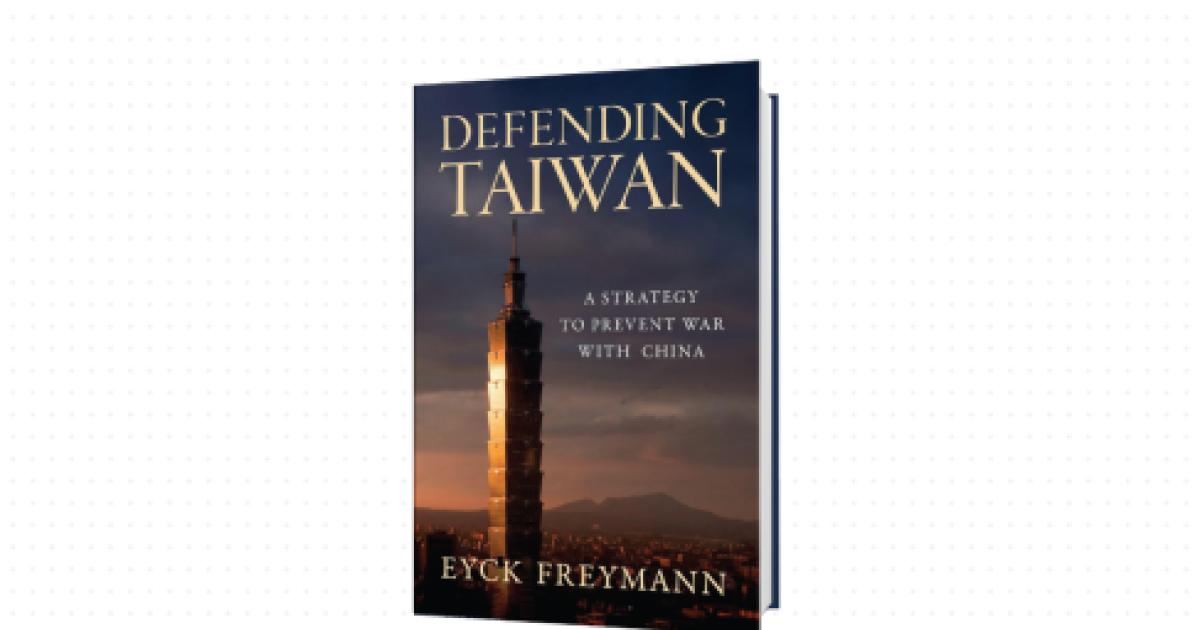
In Defending Taiwan, Eyck Freymann presents the first integrated strategy to deter war with China over Taiwan while preserving an honorable peace. The book argues that military deterrence alone will not prevent war. Deterrence requires four pillars working together: political, conventional military, strategic, and economic.
Key insights include:
- The most dangerous scenario is a crisis in the gray zone—not an invasion. A quarantine or coercive mobilization would aim to force Taiwan’s capitulation without firing a shot. It would dare the U.S. to choose: let Taiwan slip away (with the chip fabs intact) or accept a massive economic shock and the risk of escalation to general war.
- America must deter the crisis, not just the war.
- The United States needs an affirmative economic plan, not just threats of mutual destruction.
- Allied coordination is the connective tissue. The United States needs institutional mechanisms—not ad hoc diplomacy—to mobilize its coalition and sustain it over time.
The Solutions
1. Build a four-pillar deterrence system integrating political engagement, military preparation and DIB reform, technological leadership in space and cyber, and economic contingency planning.
2. Prepare for the gray zone, not just invasion. Develop contingency plans for quarantine and coercive mobilization scenarios.
3. Develop an economic contingency plan based on “avalanche decoupling”—a graduated mechanism for unwinding dependencies on China over time, rather than breaking supply chains on Day One.
4. Institutionalize the Core coalition of the U.S., Japan, Australia, the UK, and Canada through standing coordination mechanisms.