







The most consequential military events are not always wars. Sometimes they are accidents—or apparent accidents—that expose vulnerabilities no intelligence report could reveal.
The June 26, 2026 crash of a two-seat civilian aircraft into Beijing’s CITIC Tower, the tallest skyscraper in China’s capital, which is only a few minutes of flight time away from Zhongnanhai, the hush-hush living compound of Supreme Leader Xi Jinping, belongs in that category. Chinese authorities ultimately concluded that the 66-year-old pilot deliberately carried out a suicide attack after years of mental illness, releasing their findings only after nearly a week of silence while censoring discussion of the incident.
The physical damage was modest. The political and military implications were not.
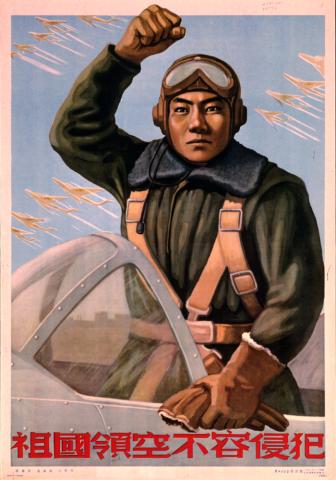
For decades, the Chinese Communist Party has portrayed itself as possessing one of the world’s most sophisticated integrated air defense systems. That confidence is rooted in history. During the Korean War, American air supremacy left an indelible scar on the People’s Liberation Army. With Soviet assistance, Beijing subsequently built what became perhaps the world’s largest ground-based air defense force. At its height, the PLA fielded roughly twenty anti-aircraft artillery divisions, making air defense one of its strongest military arms. Today, that legacy lives on through an extensive network of long-range radars, surface-to-air missiles, and advanced early-warning systems, among them the highly touted JY-27 radar family that Chinese state media routinely celebrates as capable of detecting even stealth aircraft.
Yet a slow, civilian light airplane reached the heart of Beijing.
That fact alone punctured one of the regime’s most carefully cultivated images.
China’s airspace is among the most tightly controlled in the world. More than 80 percent is reserved for military control, leaving only a small fraction available for civilian aviation—a near mirror image of the United States, where civilian aviation enjoys the overwhelming share of usable airspace. Every aircraft operating near Beijing is expected to be under close military surveillance.
Nevertheless, a privately piloted aircraft departed from a general aviation airport, deviated from its assigned route, ignored communications, and ultimately struck one of the most politically sensitive buildings in the country.
Whether the aircraft could have been intercepted is a separate technical question. The larger question is why such an intrusion was possible at all inside the most heavily defended airspace in China.
The timing makes the incident even more unsettling for Beijing.
It follows years of sweeping purges within the PLA, including repeated removals of senior officers responsible for aerospace, missile, and air-defense programs. These purges have disrupted command relationships, weakened institutional confidence, and raised persistent questions about readiness. Even if no direct connection exists between the personnel upheavals and this incident, the coincidence inevitably invites public speculation inside a political system where confidence in military competence is central to regime legitimacy.
The episode also exposed another chronic weakness of authoritarian governance: fragmented command.
Available reporting suggests civilian aviation authorities recognized that the pilot had departed from his approved flight profile and ceased communications before the crash. Yet there is no public evidence that civilian and military authorities coordinated an effective response.
China’s militarization of its airspace may have produced the opposite of its intended effect. Instead of seamless control, it appears to have created institutional barriers between civilian air traffic management and military command, leaving critical minutes lost amid bureaucratic separation.
For any country, that would be embarrassing. For a regime whose legitimacy rests heavily on promises of absolute security, it is politically dangerous.
The symbolic dimension is equally striking.
Only China’s wealthy and politically connected can realistically obtain private aircraft licenses and operate general aviation aircraft. The pilot was not an outside invader. He emerged from within the privileged echelon of Chinese society. That alone fuels uncomfortable questions. If even an affluent citizen could deliberately penetrate the capital’s defensive shield, what does that say about the regime’s internal cohesion?
More importantly, if a slow-moving civilian airplane can reach Beijing’s financial and political core, what confidence should anyone have in deterring a determined foreign adversary employing drones, cruise missiles, or low-observable aircraft?
Such questions spread rapidly through rumor even when official censorship suppresses discussion. Indeed, the authorities’ decision to erase online videos, delay official explanations, and sharply curtail public debate arguably intensified public curiosity rather than extinguishing it.
History offers an instructive parallel.
In May 1987, nineteen-year-old West German pilot Mathias Rust flew a single-engine Cessna through the supposedly impenetrable Soviet air-defense network and landed beside Red Square. Militarily, the incident was trivial. Politically, it was devastating. The flight humiliated the Soviet military establishment, exposed deep systemic failures, and gave Mikhail Gorbachev the political justification to purge hundreds of senior officers resistant to reform. Those purges fundamentally altered the balance of power inside the Soviet state. Less than five years later, the Soviet Union ceased to exist.
This is not to suggest that Beijing now stands on the edge of a similar collapse. But the comparison illustrates an enduring truth about authoritarian systems.
Their greatest vulnerabilities often emerge not from catastrophic military defeats but from small incidents that shatter carefully constructed myths of competence and invulnerability.
A tiny airplane cannot destroy a great power. It can, however, destroy the illusion that the great power is impenetrable.
The crash into the CITIC Tower did not merely leave a hole in a skyscraper’s glass façade. It punched a hole in one of the Chinese Communist Party’s most cherished narratives: that its security apparatus sees everything, controls everything, and can protect the regime from every threat.
Sometimes a single spark reveals how dry the prairie has become. The airplane that struck the CITIC Tower may prove to have been just such a spark.

