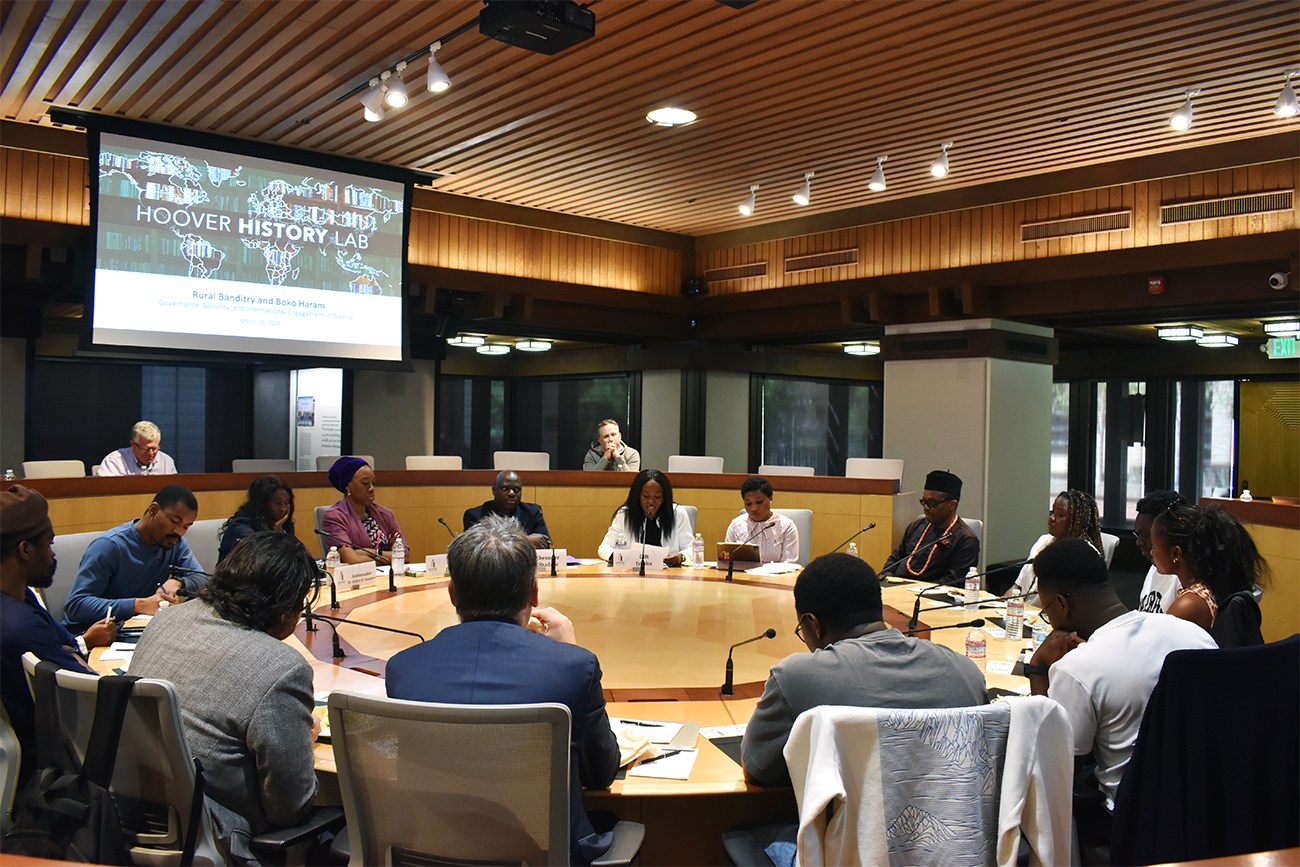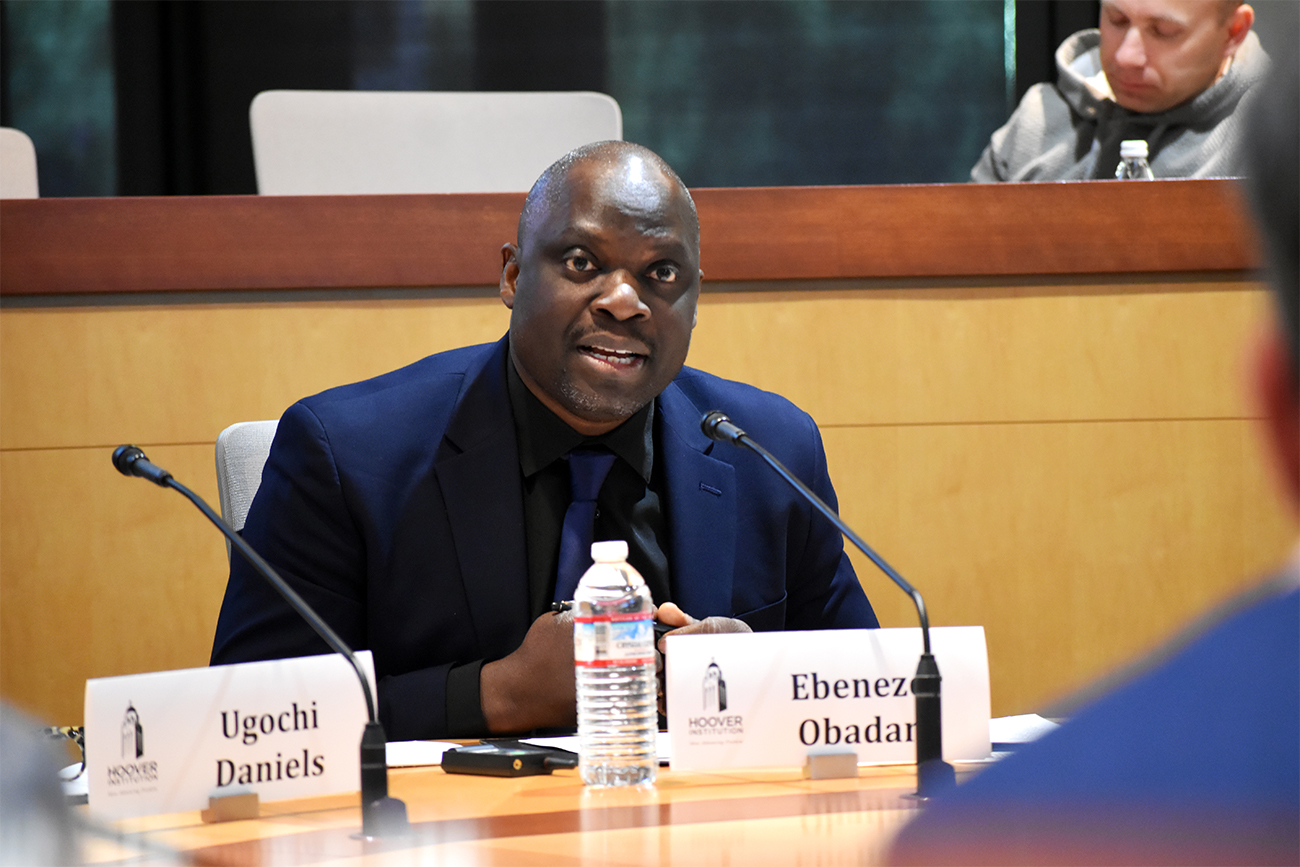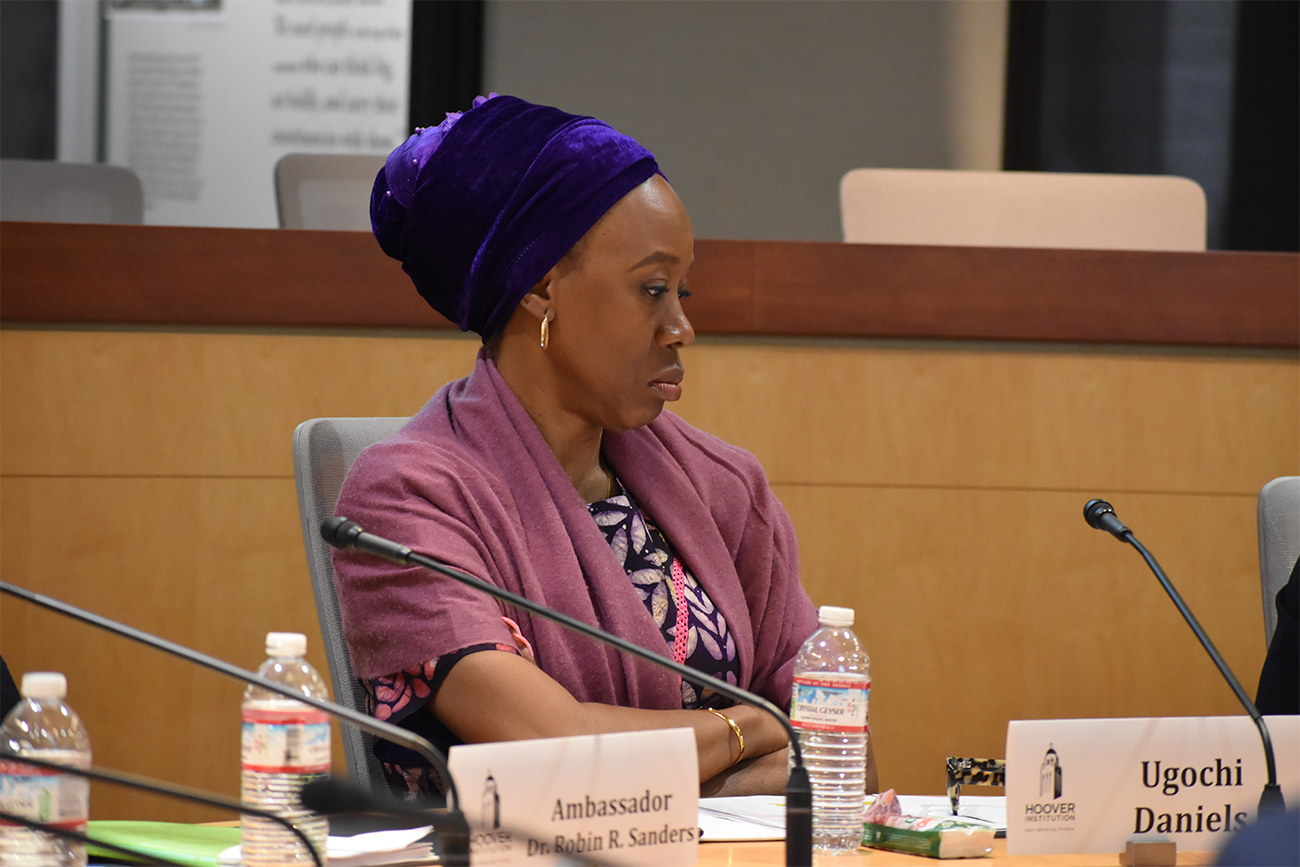














The Hoover History Lab hosted Rural Banditry and Boko Haram: Governance, Security, and International Engagement in Nigeria on Thursday, March 26, 2026.
FEATURING
Ebenezer Obadare
Senior Fellow for Africa Studies | Council on Foreign Relations
Ugochi Daniels
Deputy Director for General Operations | International Organization for Migration
Robin Renee Sanders
Former US Ambassador to Nigeria
EVENT SUMMARY
On March 26, 2026, the Hoover History Lab convened a three-hour symposium titled, Rural Banditry and Boko Haram: Governance, Security, and International Engagement in Nigeria, moderated by Gift Iyioku. This event examined the governance failures, humanitarian consequences, and international dimensions of Nigeria’s protracted insecurity.
Speakers converged on the central diagnosis that Nigeria's violence is not a collection of discrete security incidents but the cumulative product of delayed development, authoritarian state conduct, and the structural weakness of institutions at every level of government. Boko Haram and rural banditry, though often treated as analytically separate, share an ideological logic and operational methods — and unlike Niger Delta militancy, which carried negotiable political demands, Boko Haram pursues the imposition of an authoritarian order that forecloses conventional political resolution. The international community was urged to abandon euphemistic language and call the insurgency what it is: terrorism.
On the humanitarian front, displacement in Nigeria has ceased to be a temporary condition and has become a protracted reality, one that strains host communities already living in poverty and demands responses that are people-centered, community-led, and oriented toward self-sufficiency rather than dependency. Strategically, the symposium identified the absence of a sustained, coordinated framework, spanning federal, state, local, and international actors, as the defining failure enabling the persistence of insecurity. Past experience with entrenched conflicts elsewhere demonstrates that coordinated long-term action can produce results, although Nigeria has yet to benefit from it.