- America and the world are now at a critical juncture in history. After World War ii, the United States, together with committed friends, built a global commonwealth to advance the cause of freedom. In this post-war era, democracy and free markets flourished, and America had a special leadership role that Commonwealth is now fragmenting into something else that order is unraveling.
- Many Americans are understandably worried about the future in the United States and in other advanced democracies throughout the world. Majority still believe in democracy as an ideal, but they no longer are so sure that democracy works in practice.
- Americans are also losing confidence in the future that our institutions are providing a framework for economic opportunity. This is leading to a breakdown of the social contract between citizens and the state.
- It takes the form of what I call the four horsemen of the apocalypse, populism, nativism, protectionism, and isolationism.
- This is where Hoover comes in. The Hoover Institution was founded by Herbert Hoover in 1919 in the immediate aftermath of the First World War, to cope with daunting challenges posed by modern warfare and revolutionary ideas staying true to our founder's legacy. For more than a hundred years, Hoover has applied rigorous evidence-based scholarship to inform policy solutions that advance freedom, peace, and prosperity in America and around the world.
- Now in our second century, and at another pivotal time, Hoover has another opportunity to step up. We've launched an initiative to envision a new economic insecurity commons that was a favorite phrase of former US Secretary of State and our late Hoover colleague, George Schultz. It expresses a vision of free people and independent societies working together to solve common problems.
- Now for our generation, we have to answer the question, what comes next? In the Commons initiative, we will develop an agenda for common action in the 2030s. We have to find ways to ensure that democracy works and that citizens perceive that it works. We have to create economic opportunity in the digital age. We have to sustain the foundations of the American dream. We have to adapt American power for a different world, and we have to engage the ideas of our friends and of our rivals.
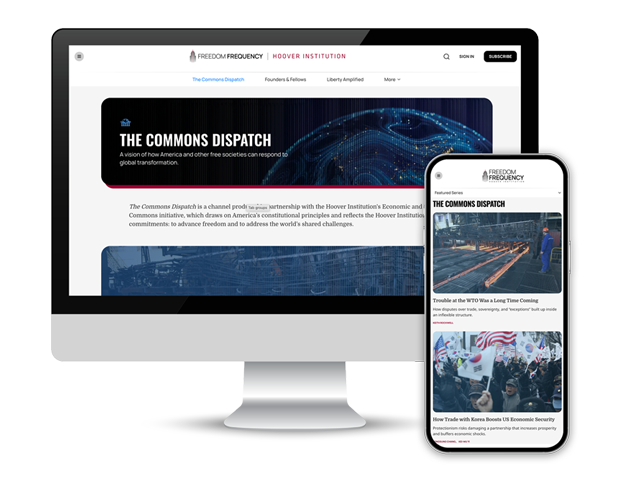
- This is the most ambitious initiative in Hoover's history. We have organized nearly 30 teams to work on these goals. There will be communications outreach, including a portal on hoover.org with our updated findings, a dedicated channel for essays and other multimedia on Hoover Substack, freedom frequency educational videos, podcasts and robust engagement and conversations across social media platforms and news media. We will develop our ideas and parallel with thought leaders and other leading advanced democracies around the world.
- We will see the ideas with our current leaders and with those who seek political office. We will present many voices across the political and ideological spectrum.
- We're going to have to challenge some old assumptions. We'll have to be open to ideas that might represent deep or fundamental changes in order to adapt to this new era. Above all, we must address our crisis of confidence here at home.
- One value of studying American history is that it helps us remember, as tough as times may seem now, our country has been through worse division, societal unrest, civil war pitched battles between business and labor, depressions and riots. Time and again. We have adapted our democracy for a new era. While keeping the constitutional foundation of our unique republic,
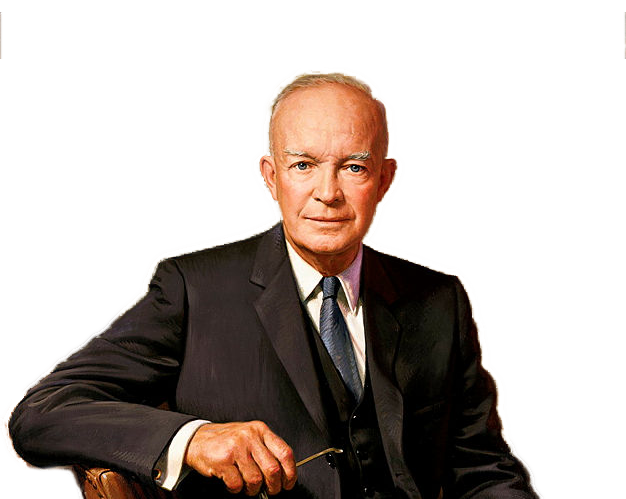
- We must look not only at where we are and where we're going, but where we've been. Now we have to sketch the next chapter in America's story at a time of change and turmoil. Once again, we'll have to envision how that story can continue to sustain not only ourselves, but also sustain a free and open world. It's good to think back about another era of struggle at the height of the Cold War. When the retired general Dwight Eisenhower assumed the presidency in 1953, everyone expected him to talk about the world. But in his inaugural address, he told the American people This, for this truth must be clear before us. Whatever America hopes to bring to pass in the world must first come to pass in the heart of America.
- As we celebrate America's 250th birthday, our goal is to look ahead and start fresh conversations about ways to renew America, as an example for all free societies, and to reinforce American leadership.