










Welcome to the third issue of the ACA newsletter! Each month, we’ll focus on a central theme and feature related webinar discussions, resources, and ACA members’ work connected to that theme. Our first few issues will spotlight past webinar discussions from our series.
You’ll also find updates on upcoming ACA programming and other events hosted by members of our network, along with profiles of ACA members who are doing exemplary work in the civics space. We hope you enjoy the May issue, and please feel welcome to send us resources and news to share in future issues.
ACA Members Survey
Thank you for being a member of the ACA! Please fill out this short survey, which will help the ACA Executive Committee better understand what is working, areas of improvement, and how to best support your civic education work. All responses will remain anonymous.
WEBINAR
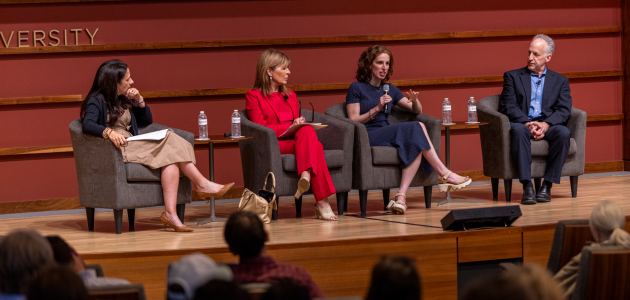
“What it would mean to honor someone like Thomas Jefferson in a lot of ways is to take seriously his claim that ‘the earth belongs to the living’ and that you cannot be a democratic citizen unless you are invested in the work of making it happen. You’re certainly not going to save democracy by figuring out how best to honor those in the past, nor are you going to do it by not knowing anything about them.”
—Jonathan Gienapp
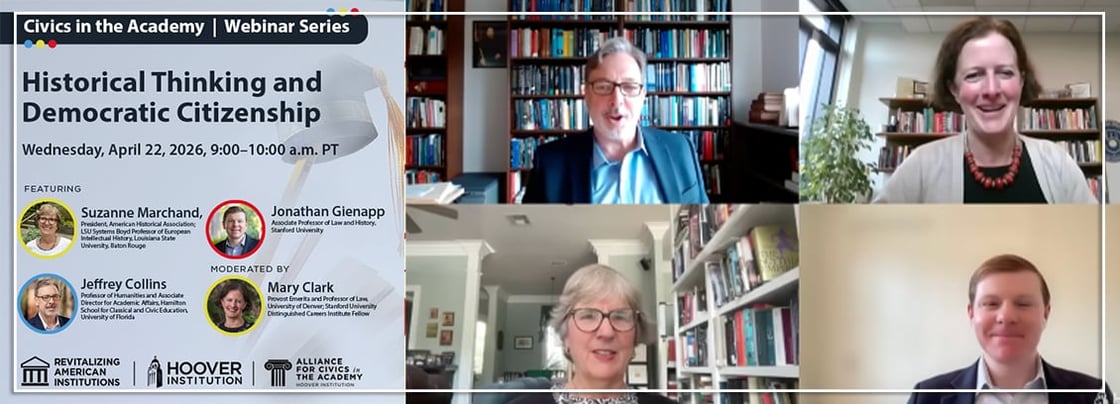
“Historical Thinking and Democratic Citizenship” with Mary Clark, Suzanne Marchand, Jeffrey Collins, and Jonathan Gienapp on April 22, 2026
Please note that the ACA webinar series will be taking a summer break starting in June and will resume in September.
SYLLABI
- History of Free Speech in the US (University of Denver)
- This undergraduate seminar explores the history, evolution, and impact of freedom of expression in the United States, emphasizing critical engagement with primary sources and major debates. Through readings, discussion, reflective memos, and a final analytical essay, students develop critical reading, communication, and analytical skills while considering diverse perspectives on free speech.
- The American Political Tradition (University of Virginia)
- This course examines the theoretical ideas that informed the creation and development of America’s political system and some of the major contemporary challenges to the maintenance of American democracy. Topics to be treated include the political thought of the American Founders, the place of religion in public life, the role of slavery and race in constitutional development, the nature of written constitutions, and the role of America in the world.
- Dangerous Ideas (University of Montana)
- This course examines the history and moral complexity of dissent–from Socrates to modern figures–by confronting controversial, timely, and sometimes unsettling ideas as they emerge rather than judging them only in hindsight.
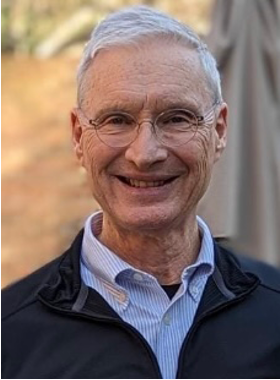
PROFILE SPOTLIGHT: Brook Manville
Brook Manville is a historian, writer, and adviser whose career has spanned academia, technology, consulting, and nonprofit leadership. Beginning his career as a Greek History professor at Northwestern, Manville’s early work in classical study also led to collaborations with Josh Ober, with whom he later co-authored The Civic Bargain: How Democracy Survives.
Alongside running his own consulting practice, Manville now writes about the history of democracy and democratic leadership. For Manville, history is not merely a record of what happened, but a “platform for understanding the challenges of contemporary life” and a way of navigating democratic life more effectively. Historical thinking, he emphasizes, encourages pattern recognition and asks what earlier societies can teach us about today’s civic responsibilities.
Manville believes historical thinking beyond mere facts is especially valuable for civic education: “If you want to understand civic education, you have to begin with the question of not just what did they do, but why were they doing it?” Learning the facts of the Constitution or the Civil War matters, but Manville warns that this approach is “only going halfway.” As civic education must prepare citizens to be productive, students must also consider what they should do with civic knowledge: “You have a checklist of dates, names, and documents, but does that make you a better citizen? That, to me, is the ultimate question.” Looking ahead, Manville hopes higher education institutions can commit to forms of civic learning rooted not only in academic study of democratic theory and institutions, but also in “hands-on work,” service, civic friendship with others, and shared public rituals–that together can reshape the way students understand citizenship. Success is making all those things part of their everyday lives.
MEMBERS IN THE NEWS
- Symposium: What Is Patriotic Education? by Paul Carrese, Justin Dyer, and Aaron Zubia via American Enterprise Institute (May 6, 2026)
- National Treasure: How the Declaration of Independence Made America by Michael Auslin (May 5, 2026)
- Saving Principles: Frederick Douglass, the Declaration, and the Soul of Civic Education by Matthew Brogdon and David Bobb via This Constitution (May 4, 2026)
- Teaching America: Reflective Patriotism in Schools, College, and Culture by Paul Carrese (May 1, 2026)
- On History, Objectivity, and Inquiry by Suzanne Marchand via Perspectives on History (March 19, 2026)
- The Declaration Still Unites Our Nation by Michael Auslin via American Heritage (February 10, 2026)
UPCOMING EVENTS
- American Institutions - Educator Workshop
- Join Professor Sean Beienburg for a deep dive into the intentional design and changing practices over time of some of America's key political institutions, including federalism, separation of powers, and judicial review. Explore primary sources related to these themes, and learn from experienced teachers how to incorporate these sources and principles in engaging ways in your classroom. This is a special double session that will include content from our Introductory and Advanced Institutions sessions.
- Hosted by ASU Center for American Civics on June 3, 2026, from 8:30 a.m. to 5 p.m. MST in person at Northland Pioneer College Campus, Show Low, Arizona.
- Please register here.
Want to highlight your event in next month’s newsletter? Send us an email at aca-hoover@stanford.edu.
THE CIVIC PROFILE
In March, the Center for Revitalizing American Institutions (RAI) launched the Civic Profile! Akin to a “civics Myers-Briggs,” the Civic Profile is an online educational and research tool that helps individuals explore their civic identity across three dimensions: civic values, knowledge, and engagement.
Discover your Civic Profile now!
Postdoc Positions
Postdoctoral Scholars—Tisch College
The Civic Studies Program at the Jonathan M. Tisch College of Civic Life at Tufts University, in partnership with the Center for Expanding Viewpoints in Higher Education (CEVIHE), seeks to hire two Postdoctoral Fellows.
One postdoc’s research and teaching must focus on one of two broad areas: The first concerns how people speak and listen to those with whom they disagree on controversial issues, and how such dialogue can be improved. The second area examines what makes certain types of intellectual work influential and well supported within the academy, while others remain marginal. It asks how such differences ought to be evaluated and addressed, under what conditions a body of thought can be considered improperly marginalized, and what responses may be warranted. Please see more information here.
The other postdoc is shared by Civic Studies, the Department of Computer Science, and CEVIHE. This person’s research and teaching will focus on using artificial intelligence (AI) to help colleges and universities, other organizations, informal groups, or communities navigate intellectual diversity and debate. The Fellow may develop AI applications, study the impact of existing AI tools, or conduct preliminary research that could lead to applications later, such as tools that combat echo chambers or teach individuals to hear alternative views. The appointment is for one year, with the possibility of renewal based on performance, funding, and mutual agreement. Please see more information here.
Lecturer—University of New Hampshire
The University of New Hampshire, Durham, invites applications for a Lecturer in Civics and Democratic Governance under the umbrella of the Responsible Governance and Sustainable Citizenship Project (RGSCP). Rank and the area of expertise is open, but we are looking for candidates who engage, from any discipline, with issues of American civics, citizenship, and democratic governance. The teaching load will be 1/2 in the first year and 2/2 in the second, with curriculum development being a primary focus in the first semester. The successful candidate will be able to offer courses in civics and political institutions (especially US institutions), as well as have the capacity to create new curriculum that will expand our university's offerings in these areas. The candidate will work with faculty in other units across the university, especially in the new Honors College, to create a foundation for civics education. Please learn more information here.
GET INVOLVED
Help make our community of practice as useful and impactful for educators as possible by sharing your work, ideas, and experiences!
- Visit our website to access course syllabi developed by ACA members, civics program descriptions, research and policy proposals, op-eds, book reviews, and more.
- Contribute to our community of practice by submitting your syllabi, research, commentary, and other field-building materials to aca-hoover@stanford.edu.
- Apply to host an ACA-sponsored conference.
- Apply or nominate a colleague for membership in the ACA.

WHO WE ARE
The Alliance for Civics in the Academy (ACA) is a nonpartisan network of instructors dedicated to strengthening postsecondary civic education. Drawing together faculty from across disciplines, regions, and viewpoints, the ACA fosters a community of practice devoted to improving the teaching of citizenship in a constitutional democracy—through shared resources, collaborative learning, and open inquiry.