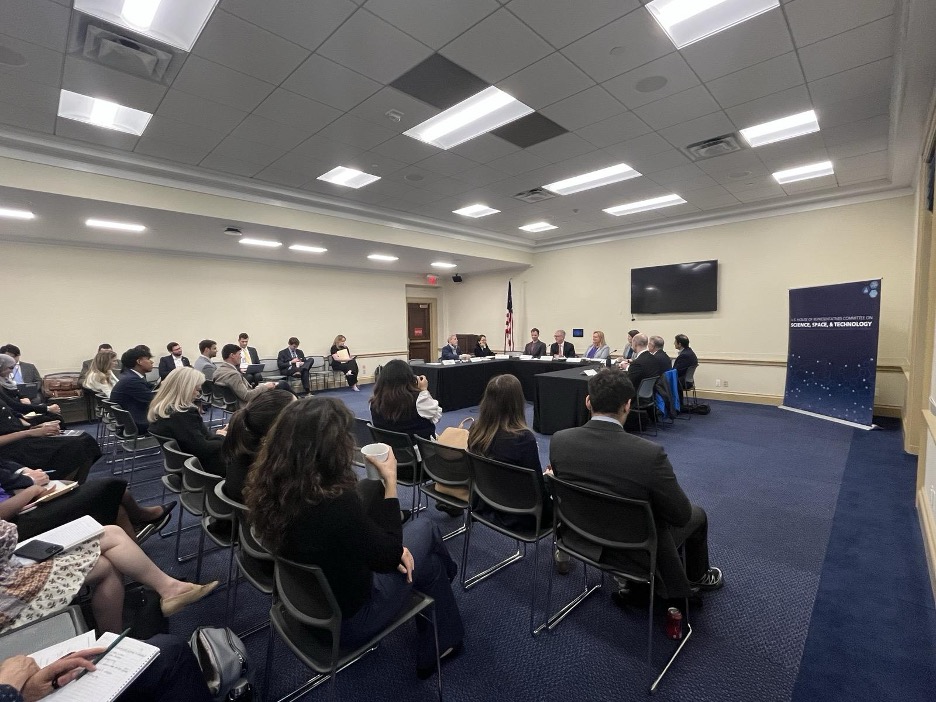
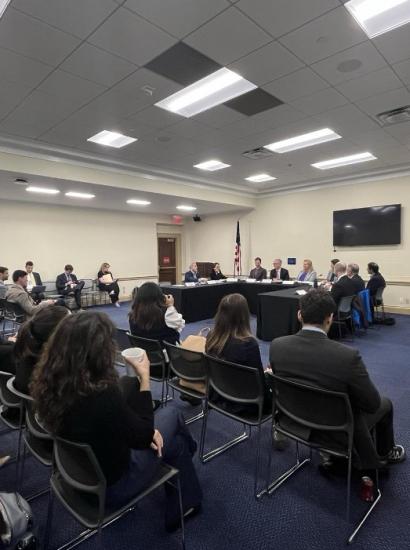
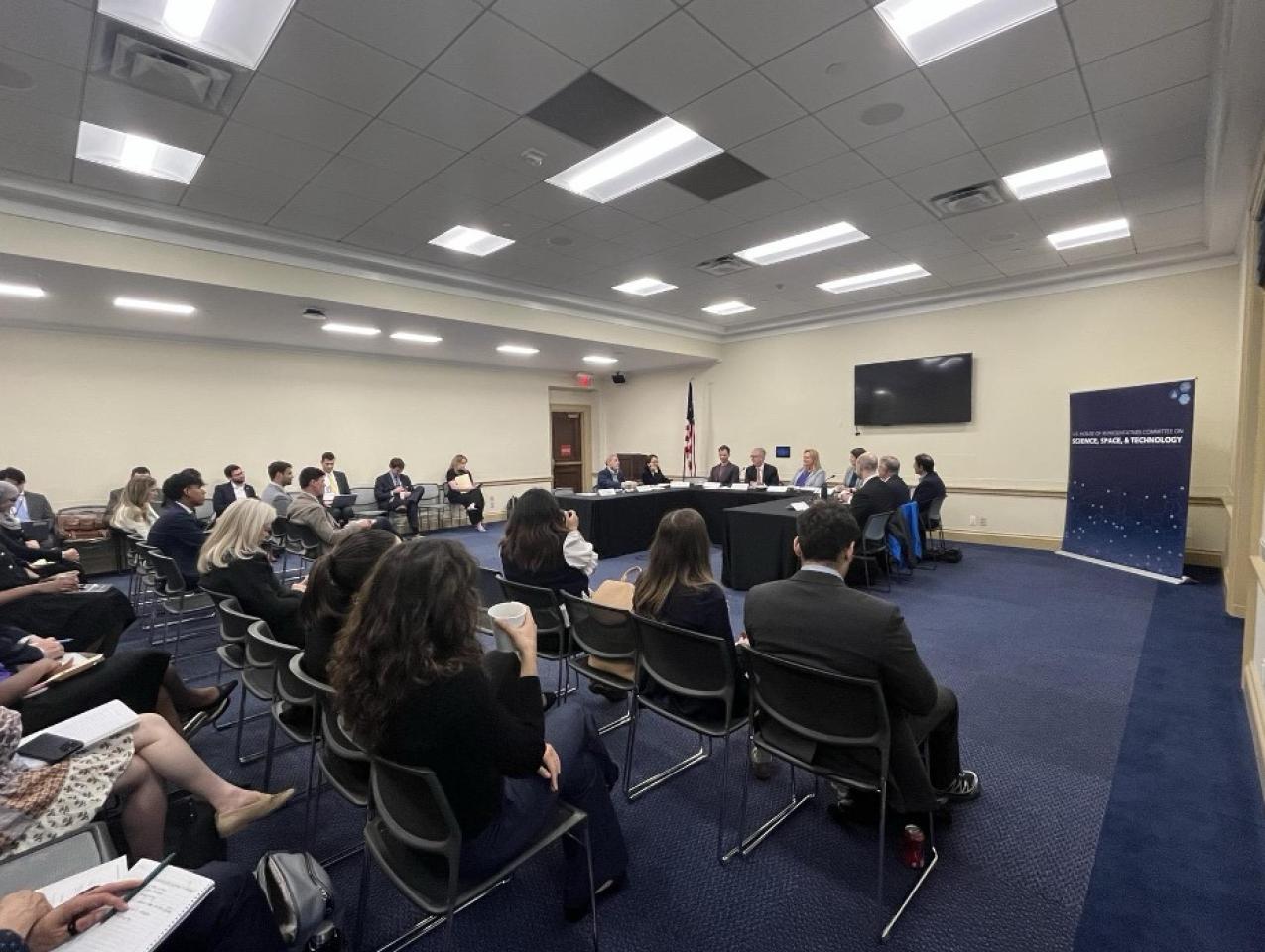
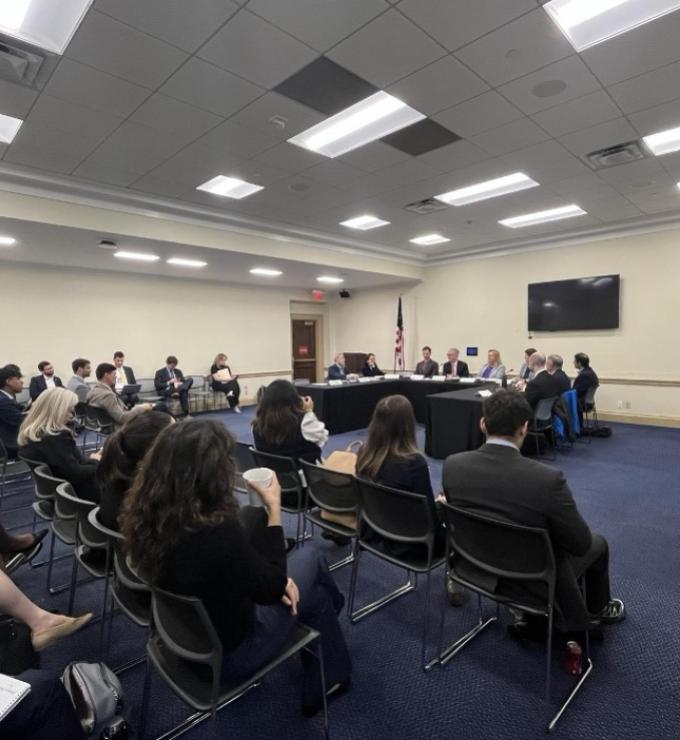
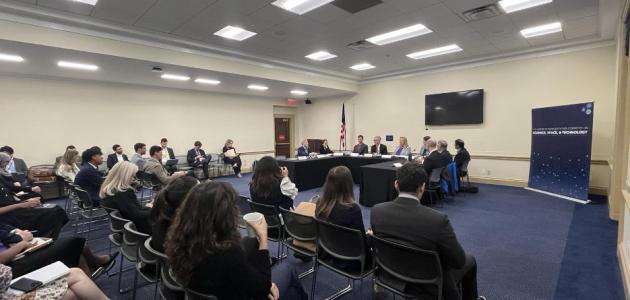
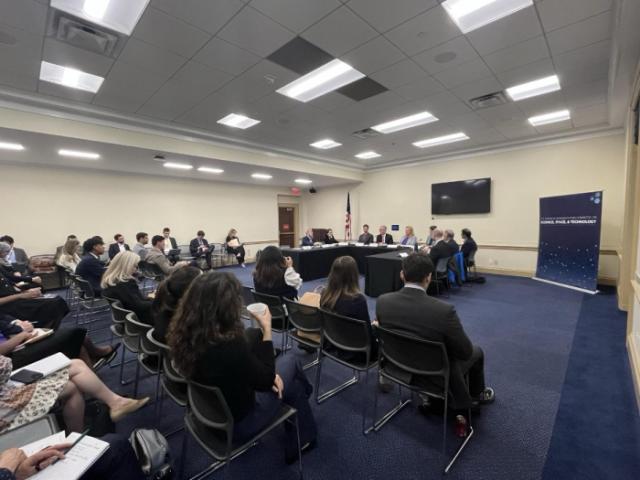
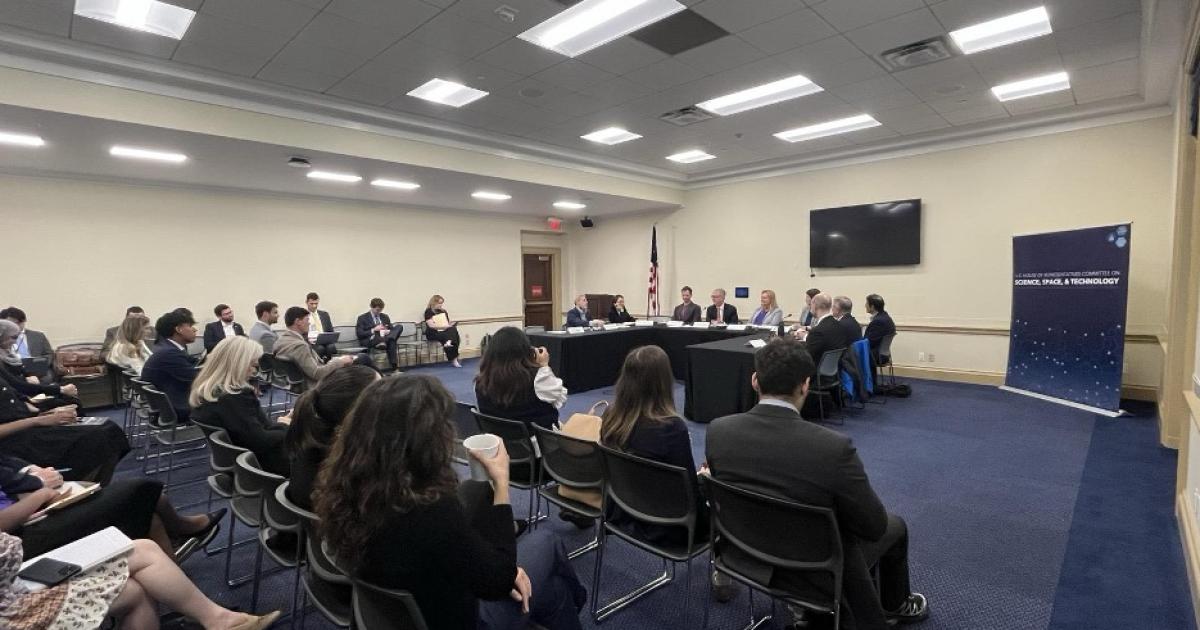
Hoover Institution (Washington, DC)— The Hoover Institution’s Bio-Strategies and Leadership (BSL) team was in Washington, DC, in late May 2026 for a series of meetings with policymakers and a Capitol Hill roundtable focused on biometrology, the science of measurement for biology.
The roundtable, titled “Biometrology: Underpinning New Discoveries in the Life Sciences,” was held one day after World Metrology Day, which marks the anniversary of the signing of the Metre Convention on May 20, 1875. The timing was fitting. Just as shared measurements helped make modern science, commerce, and industry possible, trusted biological measurements and standards will be needed to support the next era of biotechnology.
The event coincided with the introduction of the Standards and Calibration for American Leadership in Engineering Biology Act, or SCALE Biology Act. The bipartisan legislation is led by Rep. April McClain Delaney (D-MD) and Rep. Jay Obernolte (R-CA), with Rep. Zoe Lofgren (D-CA) and Del. James Moylan (R-GU) as cosponsors. The discussion also reflected McClain Delaney and Obernolte’s leadership in elevating biometrology as an important issue for US competitiveness, innovation, and biotechnology policy.
Hoover Institution Science & Senior Fellow Drew Endy moderated the roundtable, which brought together lawmakers, scientists, policy experts, and biotechnology leaders to discuss the foundational role of biological measurements and standards in advancing the bioeconomy. Participants included McClain Delaney, Lofgren, India Hook-Barnard of the Engineering Biology Research Consortium, Steven Moss of the National Security Commission on Emerging Biotechnology, John Sittmann of Deep Root BioLabs, Jonathan Dinman of the University of Maryland Institute for Bioscience and Biotechnology Research, Sanjay Vashee of the J. Craig Venter Institute, Sharon Lee of the Good Food Institute, Mike Castellano of the U.S.-China Economic and Security Review Commission (USCC), and others.
The conversation built on Endy’s February 2025 testimony before the USCC, as well as Endy’s June 2025 testimony before the House Science, Space, and Technology Committee. Before the latter committee, Endy emphasized the need for stronger federal investment in the measurement tools and standards required to advance biotechnology. That testimony helped spark further discussion among policymakers about how the United States can build the technical foundations needed to lead in biology. Endy has been calling attention to this need for more than a decade, and improving standards and measurement in biology has been a core focus of BSL since the initiative’s inception.
“Ever better measurements and standards are how science becomes engineering,” Endy has asserted. “Engineering is how biology becomes an industry.”
McClain Delaney, whose Maryland district includes the National Institute of Standards and Technology, emphasized the importance of US leadership in biotechnology and credited Endy’s work in elevating biometrology as a national priority.
“None of this would have been possible without Dr. Drew Endy,” McClain Delaney said. “He is a spectacular advocate for US leadership in biotechnology.”
Biometrology is central to BSL’s broader work on biology as a strategic domain. Standards and measurement tools allow researchers, companies, regulators, and policymakers to speak the same language, compare results, improve reproducibility, and translate discoveries into reliable products and public benefits. In biotechnology, gaps in shared measurement can slow progress in areas ranging from medicine and agriculture to biosecurity and biomanufacturing.
During the same Washington, DC, trip, BSL advanced several additional program priorities, including improving biotechnology coordination and investment in Europe, advancing biological intelligence, and strengthening biosecurity.
For more information about Bio-Strategies and Leadership, visit victory.stanford.edu or contact Sarah Moront at smoront@stanford.edu.