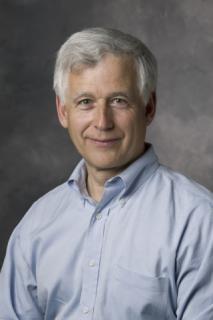
David R. Henderson

Research Fellow
Biography: 

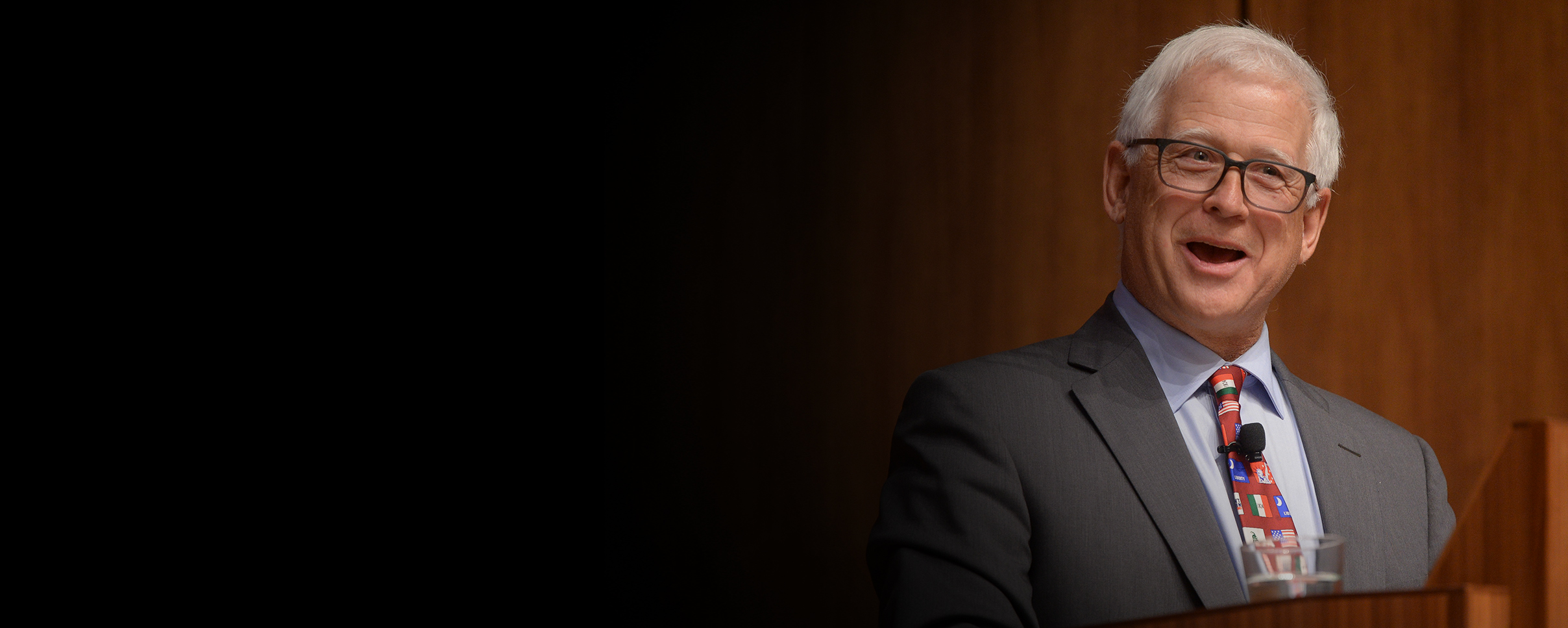
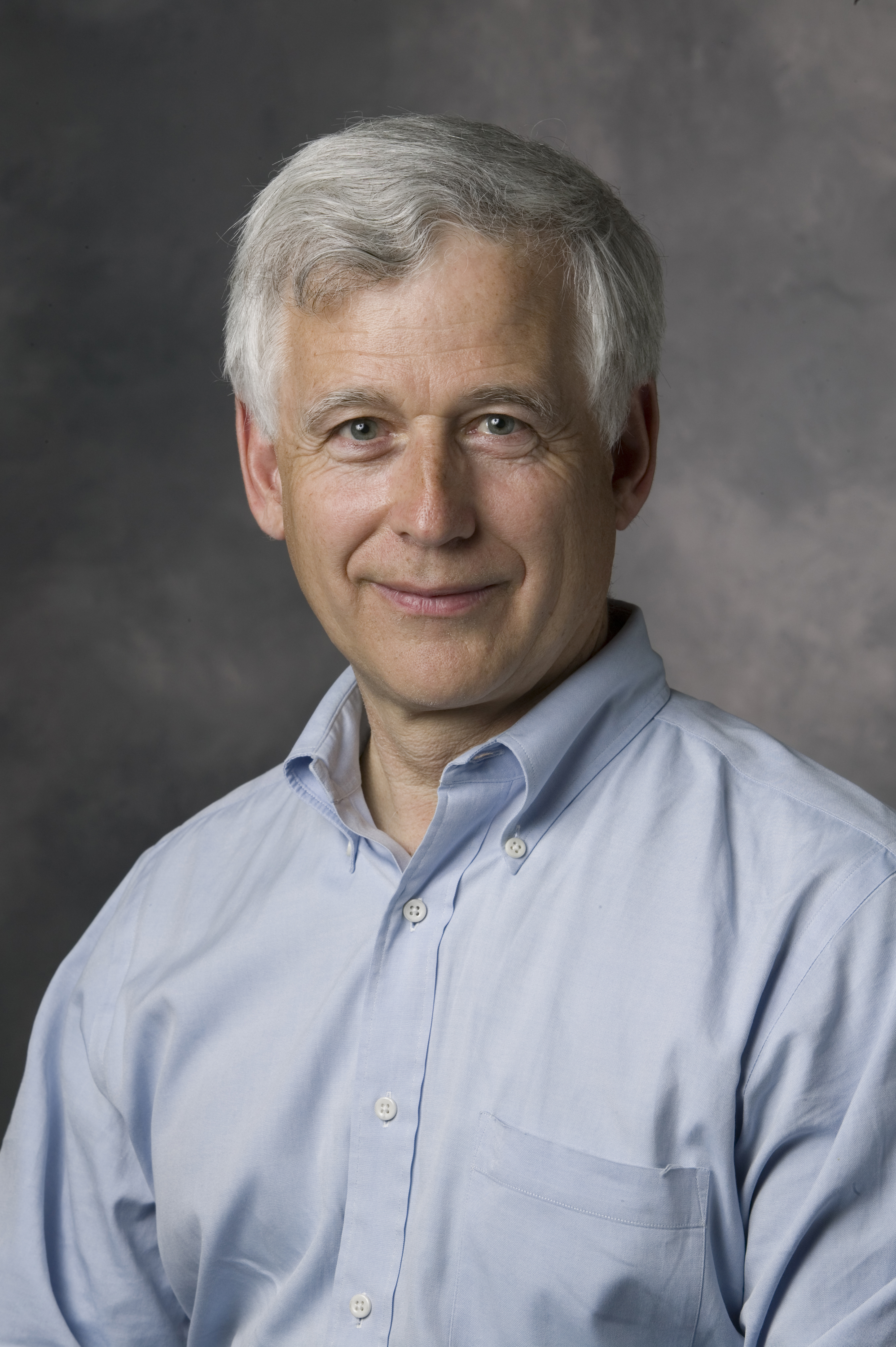
David R. Henderson is a research fellow with the Hoover Institution. He is also a professor of economics at the Naval Postgraduate School in Monterey, California.

Henderson's writing focuses on public policy. His specialty is in making economic issues and analyses clear and interesting to general audiences. Two themes emerge from his writing: (1) that the unintended consequences of government regulation and spending are usually worse than the problems they are supposed to solve and (2) that freedom and free markets work to solve people's problems.

David Henderson is the editor of The Concise Encyclopedia of Economics (Warner Books, 2007), a book that communicates to a general audience what and how economists think. The Wall Street Journal commented, "His brainchild is a tribute to the power of the short, declarative sentence." The encyclopedia went through three printings and was translated into Spanish and Portuguese. It is now online at the Library of Economics and Liberty. He coauthored Making Great Decisions in Business and Life (2006). Henderson's book, The Joy of Freedom: An Economist's Odyssey (Financial Times Prentice Hall, 2001), has been translated into Russian. Henderson also writes frequently for the Wall Street Journal and Fortune and, from 1997 to 2000, was a monthly columnist with Red Herring, an information technology magazine. He currently serves as an adviser to LifeSharers, a nonprofit network of organ and tissue donors.

Henderson has been on the faculty of the Naval Postgraduate School since 1984 and a research fellow with Hoover since 1990. He was the John M. Olin Visiting Professor with the Center for the Study of American Business at Washington University in St. Louis in 1994; a senior economist for energy and health policy with the President's Council of Economic Advisers from 1982 to 1984; a visiting professor at the University of Santa Clara from 1980 to 1981; a senior policy analyst with the Cato Institute from 1979 to 1980; and an assistant professor at the University of Rochester's Graduate School of Management from 1975 to 1979.

In 1997, he received the Rear Admiral John Jay Schieffelin Award for excellence in teaching from the Naval Postgraduate School. In 1984, he won the Mencken Award for best investigative journalism article for his Fortune article "The Myth of MITI."

Henderson has written for the New York Times, Barron's, Fortune, the Los Angeles Times, the Chicago Tribune, Public Interest, the Christian Science Monitor, National Review, the New York Daily News, the Dallas Morning News, and Reason. He has also written scholarly articles for the Journal of Policy Analysis and Management, the Journal of Monetary Economics, Cato Journal, Regulation, Contemporary Policy Issues, and Energy Journal.

Henderson has spoken before a wide variety of audiences, including the American Farm Bureau Federation, the Chicago Council on Foreign Relations, the St. Louis Discussion Club, the Commonwealth Club of California (National Defense and Business Economics Section), the Cato Institute, and the Heritage Foundation. He has also spoken to economists and general audiences at many universities around the country, including Carnegie-Mellon, Brown, the University of California, Berkeley, the University of California, Davis, the University of Rochester, the University of Chicago, Harvard University's John F. Kennedy School, and the Hoover Institution. He has given papers at annual conferences held by the American Economics Association, the Western Economics Association, and the Association of Public Policy and Management. He has testified before the House Ways and Means Committee, the Senate Armed Services Committee, and the Senate Committee on Labor and Human Resources. He has also appeared on the O'Reilly Factor (Fox News), C-SPAN, CNN, the Newshour with Jim Lehrer, CNBC Squawk Box, MSNBC, BBC, CBC, the Fox News Channel, RT, and regional talk shows.

Born and raised in Canada, Henderson earned his bachelor of science degree in mathematics from the University of Winnipeg in 1970 and his Ph.D. in economics from the University of California, Los Angeles, in 1976.

Filter By:

Topic

Type

Recent Commentary

Analysis and Commentary

Krugman's Bait And Switch

by David R. Hendersonvia EconLog
Sunday, March 1, 2015

Paul Krugman has a post on the importance of MIT economists in policy discussions. Had he simply made the point that they are highly influential, his post would have been fine.

Partial map of the Internet based on the January 15, 2005 data found on opte.org
Analysis and Commentary

The Unseen Effects Of "Net Neutrality" Regulation

by David R. Hendersonvia EconLog
Friday, February 27, 2015

Various friends on Facebook have been venting, quite justifiably, about the Federal Communications Commission's vote to regulate the Internet as a public utility.

Economics Abstract
Analysis and Commentary

McCloskey On Piketty

by David R. Hendersonvia EconLog
Wednesday, February 25, 2015

I'm starting to work on a paper that I'll give at the APEE (Association for Private Enterprise Education) meetings in Cancun in April. The working title for the paper, although I might change it when it comes time to submit to a journal, is "Economic Inequality: When and How Does It Matter?"

Analysis and Commentary

The Minimum Wage And Monopsony

by David R. Hendersonvia EconLog
Tuesday, February 24, 2015

I promised a few weeks ago to "write a further note explaining a more-sophisticated way of understanding the harmful effects of the minimum wage." This isn't it.

Analysis and Commentary

Prison Sentences Much Longer Than Juries Would Like

by David R. Hendersonvia EconLog
Monday, February 23, 2015

Jacob Sullum, over at Reason's Hit and Run blog, has a very interesting post about a federal judge in Cleveland who, after a jury found a man guilty of receiving, possessing, and distributing child pornography, polled the jury for the jurors' view of a just sentence.

Hoover fellow Richard Epstein on income inequality.
Analysis and Commentary

From 2007 To 2012-13, The Income Share Of Top 1% Fell

by David R. Hendersonvia EconLog
Friday, February 20, 2015

The share of income (including capital gains) held by the top 1 percent grew from 10 percent in both 1960 and 1980 to 21.5 percent in 2000. Since then, it fell to under 17 percent in 2002 before rising to 23.5 percent in 2007.

Analysis and Commentary

The Fatal Conceit in Foreign Policy

by David R. Hendersonvia EconLog
Thursday, February 19, 2015

A fellow free-market-oriented economics blogger, whom I respect but whom I won't name because I also respect Facebook privacy, wrote the following on Facebook: "I guess I disagree with standard libertarian view on this [ISIS]. Libertarians, like progressives, do not think that there are evil people in the world."

Analysis and Commentary

Major Improvements in Our Lives

by David R. Hendersonvia EconLog
Wednesday, February 18, 2015

Michael D. Thomas, an economics professor at the Heider College of Business at Creighton University in Omaha, Nebraska, reported on Facebook an interesting conversation he had with a student this week. It led to a more interesting set of comments than the usual.

Analysis and Commentary

Is Inequality Bad for Babies?

by David R. Hendersonvia EconLog
Tuesday, February 17, 2015

Here is where inequality comes in--if when Chen and co-authors look at children born to advantaged individuals (meaning married, college-educated and white) in the US, they survive at the same rates as their counterparts in Austria and Finland. But the trio find that children of disadvantaged parents in the US have much lower survival rates than children of disadvantaged parents in the other countries.

Analysis and Commentary

Answering Paul Krugman's Challenge on Inequality

by David R. Hendersonvia EconLog
Saturday, February 14, 2015

And challenging Paul to step up.

Pages