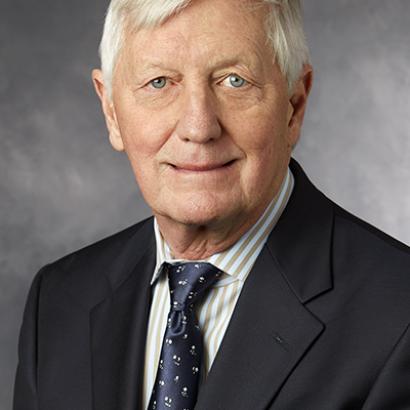
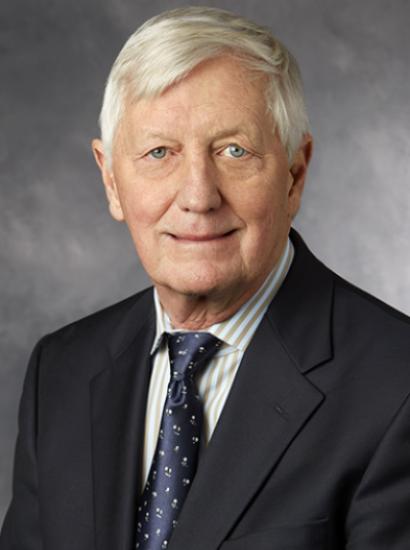
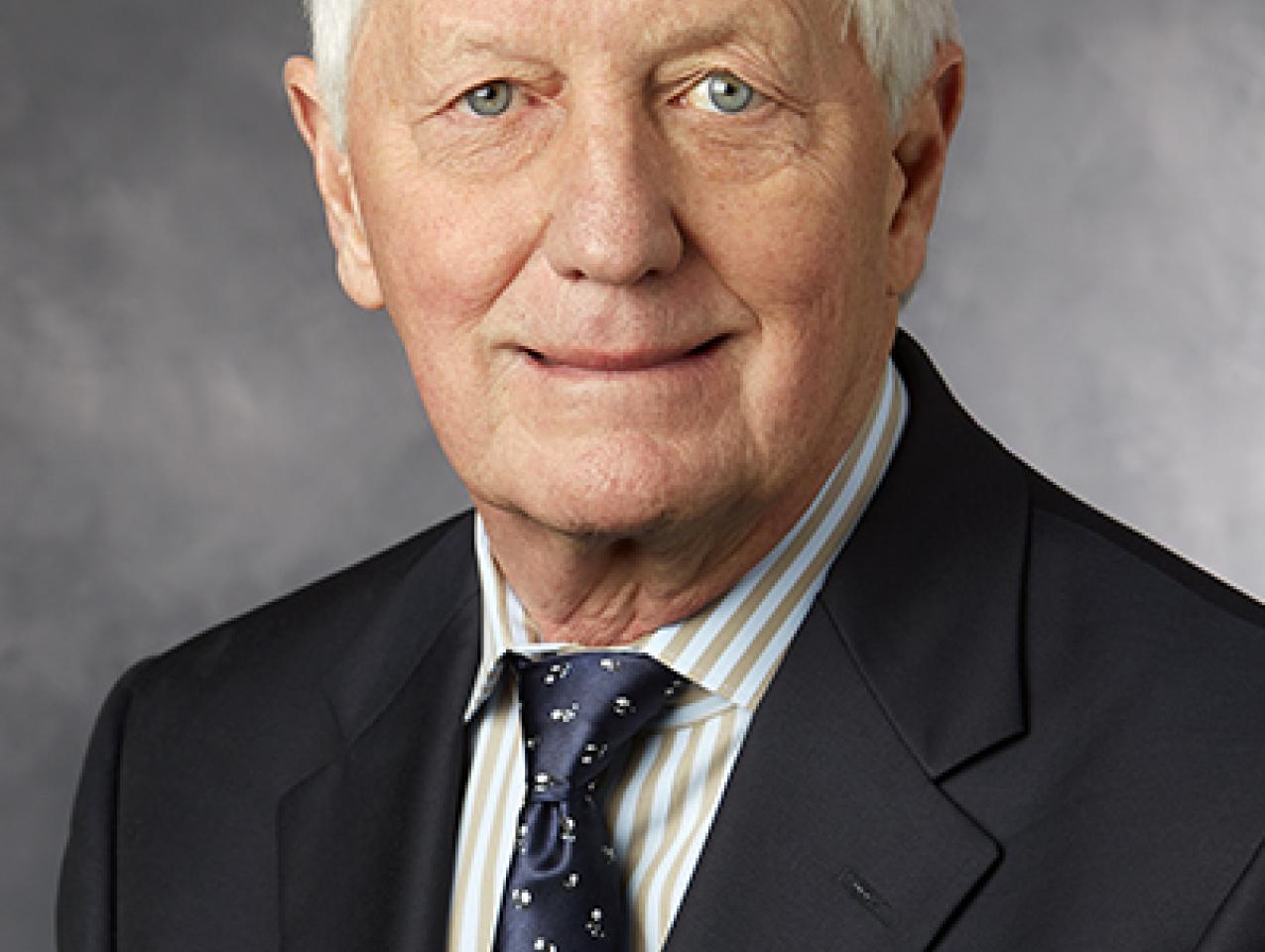
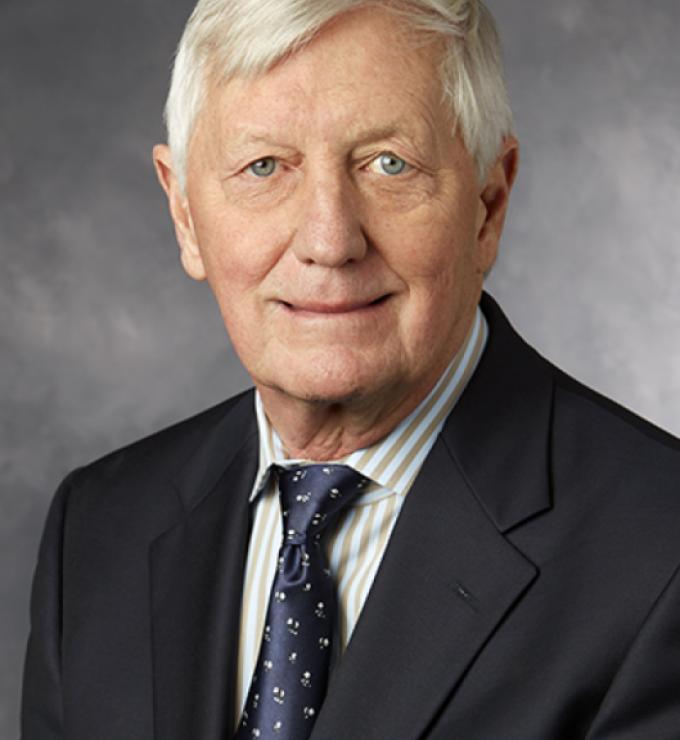
James L. Sweeney

Senior Fellow
Research Team: 
Biography: 

James L. Sweeney, known for his work energy economics and energy policy, is a Hoover Institution senior fellow.

Sweeney analyzes economic and policy issues, especially those involving energy systems and/or the environment. He has particular research interests in global climate change, automotive fuel economy regulation, electricity market problems, and market structure issues.

He is a professor of management science and engineering at Stanford University, where he was appointed to the faculty in 1971. He also is director of the Precourt Energy Efficiency Center and a senior fellow at the Stanford Institute for Economic Policy Research.

At Stanford, Sweeney was chairman, Department of Engineering-Economic Systems & Operations Research, 1996–98; chairman, Department of Engineering-Economic Systems, 1991–96; director, Center for Economic Policy Research, 1984–86; chairman, Institute for Energy Studies, 1981–85, and director, Energy Modeling Forum, 1978–84.

He recently served on the review panel for the State of California Public Interest Energy Research Program, the National Research Council's Committee on Benefits of DOE R&D in Energy Efficiency and Fossil Energy, and the National Research Council's Committee on Effectiveness and Impact of Corporate Average Fuel Economy (CAFE) Standards.

In 2000, Sweeney was appointed a fellow of the California Council on Science and Technology. He was elected a senior fellow of the U.S. Association for Energy Economics in 1999. He won an Excellence in Teaching Award from the Stanford Society of Black Scientists and Engineers in 1989 and the Federal Energy Administration Distinguished Service Award in 1975.

Sweeney's publications include Energy Efficiency: Building a Clean, Secure Economy (Hoover Institution Press, 2016), California Electricity Crisis (Hoover Institution Press, 2002), "Trade and Industry Impacts of the Kyoto Protocol," with W. D. Montgomery, in The Business Roundtable, October 1999; "Natural Resource Economics," The Social Science Encyclopedia, 2d ed. (London: Routledge, 1996), "Energy Economics," International Encyclopedia of the Social & Behavioral Sciences (Elsevier Science, 2001), and Handbook of Natural Resource and Energy Economics, with A. V. Kneese (North Holland: Volumes I and II, 1993 and Volume III, 1995).

Sweeney earned a bachelor's degree in electrical engineering from the Massachusetts Institute of Technology in 1966 and a doctoral degree in engineering-economic systems from Stanford University in 1971.

Filter By:

Topic

Type

Recent Commentary

Blank Section (Placeholder)Featured

Area 45: California: Back In Blackouts Again?

interview with James L. Sweeneyvia Matters of Policy & Politics
Wednesday, August 19, 2020

James Sweeney explains the differences between crises present and past, and suggests ways California can better balance population and environmental concerns. 

Energy Policy Insight

by Daniel Heil featuring the work of Admiral James O. Ellis Jr., Michael J. Boskin, James L. Sweeneyvia Policy Insights | A Succinct Guide to Important Policy Questions
Thursday, February 20, 2020

Over the last quarter century, the United States has experienced a dramatic transformation. With little fanfare, an energy revolution has occurred that has profoundly altered the nation’s economy, its national security, and its environment.

Policy InsightsFeatured

Energy Policy Insight

by Admiral James O. Ellis Jr., Michael J. Boskin, James L. Sweeney, Daniel Heilvia PolicyEd
Thursday, February 20, 2020

Over the last quarter century, the United States has experienced a dramatic transformation. With little fanfare, an energy revolution has occurred that has profoundly altered the nation’s economy, its national security, and its environment. No longer beholden to foreign nations to meet its energy demands, the United States now produces more energy than it consumes.

Blank Section (Placeholder)Featured

Area 45: James Sweeney On California’s Electricity Woes

interview with James L. Sweeneyvia Matters of Policy & Politics
Friday, October 18, 2019

Why can’t the world’s fifth-largest economy keep its lights on?

Blank Section (Placeholder)

How the West Was Wired

by James L. Sweeneyvia Hoover Digest
Monday, October 23, 2017

California’s electrical power capacity is bottled up by an inefficient regional network. Here’s a bright idea: fix that grid. 

Analysis and Commentary

Energy And Environment In The Trump Administration

by James L. Sweeney, Alice Hillvia Stanford Precourt Institute for Energy
Wednesday, June 28, 2017

Hoover Institution fellows James Sweeney and Alice Hill discuss energy policy at the 2017 Silicon Valley Energy Summit.

Featured

Increased Efficiency: Our Best Source Of Clean Energy

by James L. Sweeneyvia Policyed.org
Wednesday, April 26, 2017

Increases in energy efficiency are an often-forgotten component of our shift to clean energy and reduced carbon emissions. Higher prices triggered by the 1973 oil embargo caused America to drastically change how it used energy. The ensuing gains in efficiency had more of an impact on America’s energy consumption than all of the growth in solar, wind, geothermal, natural gas and nuclear energy combined.

Energy Efficiency by James Sweeney
Blank Section (Placeholder)

Energy Efficiency: Still Low-hanging Fruit

by James L. Sweeneyvia Hoover Digest
Monday, April 24, 2017

There are still plenty of ways we can use energy more efficiently. Simple changes would produce large effects. 

Intellections

Energy Efficiency: Our Best Source Of Clean Energy

by James L. Sweeneyvia PolicyEd.org
Friday, April 21, 2017

Increases in energy efficiency are an often-forgotten component of our shift to clean energy and reduced carbon emissions. Higher prices triggered by the 1973 oil embargo caused America to drastically change how it used energy. The ensuing gains in efficiency had more of an impact on America’s energy consumption than all of the growth in solar, wind, geothermal, natural gas and nuclear energy combined.

Featured

Integrate Western Power Grid To Reduce Emissions, Energy Costs

by James L. Sweeneyvia Sacramento Bee
Friday, March 3, 2017

California has built up an excess of electricity-generation capacity in the years following the crisis of 2000-01, the Los Angeles Times recently reported. Some have sought to justify this as insurance against more shortages and blackouts.

Pages