John H. Cochrane

Rose-Marie and Jack Anderson Senior Fellow
Biography: 

John H. Cochrane is the Rose-Marie and Jack Anderson Senior Fellow at the Hoover Institution. He is also a research associate of the National Bureau of Economic Research and an adjunct scholar of the CATO Institute. 

Before joining Hoover, Cochrane was  a Professor of Finance at the University of Chicago’s Booth School of Business, and earlier at its Economics Department. Cochrane earned a bachelor’s degree in physics at MIT and his PhD in economics at the University of California at Berkeley. He was a junior staff economist on the Council of Economic Advisers (1982–83).

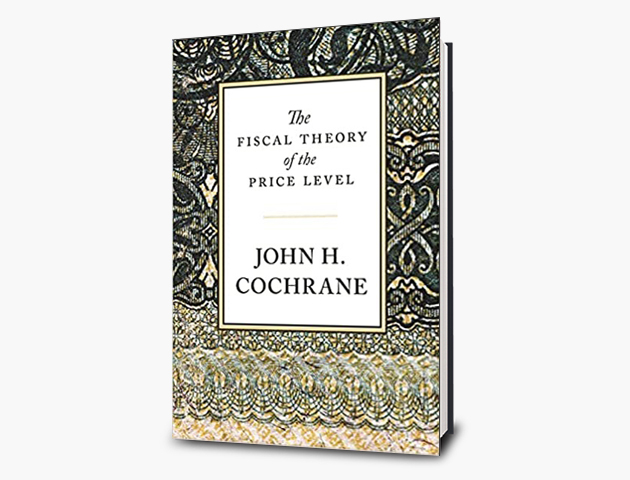
Cochrane’s recent publications include the book Asset Pricing and articles on dynamics in stock and bond markets, the volatility of exchange rates, the term structure of interest rates, the returns to venture capital, liquidity premiums in stock prices, the relation between stock prices and business cycles, and option pricing when investors can’t perfectly hedge. His monetary economics publications include articles on the relationship between deficits and inflation, the effects of monetary policy, and the fiscal theory of the price level. He has also written articles on macroeconomics, health insurance, time-series econometrics, financial regulation, and other topics. He was a coauthor of The Squam Lake Report. His Asset Pricing PhD class is available online via Coursera. 

Cochrane frequently contributes editorial opinion essays to the Wall Street Journal, Bloomberg.com, and other publications. He maintains the Grumpy Economist blog.

Filter By:

Topic

Type

Recent Commentary

Blank Section (Placeholder)Featured

Carnivorous Moose

interview with John H. Cochrane, Niall Ferguson, H. R. McMaster, Bill Whalenvia GoodFellows: Conversations From The Hoover Institution
Tuesday, May 26, 2020

Europe’s pandemic recovery includes a divided European Union struggling for consensus on a COVID relief plan. Hoover Senior Fellows Niall Ferguson, H.R. McMaster and John Cochrane discuss the health of the 27-nation EU, whose population surveys as economically progressive, more trusting of authoritarian states and less America-leaning.

Analysis and CommentaryBlank Section (Placeholder)

Jones And Fernández-Villaverde Update

by John H. Cochranevia The Grumpy Economist
Tuesday, May 26, 2020

Chad Jones and Jesús Fernández-Villaverde have updated their SIR model with social distancing. A part I find very intriguing is that they impute the infection rate and the reproduction rate from death rate data. 

Analysis and CommentaryBlank Section (Placeholder)

Get Ready For The Careful Economy

by John H. Cochranevia The Grumpy Economist
Tuesday, May 26, 2020

Ready or not—mostly not—the reopening is at hand. The economic carnage of a continued lockdown is simply too great to sustain. But the virus is still with us, so the carefully reopened economy will be less efficient than the pre-pandemic economy.....

Featured

Get Ready For The ‘Careful’ Economy

by John H. Cochranevia The Wall Street Journal
Tuesday, May 26, 2020

Reopening has costs for businesses, employees and consumers. Good thing Americans are adaptable.

Stanford Oval
Analysis and Commentary

School Of Sustainability

by John H. Cochranevia Grumpy Economist
Saturday, May 23, 2020

In a few recent posts, I was critical of university endowment practices. Why build up a stock of investment, rather than invest in faculty, research, or other core activities? Why wall that pile of assets from being spent, especially when budgets are cratering in a pandemic? When we see businesses with piles of cash, we infer they don't have any good investment projects, and the piles are ripe for diversion to bad ideas.

Blank Section (Placeholder)

GoodFellows: International Man Of History

interview with John H. Cochrane, Niall Ferguson, H. R. McMastervia Hoover Podcasts
Wednesday, May 20, 2020

Imagine the three “GoodFellows” in charge of America’s government—a modern (and democratic) twist on ancient Rome’s triumvirate. Hoover senior fellows Niall Ferguson, H. R. McMaster, and John Cochrane discuss the coronavirus-related steps they’d take if entrusted with deciding the nation’s health, economic, and geostrategic choices.

Blank Section (Placeholder)Blank Section (Placeholder)Featured

International Man Of History

featuring John H. Cochrane, Niall Ferguson, H. R. McMaster, Bill Whalenvia GoodFellows: Conversations From The Hoover Institution
Tuesday, May 19, 2020

Imagine the three “GoodFellows” in charge of America’s government—a modern (and democratic) twist on ancient Rome’s triumvirate. Hoover senior fellows Niall Ferguson, H. R. McMaster, and John Cochrane discuss the coronavirus-related steps they’d take if entrusted with deciding the nation’s health, economic, and geostrategic choices.

Interviews

John Cochrane: Reopening The Economy, And Aftermath, Now On Youtube

interview with John H. Cochranevia The Grumpy Economist
Tuesday, May 19, 2020

Hoover Institution fellow John Cochrane discusses COVID-19, economics, and reopening the economy.

Analysis and Commentary

Schmitz On Monopoly

by John H. Cochranevia The Grumpy Economist
Monday, May 18, 2020

Jim Schmitz has released the first salvo in what promises to be a monumental work on monopoly, titled Monopolies Inflict Great Harm on Low- and Middle-Income Americans. (I love titles with answers and no colons.)

Featured

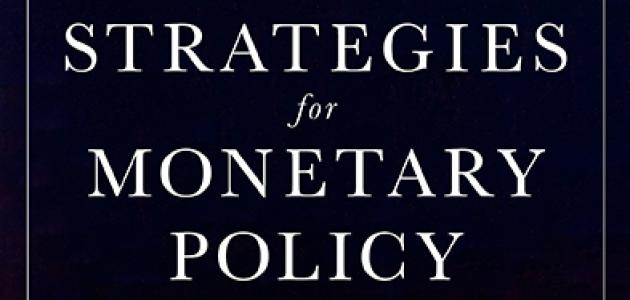
Strategies For Monetary Policy

by John H. Cochrane mentioning John B. Taylorvia The Grumpy Economist
Thursday, May 14, 2020

Strategies for Monetary Policy is a new book from the Hoover Press based on the conference by that name John Taylor and I ran last May. (John Taylor gets most of the credit.) This year's conference is sadly postponed due to Covid-19. We'll have lots to talk about May 2021.

Pages

Current Online Courses

Asset Pricing, Part 1, via Coursera and the University of Chicago

This course is part one of a two-part introductory survey of graduate-level academic asset pricing. We will focus on building the intuition and deep understanding of how the theory works, how to use it, and how to connect it to empirical facts. This first part builds the basic theoretical and empirical tools around some classic facts. The second part delves more deeply into applications and empirical evaluation. Learn more. . .