US

History

Filter By:

Type

Fellow

Research Team

Use comma-separated ID numbers for each author

Support the Hoover Institution

Join the Hoover Institution's community of supporters in advancing ideas defining a free society.

Support Hoover

In the News

George Shultz Announces 'Significant Step Forward,' Oct. 2, 1987

with George P. Shultz, Henry A. Kissingervia Politico
Tuesday, October 1, 2013

On this day in 1987, Secretary of State George Shultz said the Russians had taken “a significant step forward” in agreeing in principle to discuss an arms embargo against Iran in its war with Iraq, then in its seventh year. The Soviet Union, while serving as Iraq’s main arms supplier, also jockeyed to form an alliance with Iran. Subsequently,...

The New Deal and Modern American Conservatism: A Defining Rivalry, by Hoover fel

Davenport: The New Deal and Modern American Conservatism: Then and Now (37:18)

via Hoover Institution
Tuesday, October 1, 2013

David Davenport, a counselor to the director and a research fellow at the Hoover Institution, discusses the genesis of modern conservatism. Modern American conservatism, Davenport avers, was born in the 1930s, when Herbert Hoover took on the excesses of the New Deal. The New Deal overturned the way in which the United States worked and was governed. Eighty years later the New Deal is still the paradigm for US domestic policy. Obama is adding to the New Deal ideology with many of his policies, which are undermining US liberty and its rugged individualism. In his recent book, The New Deal and Modern American Conservatism: A Defining Rivalry, Davenport goes back to the 1930s to illustrate how the twenty-first-century discourse between progressives and conservatives grew out of the Roosevelt-Hoover debate of the 1930s.

Hoover Tower

The Hoover Institution’s Southern California Conference

Tuesday, October 1, 2013

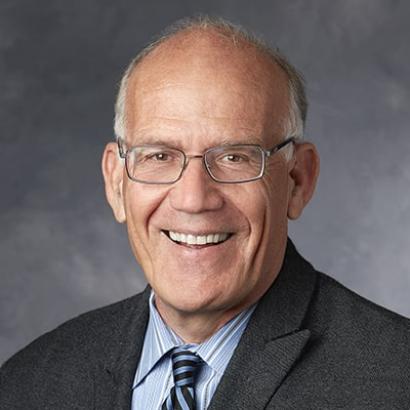
Hoover’s Southern California Conference included talks by Hoover fellows Clint Bolick on immigration, David Davenport on the New Deal and modern conservatism, and Victor Davis Hanson on the state of the United States.

News
Women of the Gulag: Portraits of Five Remarkable Lives by Hoover fellow Paul Gre

In Women of the Gulag: Portraits of Five Remarkable Lives, Gregory highlights the tragedy among women during one of the most egregious dictatorships of the twentieth century

Tuesday, August 13, 2013
Stanford

Hoover Institution Press released Women of the Gulag: Portraits of Five Remarkable Lives by Hoover research fellow Paul Gregory, a profound work that relied heavily on material in the Hoover Archives.

Press Releases
Analysis and Commentary

The Libertarian Podcast: Freedom, the Founding, and the Fourth

with Richard A. Epsteinvia Defining Ideas (Hoover Institution)
Friday, July 5, 2013
Condoleezza Rice (left), the Thomas and Barbara Stephenson Senior Fellow on Publ

Crisis Management: Kissinger, McNamara, and Rice

with Henry A. Kissinger, Robert S. McNamara, Condoleezza Ricevia Uncommon Knowledge
Thursday, July 4, 2013

This week Uncommon Knowledge brings us interview excerpts from two former secretaries of state and Hoover fellows Henry Kissinger and Condoleezza Rice, and former secretary of defense Robert McNamara. All three have influenced American foreign policy through the years and through different crises, and all three believe that the United States possesses a particular responsibility in the world. (25:47)

A Fourth of July fireworks display at the Washington Monument.

The Libertarian Podcast: Freedom, the Founding, and the Fourth

by Richard A. Epsteinvia Defining Ideas
Wednesday, July 3, 2013

Richard Epstein discusses the classical liberal Constitution and considers some of the best and worst moments in American constitutional history.

Nuclear Arms: No Time for Complacency

by George P. Shultz, William J. Perry, Henry A. Kissinger, Sam Nunnvia Hoover Digest
Monday, July 1, 2013

Shultz, Perry, Kissinger, and Nunn argue that nonproliferation efforts of nuclear weapons must carefully intensify. 

Senator Rand Paul

Senator Rand Paul discusses individualism, freedom, and national security on Uncommon Knowledge

with Rand Paulvia Uncommon Knowledge
Friday, June 14, 2013

This week on Uncommon Knowledge, Senator Rand Paul discusses his political ideas, ideals, and philosophies, noting that “we’re all born with an instinct towards individualism.” He gives his insights into dealing with immigration, unemployment, foreign policy, national security, taxes, personal responsibility, and many other issues. Senator Paul’s unique perspective and solutions could be a starting point for getting the United States back on track. (39:23)

Pages

Military History Working Group


The Working Group on the Role of Military History in Contemporary Conflict examines how knowledge of past military operations can influence contemporary public policy decisions concerning current conflicts.