Africa’s Evolving Role In A New International Order
Courted by China and Russia, and dissatisfied with America’s attentions, the continent awaits clarity from Washington.
October 7, 2026
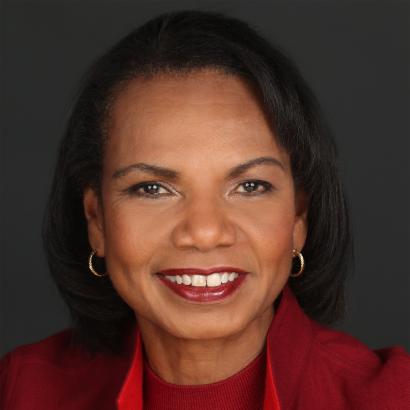
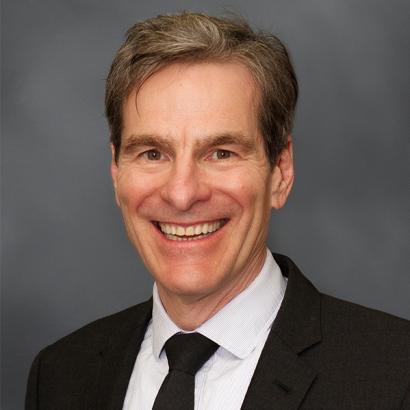
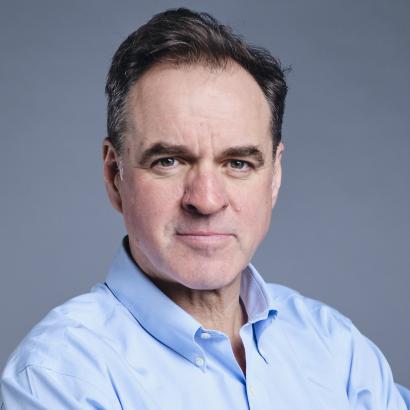
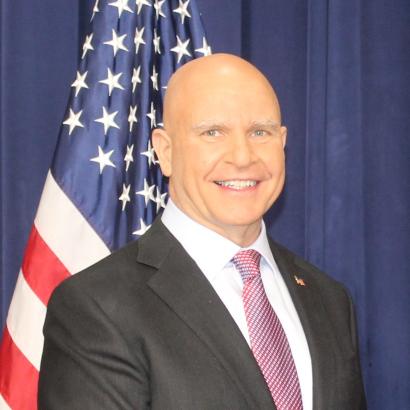
Does the current conflict in the Middle East suggest that America has learned from its recent past wars? Hoover Institution Director and former US Secretary of State Condoleezza Rice joins GoodFellows regulars Sir Niall Ferguson, John Cochrane and Lt. Gen. H.R. McMaster to discuss the prospects of an oil “shock” prompted by a prolonged closure of the Strait of Hormuz as well as a political “shock” back in the US when voters go to the polls in November, China and Russia’s losses in terms of stature and friendly regimes, plus what the Anthropic-Pentagon legal kerfuffle suggests about the role of emerging technology in history’s first AI-enabled war and the problems in being portrayed as a societal menace. Afterwards: the fellows reflect on the 250th anniversary of Adam Smith’s The Wealth of Nations, billionaires in the crosshairs of the “affordability” debate, and why they won’t be watching the upcoming Academy Awards.
Recorded on March 11, 2026.
- A short time ago, the United States military began major combat operations in Iran. Our objective is to defend the American people by eliminating imminent threats from the Iranian regime, a vicious group of very hard, terrible people.
- It's Wednesday, March 11th, 2026, and welcome back to "GoodFellows," a Hoover Institution broadcast, examining history, economics, and geopolitics. I'm Bill Whalen, I'm a Hoover Distinguished Policy Fellow, and I'll be your moderator today. Looking forward to a conversation featuring our three regulars, the "GoodFellows," as we call them. I'm referring, of course, to the historian, Sir Niall Ferguson, the economist, John Cochrane, and former Presidential National Security Advisor, Lieutenant General H.R. McMaster. Niall, John, and H.R. are all Hoover Senior Fellows. So gentlemen, be on your best behavior today because we are joined by the boss. I'm referring, of course, to the director of the Hoover Institution, former Presidential National Security Advisor, former U.S. Secretary of State Condoleezza Rice. Condi, great to see you.
- Great to be with you.
- So you should know that on our last "GoodFellows," Condi, it was last Friday, at the same time you were in Washington, D.C., and I think about five minutes after we stopped recording, our producer, Scott Immergut forwarded me a tweet. And the tweet was NBC tweeting breathlessly, Condoleezza Rice is at the White House. And about 10 minutes later, NBC tweeting, it's for college sports. But then Twitter erupted yet again after that, X erupted after that, Condi, because you were seen walking off with the president and his Chief of Staff Susie Wiles. So we could either start the show by you telling us what you told the president, but I imagine that's probably off the record, so let's go in a different direction. On our last show, Condi, Niall referred to this as Gulf War III. So my question to you is, how do we keep Gulf War III by becoming World War III, or a much bloodier regional conflict? Condi, what diplomatic guardrails, what military guardrails need to be in place?
- Well, look, we've gone through a very interesting period here, that I would go all the way back to October 7th, when I think Israel's conception of its own ability to deter attacks on its population was really shattered by that awful attack of October 7th. It was very clear that Hamas, and I have to believe, trained and equipped, maybe even planned in coordination with the Iranians. And then, of course, you had the action in June between the United States and Israel, which was a coordinated action to deal with, largely with the Iranian nuclear program, but also knocked out Iranian air defenses in large part. And so then, finally, the action that we've seen over the last week plus, which I would state in the following way, and I think one way to think about guardrails is, do you have a clear set of objectives? And the objective that I see here is to render Iran a non-factor militarily in the region, in other words, to neuter Iran's military power in the region. And we see that in the sinking of their navy, the destruction of their air force, going after the missile capability, and of course, after their command and control, quite deep into their command and control. And so while everyone wants to talk about what's next and so forth, I think those are all legitimate questions, but if you can achieve the neutering of Iran as a conventional military threat, the weakening of its tentacles, like the Shiite militias and Hezbollah and the Houthis, and if you can prevent them from having a conventional shield for their nuclear capabilities, or their nuclear ambitions, then you have achieved something quite dramatic in the region.
- Can we talk about the lessons of previous Gulf Wars? Because this is a field in which you are certainly an expert. Is the United States acting like it's learned lessons from its previous military experiences in the region?
- Well, you could say that the engagement here is essentially through the air. There is no evidence that there would be large-scale mobilization in any way of ground forces for some kind of activity. It took us almost a year to mobilize the force that we sent into Iraq. So you see nothing like that. And perhaps the president's words about this, that he doesn't intend to have American ground forces in the mold of a large-scale presence, even though he won't rule out ground forces, as H.R. would tell you, there are all kinds of ground forces, not all of them have to be division-size detachments, but yes, maybe there is a sense that you destroy the military capability. Now, I will say, and it goes back to the question Bill asked, there is a little bit of confusion about the regime change aspect of this. Because it's very hard to change a regime from the air. And it is also very hard to shape the politics afterwards from the air. And so the first lines about giving the Iranian people an opportunity to reclaim their future, that's fine, but one has to be a little careful and not talk too much about trying to determine the future of Iran, if you're going to keep your objectives relatively limited, and the kind of military objectives that I was speaking of. So maybe there have been lessons learned. But I would say, depending on what your objectives are, you aren't gonna probably do it from the air.
- Condi, I think there are other lessons, too, I think, from other wars. Certainly, the kind of land forces you could employ were those we employed in the opening campaign in Afghanistan at the end of 2001, beginning of 2002. If, for example, the president decided to support opposition groups, arm those opposition groups, empower them with air power, you could see scenarios in which there are some uprisings, for example, the regime tries to repress them, the U.S. strikes in support of those who are rising up, and provides some armed capability to take over parts of the country over time. I think that is an option. But I think the other lesson, other than the successful military campaign in 2001 to 2002 in Afghanistan is how unsuccessful we've been able to, we've been in the past in eliminating missile and drone threats exclusively from the air. This is the big problem that we're facing now. And, of course, we've learned this many times. I mean, you know, the Allies learned it in World War II with the V-1 and V-2 threat, which it tried to neutralize from the air. We learned it again in the Gulf War in '91 with the Scud missile threat toward Israel and had to employ special operations forces, special forces to roam the desert, to identify them on the ground. Israel learned that lesson in the 2006 war in Lebanon, you know, when they tried to deal with that threat from Hezbollah exclusively from the air. So it's gonna be a tough mission, I think. I think our forces have done extraordinarily well in dramatically reducing the launchers and the missiles and the drones. But it's just a tough mission, especially when facing kind of the opening of the Strait of of Hormuz. And I wonder what your thoughts are on that and on the economic ramifications of what now looks like it's gonna have to be an extended campaign.
- I think you just lit John's eyes when you talked about the economic ramifications. But let me start with each of those. I think, in a country that is 90-plus million people, twice the size of Texas, when one starts talking about supporting opposition, particularly ethnic opposition, that's a big idea, and particularly some of the stories that we're running around about let's arm the Kurds, or let's have the Kurds come in from Iraq, you know, I'm not sure you wanna go there. Because you then bring Turkey and Turkish interest in, in important ways. I'm not sure about arming Azeri. I just, I think there's a real, for me, set of caution lights about arming opposition. We had a different circumstance in Afghanistan. Those were well-organized militias that we supported. They'd been fighting for years. They themselves were armed. They knew those mountains better than anybody else. Arming the Northern Alliance or arming Karzai, that's a totally different circumstance. One thing that regimes like the Iranian regime do very well is they make sure they have a monopoly on the use of force. So I can pretty much guarantee you that there aren't very many people who are armed inside of Iran. So that would have to have an outside power do it. And I think it's relatively dangerous to do that. I'll come back to how it might happen anyway, but I don't really think that's a logical thing for us to do. And I know there were these stories about the Kurds. I also know that those stories were just stories. The second point that I would make is, yes, the missile threat is very hard to eliminate from the air. It's not hard, though, to degrade it. And I think what they're doing is they're degrading it. As you know, H.R., every time something fires, you go after the launcher. And at some point, you do degrade their capability. And oh, by the way, you may have to do it time and time again. And one of the weaknesses of Iran right now is they're totally exposed to air power. And so if you have to keep going back, you can. The final point I'll make is about the economic piece of this. Look, there's no doubt about it. Everybody knew going in that the Iranians' real ace in the hole, if you will, was to do something in the Straits of Hormuz that would make it impossible to transit the Straits of Hormuz, mostly, by the way, because people are fearful of transiting the Straits of Hormuz. I've seen a little bit here and there that we may have had to destroy some mine-laying apparatuses of the Iranians, but since they're letting, by some reports, Chinese ships through, it would be somewhat stupid to mine the Straits of Hormuz. So this a little bit of a mixed story. But what they can do is, they can terrify anybody for going through there by threatening to attack ships coming through. And it has virtually the same effect. And it's not just oil tankers that are not getting through. It's container ships now that are not getting through. So there's no doubt that it's going to have an economic impact. It's having a... Price of oil is now over $100 a barrel. By the way, when I was secretary, it went to $147 a barrel. So we have seen this before. That will eventually have a domestic issue for the president because it will show up at the pump in time. But I have to assume that it was understood that that was one of the potential, one of the potential downsides of this action. And then it becomes a question of, how long does this action go on? The other one that we've not yet talked about is the Iranians' decision to start going after American allies in the region, so the UAE, Kuwait, Bahrain, saying that they're only going after American assets there, but I don't know that the hotel, the civilian hotel in Dubai, in which I've personally stayed, would be considered a U.S. military asset. So the Iranian decision to do that, I think, really, it's rather puzzling because rather than separating us from our allies, it pushed us together. Whether or not, if this goes on for much longer, you're gonna start to hear what we often heard from those countries. Kind of, could you get this over? But quietly, sotto voce, rather than publicly.
- Well, I'm glad Condi started with war aims. 'Cause as much as all of us would love to free the people of Iran, as we'd love to free the people of Afghanistan and Somalia and all sorts of horrible places, that's not our war aim. The war aim is that, first of all, Iran will not destroy Israel. And second, it will not threaten us and our allies and cause trouble around the Gulf. That's the war aim. Now, you know, it's... Now that they have attacked the other countries and the Strait of Hormuz issue has come up, I'm interested also in the constant drumbeat that I'm hearing in the media. Oh, you know, this is too economically dangerous. Trump has to stop because it's too economically dangerous, which would be to lose. That would be absolute victory for Iran if they now have a veto over what we do, because, hey, I can threaten the gas price. I can threaten the food going into the other countries. I can threaten to send missiles off to your refineries and so forth. That is the war aim, that they will not be able to do that, I think, is big-
- John, John, could you do some economics? Because I think what our audience wants to know is, if the Strait of Hormuz remains closed for the rest of this month, that's 20% of the world's oil supply offline, about the same percentage of its gas supply. What does that mean for the economy? Can you, as our resident economist, answer that?
- Well, it depends where you live. So it's a major supply shock to China and Europe. The U.S., fortunately, is an oil exporter, thanks to our fracking development. So although the cost will go up 'cause it's a world market, it's less of a problem. And we are less oil dependent than we were. 'Cause we're a services economy. We don't make stuff anymore. A good advantage of that is, well, you don't need the oil to make stuff anymore. So I think it's limited. A month of closure would be very bad. But losing this war and having that as a constant threat over us so that we cannot act in the Middle East might be worse. Our forefathers went through much worse economic deprivations to win World War II. And so if gas goes up only to what it costs in California in the rest of the U.S, you know, perhaps we can weather that.
- I would say here, I'm gonna borrow a phrase from Kennan in his famous Mr. X telegram. If you think about the relationship between what happens internally in Iran and what they are doing externally, or have been doing externally, regimes like this rest on three pillars. One is the ability to coerce and oppress their people. And to the degree that any of that capability is undermined, to the degree that if you're in the Iranian elite, you've got to be looking to your right and left and asking, who's the Mossad agent here? Because the level of penetration of the Iranians is just extraordinary. And I assume it's mostly Iranian intelligence. Perhaps some of it's ours as well. So the first is the coercion. The second is this myth of Iran as being able to unite the Shiite, being able to spread the Islamic revolution. Remember, this is the Islamic Republic of Iran. This is not just about Iran. This is about a messianic duty of Iranians to do things outside of their borders. And if that myth is also exploded, then you have the third question, which is, even if this regime looks stable now, sometimes these regimes look stable until they're not, and so what is going on inside? When Ayatollah Jr. was not announced for several days, because Iran specialists will tell you, a lot of people didn't think hereditary Ayatollah was a good idea. And so is he really popular? Does he have a base? What do the IRGC people, who are apparently 40% of the Iranian economy... If the Iranian economy is becoming zero, 40% of zero is zero. What do they think of their circumstances? And so I don't think you have to look to people in the streets to say that there are a lot of tensions within this regime that may come to play. And whatever we do, I hope we keep pressing for maximum pressure on this regime. One of the really big mistakes of the Biden administration was returning that money to the Iranians. Because we know what they did with it. They didn't relieve the economic plight of their own people. They started funding Hezbollah again. They funded Hamas, and by the way, found out because somebody leaked the budget. And so if you keep maximum pressure on this regime, borrowing from Kennan, do you want to deny them the easy course of external expansion until they have to turn to deal with their own internal contradictions? And this regime is one big internal contradiction. It is unpopular. It may well be unstable. It is deeply penetrated by its enemy Israel. And so maybe it takes some time. But I wouldn't just write that the Iranian regime has, quote, survived this. We will see. We will see in the future. One final point, to John's point about the economic consequences, look, I'm quite sure, having been in these circumstances, as you have, too, H.R., there are people in the economic side of the government who are saying, when's this gonna be over? When's this gonna be over? Why doesn't CENTCOM tell us how many more targets they have? How many more days is this gonna take? And CENTCOM's undoubtedly coming back and saying, you know, this was a target-rich environment. We have some work still to do. And those tensions will continue. And the president will eventually have to decide. But I heard a very senior diplomat say the other day something I very much agree with. And this senior diplomat said, by the way, he didn't particularly initially support doing this, but now he hopes they don't stop too soon. And I do think the point about making sure that the military aims are met is extremely important.
- I just wanted to add two economic points. One is that Iran, also, its main export is oil, which has to go through the Strait of Hormuz. So in some sense, they're putting tariffs on themselves. The other is, don't underestimate substitution. Back in 1979, you know, Saudi Arabia was the main, and OPEC was the main source of oil, and there wasn't any others. But there's all sorts of oil all over the place. And the supply curve of oil is pretty darn flat. So if this lasts a while, there's a whole bunches of wells in West Texas that can get turned on that weren't really efficient at current prices. There's a lot of the North Sea that can get turned on that really isn't deficient at current prices. So I think that will buffer us as well.
- I hesitate to disagree with, John, on this.
- Oh, no, no, you know more about it than I do, I think.
- Well, I agree with Condi about the regime. I was very struck by something that Karim Sadjadpour just wrote, and he's somebody who knows Iran much better than I do. He said it's a little bit like the Iranian Kim Jong Un, that the regime is actually more radical than it was under Mojtaba Khamenei's father. But it seems to me that's not the right analogy. This is more like the bunker in 1945, if Hitler had had a son. There might have been a brief period when that son was said to be in charge of the Third Reich, but brief is the operative word. The man has a price in his head. And as Condi rightly said, the Israelis probably have a pretty good idea of where he's hiding out. So I don't think this iteration of the Islamic Republic has a very long shelf life, though heaven knows what comes after that. But John, on the economics, I think, when you see oil prices up 20, 30%, and as we speak, an oil tanker ablaze in the Strait of Hormuz, the insurers and the shippers are not coming back. The U.S. Navy can't provide escort services. It's got other things to do. Nobody else wants to do them except the French, when the war's over. Thanks, Emmanuel, for that. So I think the economic problem's very real. And the reason I think it's real is that if you have oil at this price, it feeds into inflation pretty fast through the gas price. And with the American public more exercised about affordability than almost any other topic and the midterms bearing down on Republican candidates, this is a problem, and we shouldn't understate it. Even if the regime is in its death throws, which I think it is, as Condi says, I think the economic shock is already a big one. And the longer this strait remains closed, the bigger the shock is gonna be.
- Well, you mentioned the political shock of gas prices, which I grant you, but I'm still betting on the forces of substitution, other forms of supply, stockpiles and so forth, to get us through even a month or two, but we'll see.
- I would just also make a point about the political shock. There is going to be a difficult midterm for the party and for the president anyway. If this had never happened, there was going to be. First of all, historically, with the exception of George W. Bush in 2002, who was riding the wave of the 9/11, this happens, and so it's going to happen. It may be a question of degree. Maybe there will be, the American public will take more out on Republican candidates as a result. But I do think we have to recognize that there's a larger issue here, which is, we have been at war with this regime for 47 years, or they have been at war with us for 47 years. And when people say, well, you know, we should wait until they were an imminent threat, these people... Bob Gates was the note taker for Zbig Brzezinski, when Carter sent Brzezinski to meet the regime, and after they came to power. And Brzezinski said to them, we'll recognize you. They said, give us the shah, who was undergoing medical treatment in the United States.
- This is the meeting in Algeria between Brzezinski and-
- Yes, this is the meeting in Algeria.
- Yeah.
- Brzezinski said, Americans don't do that. And three days later, they sacked our embassy and kept our diplomats for 444 days. Their tentacles, Hezbollah, killed 241 Marines in Lebanon. They have a price on the head of the president of the United States, former presidents of the United States, former secretaries of state. And if you ask what percentage of American deaths in Iraq, before we were able to put more protection around them, around our troops, people will give you estimates from 70 to 75% from IEDs and roadside bombs that the Iranians build. And so the idea that this regime, we could just kind of live with this regime, I only wish that we had made clear at the time when I was negotiating with the Iranians about their nuclear program that we were not gonna tolerate this forever. And, you know, you can't... You can wait until a threat is imminent, and you almost always pay for that.
- Another point on this, I just, I think it's really important to make this case to the American public in a more consistent manner. You know, I mean, they were racing to expand the magazine of missiles and drones, and we're seeing the evidence of that now. They were restarting the nuclear program. That would've taken 'em some time, but they were building up this massive capability that you're seeing them employ now, and employ it against Israel. But actually, I think they fired a heck of a lot more missiles and drones at the UAE than they have even against Israel. So it's a threat to the U.S., our Gulf allies. And as you mentioned, you know, they have blood on their hands for thousands of Americans, in my view. And, you know, too many of my soldiers were killed in Iraq by these EFPs and by their agents. You know, the raid that we conducted in Southern Iraq where we rolled up Mullah Daduk because they were trying to Arabize the Iranian militias in the south by using Lebanese Hezbollah trainers, I mean, they've been at war with us for 47 years, Condi, and we can't say it enough.
- Can I take a moment to look at the global picture when we've got Condi here? Because in all of these events, it's the second- and third-order consequences that tend to get you. And it feels like this war is already a net win for Vladimir Putin. Not only is oil price, is the oil price up-
- I could not disagree more.
- Oh good.
- All right.
- Reassure me.
- For a short period of time, he will have a higher price of oil. 30% of his refining capability, by the way, is gone thanks to the Ukrainians. And he will, what is... He's gonna fund this war a little bit better than he would've funded it before with an economy that's collapsing anyway. But think about the broadest strategic picture. It's been a really bad couple of months, actually almost a year, if you're Vladimir Putin. Your friend Bashar al-Assad is someplace in exile, and your bases in Syria are gone. Your friend Maduro is in an American jail. And your Cuban henchman are being sent back to Cuba, which, oh, by the way, is itself in near collapse. And you've just watched the American military once again demonstrate how extraordinary it is. If you wanna call that a win for Vladimir Putin, really? I have to say, if I'm Vladimir Putin, you know, while I've been trying to take a rust belt called Donbas, the Americans have taken out my friends in Venezuela, have seriously damaged my friends in Iran, the Cubans are about to come apart, and I've lost Syria. I'd call that a strategic defeat.
- Can I add something to that? I would say, I would also say it's a huge loss for China. Because what China was able to do is portray themselves as a power broker in the Middle East. They were able to do that, in large measure, because the Biden administration's not enforcing the Trump era sanctions, allowing that economic pressure to dissipate from the U.S., and the belief that the Biden administration wouldn't do a thing against Iran militarily. So he had no military sway, no economic sway over Iran. And that allowed China to come in and say to the Gulf States, hey, you need us. And this is one of the reasons they came in over top of the normalization deal between Saudi Arabia and Iran that the Omanis and the Iraqis brokered. And they don't have that anymore. I mean they're seen, I think, after the defeat of Iran and the defeat of Iran's ability to project power in the region, they will lose all of that influence. And we're gonna wind up with, you know, clearly having the keys to their gas station. I think it's a huge loss for China too.
- One other thing about China, you will notice that the Chinese have been relatively quiet here. It's because from their point of view, they really want this summit with Trump to go forward. And that's the most important thing for them. I mean, Wang Yi basically said, oh, this is unpleasant, but you know, there are more important things to do. And I'm quite sure they don't really want split screens of us bombing Iran while they're meeting. So they're probably, as much as anybody, hoping this is over pretty soon. And they probably also are saying to whatever friends they have left in Iran, you know, playing around with oil prices actually hurts the United States less than it hurts us.
- Condi gave a beautiful speech on the casus belli here, but that is very weak right now. The polling is not strongly in favor of it. And the common theme is, you know, the president has not explained what we're doing here. And that, I think, is the big weakness, that America might, you know, coming up to the midterms, not have the guts to see this through. So can you give advice to your friends in the administration? I mean, how do we get the rest of our country to see this as such an existential crisis, and such an opportunity, that it might be worth paying 50 cents a gallon more for gas between now and the midterms. 'Cause otherwise, we can't get anything through Congress. When you did Iraq, there was a congressional vote, and it was pretty, I forget the numbers, it was pretty darn unanimous. The Democrats voted for it. So that is really the key weakness I see right now from the U.S. point of view.
- The messaging has been weak. I admit that, or let me say it's been mixed. And I do think, if you saw the president's statement on that Sunday, on Truth Social, it was actually very good. It went through some of this history. But there's been a tendency to keep changing. Well, when you say you want the Iranian people to be able to seize their future, the first thing that comes to people's minds is, we are gonna change the regime, which, of course, we're not going to do. And so, yes, I think Marco Rubio has done a very good job of laying out the case. I think, back on that Sunday, the president did. But, you know, you have to keep saying it over and over and over. And I think you have to keep reminding people how very dangerous this regime really, really is, and that this is, as you say, John, an opportunity. And I don't think that the polls are what will take us out of the war. I do think, as Niall has been saying, the economic pressures felt by the White House and felt by the president. But I think you just have to keep saying, sometimes short-term pain in order to really gain something quite important here, which would be an Iran that cannot do the things that it has done for 47 years.
- We have only about 10 minutes left, Condi. So I'd like to squeeze in a question on something that I know you care very much about and have steered the Hoover Institution in its direction. That's technology, since we're in Silicon Valley's backyard. I want your thoughts on the clash between Anthropic and the Pentagon and what, if anything, this suggests about AI's comfort being involved in what we might call the military industrial complex.
- I have to say, I don't think either side covered themselves in glory on this. So unfortunately, we are in a moment when I personally, and many people around me, but I admit I live in the valley, I am at Stanford, think that some of the scenarios that are being built about how we will use AI are pretty far in the future and also pretty farfetched. I do not know a self-respecting military that would want to have autonomous vehicles of this kind led by AI in its nuclear program. It is actually against the laws of the United States to have mass surveillance of the American public. And so I'm not quite sure that it's useful to lay out constraints that may not be needed. This is, what is needed is a more sober discussion of how we can use AI now to improve our national security, our education, our drug discovery. We are at the infancy of what this technology can do. And to start going way out into the future about how it might be used for nefarious purposes, I think, is actually not helpful. I'm sorry that that debate took place, because it now colors the questions of how AI gets used in the military. I would much rather have had military people, H.R. among them, talking about how this may make it possible for the young lieutenant to have an agent that helps that young lieutenant to make decisions within the context of what he's been told to do. I think we even have, we have a kind of popular culture problem with this. So my view is, I wish the first AI robot had not been a killer robot in Hollywood.
- Open the pod bay doors, HAL.
- [HAL] I'm sorry, Dave. I'm afraid I can't do that.
- It would be nice if the robot were the one who could help your grandmother get dressed. Our popular culture and some of the elements of our debate are painting this technology in its most extreme and potentially devastating forms. And if you wanna talk about the implications of this for the technology race, let me call it that, with China, we're doing great on the innovation side. The Chinese are adopting more rapidly than we are. They're diffusing their models into the international system more rapidly than we are. And we're having debates about mass surveillance of American citizens, which is against our laws. And that makes my last point about it. Another reason that I really want us to, quote, win this race, whatever that means, is that we are a democracy, that if something goes wrong, and things will go wrong... A good friend of mine said, it probably took the caveman a while to realize that this thing that they discovered called fire, that you shouldn't touch it, all right? So things will go wrong. But if they go wrong in a democracy, we will have investigative reporting. We will have congressional hearings. If it goes wrong in an autocracy like China, they will do what they did with Wuhan. They'll cover it up, they'll lie about it, and we'll be surprised. I've, tongue in cheek, said... My computer science friends are split on whether this thing called AGI, you know, a generally intelligent model is really in our future, how really intelligent it would be. Would you put it in a body, in other words, in a robot? And then what would it do to us, the humans? So that's an interesting debate. But I've been saying, you know, if there is going to be an AGI-driven robot, I want her to speak English, not Chinese. And to me, that's the most important part of this. That's why I think continuing American innovation, pushing American innovation, not getting too caught up in what the really bad future could be, is also an important national security imperative.
- Yeah, I would just agree with that and say, you know, really, the technology's neutral. It's really how the user uses it. And we have, you know, we have oversight processes. We have, you know, the rule of land warfare that we follow in the Army. You know, we are bound in terms of, you know, executive authority and the use of AI by the oversight of the Congress or review of the judiciary. We don't have mass surveillance in our country. So I just think, in many ways, it was just a, it was a debate about a non-issue, in terms of how the U.S. government employs the technology. And as Condi has alluded to, if you have a technology that is competitive in nature, like AI is, especially AI that is applied to warfare, and you want rules for this technology, you need all parties to that competition to sign up for the rules. And hey, even if China signs up for the rules, they're just gonna lie about it anyway. So I think it's really important for us not to constrain the development of these technologies and to recognize that we have processes in place to help ensure the legal and ethical and moral application to the technology.
- This is the first AI-enabled war that the U.S. has fought. I mean, it's not as if this lies in the future. The targeting that has been done by the U.S. Air Force was partially enabled by Anthropic, in tandem with Maven. So it is here already, AI-enabled warfare. The question in my mind is, sure, we can certainly destroy Iran's conventional forces, but the one thing that I'm worried about is what the Chinese are learning as they watch us do this. There is a Chinese naval vessel gathering data not far from the war zone. The one thing that I learned last week in conversation with a very senior American military officer was that they're certainly monitoring the depletion of our stocks of precision missiles. Those can be fired off in a couple of weeks. It takes many, many months to replace some categories of these weapons. And the message I took away from that meeting was, the U.S. needs to move much faster to build and scale the next generation of weapons. Because if there is to be a showdown at some future date over Taiwan, we don't want to go into it with our stocks depleted as they're going to be at the end of this campaign. So the one other power that can do AI-enabled warfare is China. And China is surely watching our performance carefully, both in terms of how we do it and how quickly we run down our stocks of weapons. Is that a concern, Condi?
- Well, look, there's no doubt that they're watching. We watch every time somebody is doing... Every time there's a war, your adversaries will watch. So there's nothing new about that. I'm sure that goes back centuries and centuries and centuries, so that's fine. I just wanna say one thing about AI-enabled warfare and the point that I made about way into the future. There is no more conservative organization that I've ever dealt with than the American military about the laws of war, about what one should do and et cetera. And so my point was, to have an argument with the Pentagon about what you might do with AI in your nuclear program or in keeping human beings out of the loop or mass surveillance of American citizens, that was what I was talking about, not that there isn't AI-enabled warfare now. There is, and there should be. What are the Chinese reading? You know, it's very easy when you're sitting on our side to say, oh, we're driving down stockpiles. And I agree with you, by the way, we should be moving faster both on the current production and on future innovative production. Absolutely agree there. But it's very easy to sit here and say, oh, you know, we're running down stockpiles. We are depleting our stockpiles. They're learning about us. They're also learning that we're really good, right? And if there's a deterrent in warfare, it is, those guys are really good. And so if I'm Xi Jinping, and I'm thinking about an engagement in Taiwan... And you know, we've all sat in these meetings. Most people don't think that a kind of cross-straits invasion of Taiwan is what they're thinking. They're thinking about something that's much actually more nefarious, which is to cut underwater sea cables, cyber attacks against Taiwan. I was with some senior Taiwanese, former Taiwanese officials, and they were talking about, you know, trying to infiltrate Taiwanese politics and to bring people who would be more pro-Beijing into the Taiwanese political system, so you know, what's been called Anaconda, the strangling of Taiwan. So, but let's leave that aside. Even if I were Xi Jinping, and I were thinking, you know, I really think I'll challenge these Americans, really? I've just decided that even the military officer who I apparently went to kindergarten with is not loyal, and I have imprisoned him on charges of sharing nuclear secrets with the Americans. And this has happened multiple, multiple times now in recent months and the last year with Xi Jinping. So if that's the military that he wants to send against an American military that he has just watched not only destroying Iran's military capability, but having found Maduro in the middle of the night and whisked him away to an American prison, I think we're actually reinforcing deterrence, not undermining it.
- And he's watched us adapting. He's watched our defense systems, and the Russian and Chinese air defense systems. He's watched us learn to shoot down drones quickly. He's watched the, oh, you know, the big improvements in drone. And to your AI point, nobody is worried about Europe's AI, and they're the ones with all the rules to make sure it's not dangerous. And there's a larger question of regulating AI. There's just no case that this has to be regulated preemptively, that before Orville Wright can take off in the 1903 Flyer, he needs to present the 737 maintenance manual already done. This is one, even technologically, you can see the problems, and you can fix the problems.
- Right, we have to go. Our secretary's time is coming up. But Condi, in deference to your vast knowledge of football, let me ask the following exit question, and it has to do with armchair quarterbacking, hawkish armchair quarterbacking, if you will. I've seen suggestions that we should seize Kharg Island and cut off Iran's oil flow. We should drop special forces inside Iran and seize the enriched uranium. So the question for the panel, are boots on the ground inevitable? H.R., why don't you go first?
- Well, there already are boots on the ground. I mean, all those air defense weapons systems that you see operating in the Gulf, you know, who's doing that? All the logistics infrastructure. And so, you know, I think, at some point, there may be limited objectives for land forces. Because really, all of the problems that show up in the aerospace and maritime domains originate on land, like where people live. So I think, at some point, it depends on what your political objectives are. If they're narrowly circumscribed, and they involve, you know, mainly just ensuring that Iran does not have the capabilities to project power outside of its borders, we may be able to accomplish that exclusively from the aerospace and maritime and cyber domains.
- Yeah, this boots on the ground is a buzzword that ranges from a commando mission to go take some a uranium out, to an armed invasion that wants to take, hold territory. And we're not gonna do that. We are gonna do the former. And air power is pretty effective. You know, we keep saying nothing changes from air power. Japan actually gave in from air power. Now, a horrendous kind of air power that we are not even contemplating on Iran. But air power can destroy things pretty effectively.
- Niall?
- I agree with H.R. There are already boots on the ground. I'd be amazed if General Caine wasn't making considerable useful already of special forces. The president has a big decision to take, and he has to take it soon. And that decision is whether to scale up the special forces presence to try and ensure that the Strait of Hormuz is navigable. And that is gonna be one of the key decisions of the coming days. It's the risky option in some ways. Because there's bound to be talk about mission creep. But I think, if he doesn't do it, there's a risk that the Strait of Hormuz is too dangerous to reopen, and then the economic costs start to become a major problem. So this is a key moment. It's the right question to ask. It's not like the 82nd Airborne. It's not 2003. But I think it might have to be scaled up significantly to deal with the problem of drone and potentially mines in the strait.
- I would just close by saying, yes, there may be some reasons for exactly the kinds of things that H.R. and Niall are talking about. I do think the administration did a very, very good thing. They did not say this was gonna be cost-free. In terms of American lives, I think they made very clear that they understood that, as sad as it is, we may lose some people. And I appreciate that because sometimes it's a little easier to just consider that warfare is really just something that is pretty clean, and you get in, and you get out, and so I appreciated that. I just wanna say one thing in closing about the highly enriched uranium, you know, the 60% grade we believe that they have. You know, yes, I would love to be able to get the 60% highly enriched uranium out, but it has to get to 90% in order to be weapons grade. One has to be able to spin centrifuges and do it in order. I know the Iranian program inside out, 'cause I negotiated about it. If you have destroyed the conversion facility, if you have made those centrifuges so that they cannot run continuously in order, if you have made it hard to get the enriched uranium to 90%, you're doing a lot to make sure that they cannot have a nuclear weapon. They may have some nuclear capability, but they don't have a weapon. You have to have fuel, you have to have a bomb design, and you have to have delivery vehicles. And so every time we mow down one of these conversion facilities, we don't just set them back; we make sure that, for some time, they cannot realize their nuclear ambitions, which are, and probably will be for a long time, a part of this regime's playbook. But as long as we keep them bottled up in Tehran, unable to build a nuclear weapon and unable to threaten, in a large way, to spread the Islamic revolution, we've achieved a lot.
- Condi, we'll leave it there. I think I can speak on behalf of my colleagues in saying how much we deeply love having you as our director. It is truly an honor to be associated with you and, of course, your infinite patience in dealing with we crazy fellows.
- Great to be with you.
- Okay, enjoy Augusta.
- Thank you.
- And now on the lightning round.
- [Announcer] Lightning round.
- Niall Ferguson, I wanna start with you. For some reason, you saw fit to post on social media that this is the 250th anniversary of the publication of Adam Smith's "Wealth of Nations." What possessed you to do that?
- Well, I know we've a lot to celebrate this year. But it's not a coincidence that "The Wealth of Nations" was published in March of 1776, a little bit before the Declaration of Independence, July 4th, the same year. I went up to Edinburgh to hear my good friend Dambisa Moyo give a lecture about the significance of Smith's great work. And I observed on the occasion that the connections between the Scottish Enlightenment and the American Republic are much, much more important than is generally realized. And Smith deserves credit because if you read "The Wealth of Nations," you'll see that he's very sympathetic to the American colonists in their complaints about government from London. So everybody who's celebrating the foundation of the Republic should also be celebrating Adam Smith's foundation of economics as a serious discipline.
- John, is he overrated or underrated, Adam Smith?
- You cannot overrate Adam Smith. This is, you know, like this is the bible to... What the Bible is to the Catholic church, Adam Smith is to economists. If I could just take a minute, you know, why is it so important? It is not from the benevolence of the butcher, the brewer, or the baker that we expect our dinner, but from their regard to their own self-interest. Greed is good. Well, greed is not bad. Or every individual neither intends to promote the public interest nor knows how much he's promoting it. He intends only his own gain. And in this, as in many other cases, is led by an invisible hand to promote an end which was no part of his intention. People following their own self-interest do public good. In England, Niall will fill us in, I'm amazed looking, historically, at how much economic restriction there was, who could have what job, what you could do, what you could charge for it. Economic freedom, just a little bit of economic freedom has made us immensely wealthy. He started, it was the beginning of the Industrial Revolution, maybe two, maybe $3,000 per capita GDP. We're now at 80. And life expectancy and child mortality, you know, that idea, a little bit of economic freedom is what made us wealthier. And the idea that we're still stuck, our ethics haven't... It's really an ethical book. It's a moral book, saying that that business and trying to make yourself better by serving your fellow, by providing products and maximizing your own profits, is in fact socially beneficial. It's the move from a zero sum society, where I can only get richer by making you poorer, to a positive sum society. And we should celebrate rather than tax to death our billionaires. They have provided so much wonderful stuff. Freedom works, and really that's the bottom line. And it goes with, just one last point, it goes with the same vision of the Declaration of Independence, 250 years ago was a great year, that a social system that channels people's pursuit of their own self-interest doesn't think that they're ever gonna be, you know, just wonderful, benevolent. That is a system that produces great freedom for all of us and great wealth.
- John, you just stumbled into the next question, which is, file under the problems which I wish I had, by the way, Bernie Sanders wants to levy a wealth tax on billionaires in California. There may be a ballot initiative which will impose a 5% flat tax on, a one-time tax on billionaires as well. Good idea, John?
- You wanna put the T-ball right here and watch me go after it? I mean, I think all of us see how terrible an idea this is. You know, get rid of the rich, either through the guillotine or the tax, has been an answer to a question for hundreds of years. This is not only not gonna raise any revenue for California, the billionaires are already leaving and taking their businesses with them. You know, don't tax capital. Don't tax the product of people investing in great businesses, producing great products for us. You know, that's the society we live in. And it's just immensely destructive and counterproductive.
- And Niall, affordability, is that what's driving this?
- Well, affordability is interesting because it's the thing that the pollsters find the public cares most about. And it's the biggest political headache for Republican candidates ahead of the midterms. I think, when the public hears affordability, it does mean something different from what John's profession means when they talk about inflation. Because the profession of economists likes to talk about core PCE inflation, and they look at the year on year percentage change. And as long as the percentage change kind of stays constant, economics declares victory. The public has a completely different conception. If prices went up, as they did significantly in the period after the pandemic, they'd like them to come. And they don't focus on the core measure. They focus on the things it excludes. They focus a lot on energy. They focus a lot on food. That's why affordability's gonna become even more of an issue when gas prices rise, which they will, quickly. It'll be in the next month's data. That's how fast crude oil prices translate into prices at the pump.
- H.R., I've not forgotten about you. The Academy Awards are this weekend. Question, are you in the lovely Katie McMaster holding a party? Are you gonna watch it together? Do you even care about the Oscars?
- I'm not gonna watch at all, Bill. I'll watch maybe some of the coverage afterwards.
- Okay, well, I wanna get the panel's thoughts on this. This used to be a big deal in America. People would host parties and watch the Oscars, great suspense to see people turn out in their finest. But the ratings stink, and I don't know, can you guys name two movies, and two actors and two actresses up for a nominations? I'm hard to... John, what's happening in the movie industry? What's wrong here?
- Well, what happened to the play industry? I mean, you know, the movie industry has been substituted for by all sorts of other electronic entertainments on your tablet. So it's just not culturally important anymore, in my view. But, you know, I don't watch movies. Oscar night and Super Bowl Night are great for me and Beth 'cause we can go out and go to a really nice dinner at an uncrowded restaurant.
- And Niall, I'll give you the last word here. How insufferable will the politicizing be at the Oscars? And maybe also compare BAFTA versus the Oscars. Go there, is the British version as insufferable as the American version?
- Equally, possibly more so. There are few sites more despicable than actors and actresses virtue-signaling. Hollywood went woke and is going broke. It's quite hard to change that because everyone connected with the movies is wildly to the left. The champagne socialism is rampant. And John's right, other forms of entertainment have displaced going to the movies, just as going to the movies displaced going to Vaudeville shows. Games are a much, much bigger business now than movies. I don't play games, never have done. But I know when I watch my children's generation that they play games rather than going to the movies. So the Oscars is just irrelevant. I couldn't care less who wins an Oscar. The movies are all dreadful. They've been steadily more insulting to the intelligence with every passing year of my life. And we already said in a previous episode that Robert Duvall had this right, but let's say it again. Duvall's generation of actors, certainly he looked down on actors and actresses doing politics, and he was dead right about that.
- You know, my favorite portrayal of an Oscar speech is the "South Park" portrayal of George Clooney's acceptance speech years ago. And he's talking, and a cloud of smug rolls out over the audience. And then for several episodes, they follow, like the weather, the cloud of smug moving across the United States.
- [George] We are a little bit out of touch in Hollywood, rights when it wasn't really popular, talked about AIDS when it was just being-
- [Bill] That's fantastic.
- Oscars for "South Park," yeah.
- That might be the solution. Instead of three hours of Oscars, just three hours to "South Park."
- Oh yeah, I'll take "South Park" over the Oscars all day long.
- All right, gentlemen, as always, a great conversation. Thanks a lot. On behalf of the "GoodFellows," Sir Niall Ferguson, John Cochrane, H.R. McMaster, our guest today, Condoleezza Rice, we hope you enjoyed the conversation. Till next time, take care, and thanks again for watching.
- [Announcer] If you enjoyed this show and are interested in watching more content featuring H.R. McMaster, watch "Battlegrounds," also available at hoover.org.
Courted by China and Russia, and dissatisfied with America’s attentions, the continent awaits clarity from Washington.
October 7, 2026
H.R. McMaster and Francisco Sagasti discuss the lessons of Sagasti's presidency, political and economic trends in Latin America, and his new book, Knowledge is Power, which explores the life and legacy of Sir Francis Bacon.
October 7, 2026
Michael Auslin, a Hoover Institution distinguished research fellow and author of National Treasure: How the Declaration of Independence Made America, discusses whether the “spirit of ‘76” is alive and well in 2026.
October 6, 2026