








- History
- Military
- Revitalizing History
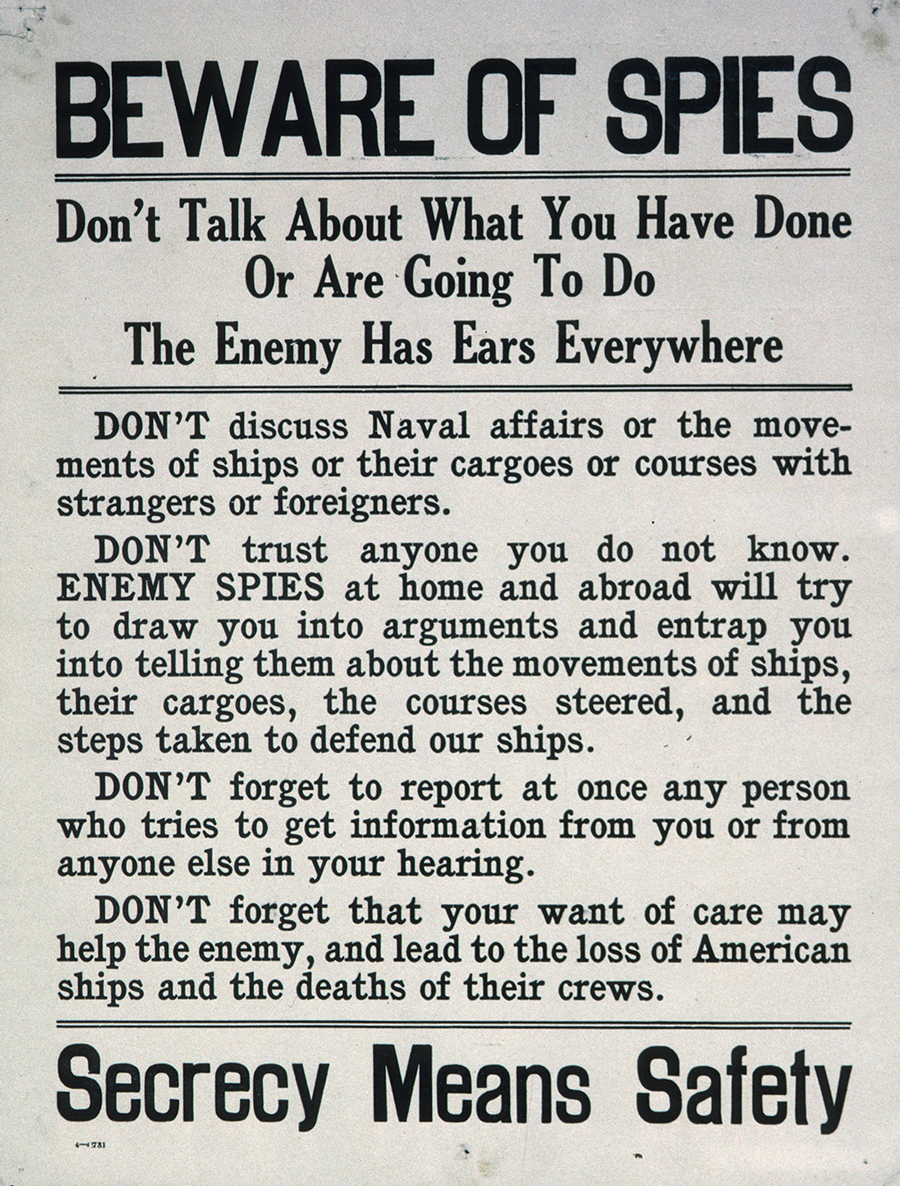
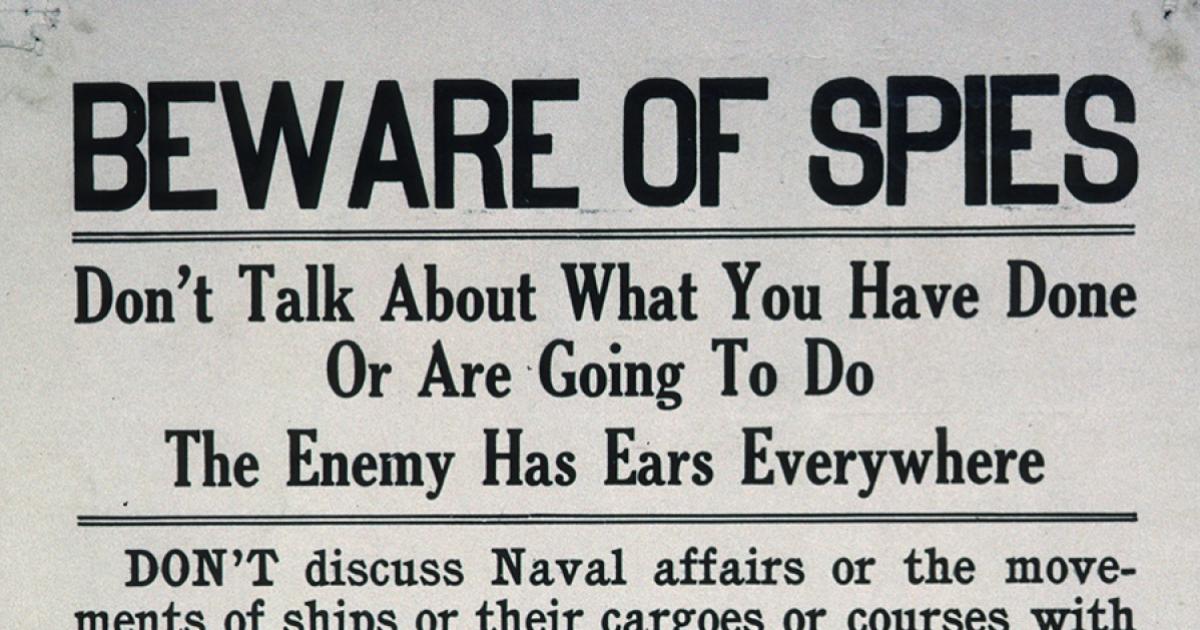
During World War I, espionage, counterespionage, propaganda, and psychological operations played a crucial role in Greece, which became a hotbed of secret activities even before officially joining the conflict. The warring powers aimed to sway political developments, disrupt their opponents’ operations, and manipulate public opinion, while Greek society itself became obsessed with spies and spy stories. Though much of the archival record has been lost—especially during World War II—historians have reconstructed a fragmented yet revealing picture of intelligence operations, particularly those conducted by British and French services in Athens.
The British established an espionage office in Athens in February 1915 to monitor Ottoman activities during preparations for the Dardanelles campaign. Initially located at Agios Dionysios Square and later at 20 Akadimias Street under the cover of a refugee relief fund, the office was subordinate to the Dardanelles expedition’s General Staff. Its reports, mostly concerning German espionage in Greece, were often unverified, prompting the establishment of a counterespionage office in August 1915, headed by Royal Marines reservist Captain Compton Mackenzie. Mackenzie, despite his inexperience in espionage and lack of Greek language skills, leveraged his social position and contacts to create an extensive intelligence network. In collaboration with French Navy Commander de Roquefeuil, he formed an “Anglo-French police force,” which arbitrarily invaded homes, detained “Germanophiles,” and maintained a surveillance archive of 24,000 Greek citizens, including prostitutes and informants.
Mackenzie’s operations included offering asylum to Venizelist sympathizers and employing Cretan gendarmes who sometimes fired into streets, reflecting the scandalous, overtly political nature of his activities. His most notable success involved recruiting the Greek doorman of the German Embassy, allowing him to steal the embassy’s diplomatic bag in August 1916. The stolen documents contained a letter from Queen Sophia to the Kaiser’s wife. This act partially retaliated for the seizure of a British diplomatic bag by an Austrian submarine from the Greek ship Spetsai in December 1915. Mackenzie also played a key role in orchestrating the deportation of Central Powers diplomats from Greece in November 1916, providing the French admiral Louis Dartige du Fournet with the proof of espionage through elaborate subterfuge, including a German officer writing intelligence on eggs and Turkish reports transcribed via rented typewriters.
French espionage, led by de Roquefeuil, operated since 1915 and often relied on unverified or fabricated intelligence. He collaborated with Russian agents and news agency employees to intercept telegrams from German, Austro-Hungarian, and Greek authorities. De Roquefeuil persistently accused Greek officials, including MPs, of supplying German submarines, though investigations revealed these claims were largely false.1 His obsessive efforts against King Constantine even extended to alleging German use of the King’s Corfu mansion, the Achilleion, to refuel submarines—a claim disproven by simple inspections. Despite his unreliability, de Roquefeuil successfully organized provocations and facilitated Venizelos’ clandestine escape from Athens to Thessaloniki to form the “National Defense Government,” splitting Greece in two.
Propaganda efforts in Greece were extensive and multifaceted, involving newspapers, radio, and the “Havas” news agency. Venizelist newspapers such as Kiryx, Patris, Ethnos, and Eleftheros Typos received foreign support to promote Entente interests, while pro-royalist publications, including Empros, Acropolis, and Nea Imera, countered them. Foreign journalists overwhelmingly supported Venizelos, except for a few like the American Paxton Hibben, whose uncensored dispatches defended the King’s neutrality. French envoy Henri Turot further manipulated media by attempting to acquire newspapers, organizing public demonstrations, and even staging fake deaths to influence public opinion.
A particularly notorious case was the “Uhlans affair” of June 1916. Following the Allied ultimatum, Venizelos warned Prime Minister Zaimis that 10,000 German Uhlans were reportedly marching on Tatoi2 to support the King. Although Zaimis dismissed the rumor, the Agence Radio3 broadcast it to Paris, prompting French and British commanders to mobilize forces in Piraeus, culminating in huge riots. This episode demonstrates how intelligence, whether accurate or fabricated, directly influenced military and political decisions.
Both the Uhlans and submarine incidents illustrate how misinformation, rumor, and propaganda could escalate tensions, manipulate foreign forces, and destabilize Greek internal politics.
The opponent of the British and French secret services in Athens was mainly the Palace Security Agency, headed by Captain Ilias Chrysospathis. His efficiency is also presumed by the fact that his removal and the control of the Palace Security Agency by the British and French was among the terms of the Entente Ambassadors’ Communiqué in June 1916. The requirement was eventually accepted by the new Greek government, although Chrysospathis remained as the commander of the King’s Security. He died, however, in the controversial fire of the Royal Estate of Tatoi in July 1916, while he was protecting the King.
In conclusion, during World War I, Greece became a microcosm of the secret war, where espionage, propaganda, and covert operations intertwined with political intrigue. British and French intelligence services, though sometimes incompetent or deceptive, exerted significant influence through surveillance, kidnapping, espionage, and media manipulation. Meanwhile, Greek factions and the monarchy engaged in countermeasures, resulting in a complex, high-stakes struggle for power, perception, and allegiance. Incidents such as the Uhlans affair and the German submarine operations underscore the dramatic, sometimes absurd, but consequential impact of espionage and propaganda on both military and political developments in wartime Greece.
1 Besides, of course, the refueling of the two German cruisers “Goeben” and “Breslau” off the island of Naxos, which took place in August 1914, when Venizelos was Prime Minister.
2 The Royal Family’s estate just a few kilometers outside Athens.
3 It was funded by Vassilios Zaharoff (later Sir Basil Zaharoff), a very close friend and sponsor of Venizelos, and one of the darkest personalities of the time.

