As his self-proclaimed 10-day window for dealing with Iran approaches its end, what are President Trump’s options? GoodFellows regulars Niall Ferguson, John Cochrane, and H.R. McMaster weigh the merits of a US military strike versus an interim diplomatic solution. They also probe the Epstein scandal’s impact on the British landscape and the Supreme Court’s ruling against the Trump administration’s use of emergency powers for tariff implementation. Later, in the “lightning round”: why US Secretary of State Marco Rubio was warmly received at the Munich Security Conference; the Pentagon’s desire to sever academic ties with Harvard University; Barack Obama’s suggesting that aliens exist; plus H.R.’s remembrance of film great Robert Duvall, aka Apocalypse Now’s Lt. Col. Bill “I Love the Smell of Napalm in the Morning” Kilgore.
Recorded on February 24, 2026.
- And if at times we disagree, our disagreements come from our profound sense of concern about a Europe with which we are connected, not just economically, not just militarily, we are connected spiritually, and we are connected culturally. We want Europe to be strong. We believe that Europe must survive because the two great wars of the last century served for us as history's constant reminder that ultimately our destiny is and will always be intertwined with yours.
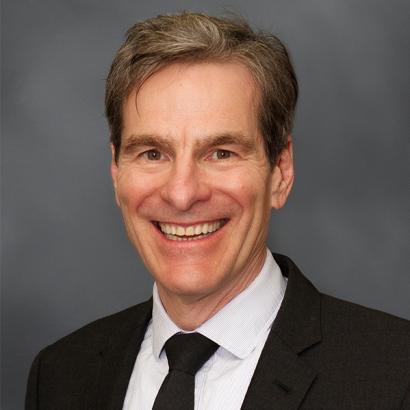
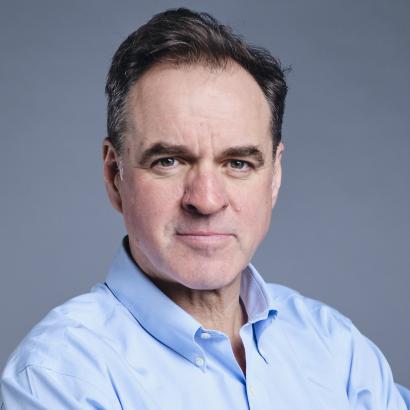
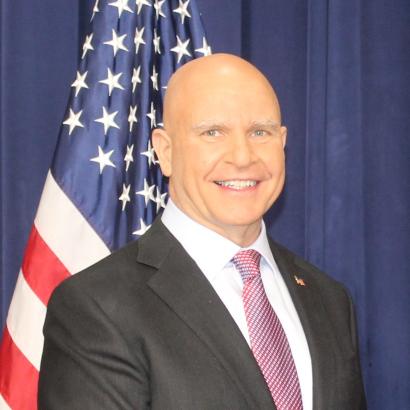
- It's Tuesday, February 24th, 2026. And welcome back to GoodFellows, a Hoover Institution broadcast, examining matters of history, economics, and geopolitics. I'm Bill Whalen. I'm a distinguished policy fellow here at the Hoover Institution. I'll be the moderator of this show today. Looking forward to a spirited conversation featuring three of my colleagues who we jokingly refer to as the GoodFellows. I'm referring, of course, to the historian Sir Niall Ferguson, economist John Cochrane and former Presidential National Security Advisor, Lieutenant General, H.R. McMaster. Neil, John, and HR are all Hoovers senior fellows. Gentlemen, good to see you. And I have three items for you to discuss today. John, I want us to discuss what's next in the way of tariffs and trade wars now that the US Supreme Court has struck a blow to the Trump administration's tariff strategy. Niall, I want to get your in the panel's thoughts on a significance of the Epstein scandal now that it's led to the arrest of a member of the House of Windsor and a former registered ambassador to the US and might also topple your Prime Minister. But first, H.R. I turned to you and let's talk about Iran. And let's keep in mind we're in a bit of an awkward position here. We're recording about nine hours before President Trump gives the State of the Union address. We're also recording five days into the 10 day window that the President set on whether or not to strike Iran. So H.R., let me ask you, since you once served in the White House for Donald Trump, if you were back at your old job as NSA, what would you advise him at this point?
- Well, I think what I would advise him is, first of all, hey, let's have clear objectives here. What is it that you really want to achieve? I think what he wants to achieve, first of all, is to, you know, to restore deterrence in terms of the Iranian regime's, you know, willingness to commit mass murder, mass atrocities. They murdered over 30,000 of their own people. Maybe another objective would be to reduce further their capacity to do harm more broadly in the region. That would bring into play, you know, the missile program, the Islamic Revolutionary Guards Corps Navy, for example, would be kind of targets associated with that. But then, also, do you wanna weaken the regime, try to weaken the regime fatally, potentially, by going after the regime's tools of repression that would include the Basij, the IRGC, and the leadership associated with those organizations. So I would first clarify the objectives and then put together a military campaign as part of a broader, I wouldn't put it together, or, you know, the central command would put it together and pass it to the chairman who would advise the president. But what would be key for the National Security Advisor is to integrate that military instrument with diplomatic and financial and economic efforts. And I see that that's kind of happening now in terms of restricting the resources available to the regime. I would work on this problem outside in as well to really go after, you know, China, who's buying 90% of Iran's oil, you know? And keeping that regime alive and so forth. So I think that's the kind of advice he's getting. Of course, you heard like the stories leaked, you know, yesterday about, you know, the possible negative consequences and risks. Yeah, that's always something you highlight. But also I think what's really important in this case is to highlight the cost and risk of inaction, right? And to take that into consideration as well. So I hope that those are the kinds of deliberations that are happening. But I think what I'd love to hear more about is sort of clarity about the objectives. And then if you're crafting, you know, helping to craft a presidential speech, to then really emphasize the so what? Why do Americans care about those objectives and what is at stake? Why is it important to us?
- H.R., one thing that wasn't leaked was Steve Whitcoff, the president's Middle East envoy, telling reporters that Iran was 60% of the way to uranium enrichment. And in his words, a week away from, "Industrial grade bomb making material." This raises questions from me, H.R., of what did our strikes accomplish last summer? But also, if you think Iran is a week away from bomb making material, why didn't you hit them a week ago?
- I don't know what the intelligence is on that. I mean, I really, you know, so I just can't, I can't really know for sure, but I doubt that there are a lot of centrifuges running in Iran right now. Also, and my knowledge is kind of dated, you know, it was not definitive the intelligence or anything, but, you know, they've got a miniaturized that, you know, that device. put it on a missile and so forth. But I think he's right to be concerned overall, right? 'Cause you have, you know, I think one of the big problems with Iran nuclear deal in 2015 was it didn't take into consideration the means for delivery of the most destructive weapons on Earth, the ballistic missiles in particular. And hey, guess what? Iran has used ballistic missiles more than any other country in history against six different countries. You know, so I think that, you know, one of the areas that are really gonna be a point of contention are already, is the missile program. Is the missile program included in any kind of interim deal that might stave off an air campaign and a strike campaign against Iran? I mean, the Ayatollah Khamenei has been saying, "Hey, that's not negotiable. I still want to enrich and so forth." So you have the shop window of the regimen, Araghchi, in the negotiations, but hey, the supreme leader, he can't help himself because they've defined their regime, you know, based on their kind of permanent hostility to the great Satan, you know, Israel, who they call the cancerous boil, you know? And as well as the hostility to the Arab neighbors. So, yeah, I think we're on a collision course here. I really do. I don't think that there's gonna be any kind of a negotiated reprieve, you know, for the Iranians,
- Niall.
- It's fascinating to think about the coming conflict. Many people doubted last year that there would be air strikes against the Iranian nuclear facilities. There are people who still seem to doubt that the president is resolved to take action. But let's not forget that this regime slaughtered somewhere between 30 and 40,000 of its own people. And that President Trump said that help was on its way. It couldn't immediately be delivered, because as H.R. knows, the assets that are necessary for a fully dominant and effective campaign against the Iranian regime take time to assemble. But they are now in place, a formidable array of military force, of naval force is in place. I think what's interesting is that the Iranians have got nothing really to protect them. No Russia. You know, it's essentially good luck out there from Putin. No China. Iran is isolated and its capabilities are still barely recovered from the state that they were left in by Israel and the United States.
- Hey, Niall, just quickly, quickly on this yesterday, it wasn't really widely reported, but a large number of Chinese cargo aircraft landed in Tehran, and in the vicinity. And I think they're probably we're offloading radar systems. So I mean, again, you know, if President Trump needs a newsflash about leaking axis of aggressors, you know, and that China's a problem, this is kind of another one.
- But if you compare that with situation during the Cold War, when the Soviet Union was capable of large scale military operations in the region, which made it much riskier for the United States to take action, we're in a very different world where the support that Iran can can call on from Russia and China is relatively modest and maybe even trivial compared with the forces arrayed against it. So I think I agree with you, H.R., this collision is coming, and I think the key question is, what's the desired outcome of the administration? Because it's clearly more than just further degradation of the military capabilities of the regime. I think the goal, as in Venezuela in January, is regime alteration. I'll use that term to define it differently from regime change. This is not 2003 Iraq. This is something that aims, as in not Venezuela, not to change the character of the regime, not to create a liberal democracy, but to get rid of the leader, decapitate it, and replace it with a leader that was willing to see Washington, rather than Beijing, as its master. That's been done in Venezuela. I think it's the goal here. I think Khamenei has richly deserved to be destroyed. The question is, can the United States find a Delcy Rodriguez, who of course has been the successor to Nicolas Maduro in Caracas, in Tehran, to carry on the show, but to report to Washington, rather than to Beijing, or for that matter Mosque. That for me is the question. Can you achieve regime alteration in the same way in Iran as you did in Venezuela? It's not impossible. Last thought about this. Not only is Iran relatively isolated, the regime is hated. It's not as if there's gonna be mass protests against regime alteration. There's going to be, I think, considerable popular relief if Khamenei is got rid of. So I think the stars are relatively favorably aligned for this operation to succeed. And of course, to send another signal to China that you don't mess with the United States because it has a unique military capability that no one else has.
- So let me ask you guys. I think you framed it up beautifully. What is the final objective? Are we playing one more round of whack-a-mole? Are we going for regime change in a way that frees up the Iranian people from the horrendous things they've been living under, as H.R. pointed out? Or are we gonna go for what seems to be the currently popular third way, changing who's in charge, but fundamentally that means leaving the IRGC, all the forces of evil that you can, you can harm your own people all you want, so long as you do what we say internationally. I'm like H.R., I'm, I'm offended by letting that stay, although that may be what we have. Although it is kind of puzzling, we now, Trump has really done some amazing things. Many of our enemies are on their five yard line, and you know, Hamas is on the five yard line. Venezuela went to the five yard line, Cuba's on his five yard line. But do you score any points at the five yard line or do you have to go all the way? And I mean that, not just in the long term. Strategically, how long can a new regime in Iran, if there was one that was willing to do what we say and still be theocracy light, how long can that go on with them, of course, trying to cheat everywhere they're on. And at what point do you have to just finalize things and wars and in victory? That goes with my second question to you guys is, from the international perspective, I've already heard that the Saudis are seeing Iran as being weakened and saying, "Well, we now don't have to be so buddy with Israel anymore, which is kind of sad. And I noticed that Niall's UK has said, we're not going along with anything that you guys do in Iran. So we seem to be sort of picking up the downside of what happens when you break with your allies or tell your allies they're on their own. Well, they go in their own directions. So both of those seem like unfortunate things that maybe you guys can comment on.
- H.R.?
- Yeah, hey, Niall. I think when you're saying regime alteration, it's a pretty significant alteration, right? I mean, I think it's the end of the alfaqui or the rule of the jurisprudence. I think a lot of the structure around the supreme leader goes away, the council of elders and so forth. The good thing about Iran is that, you know, they do have elections and actually the elections matter because they disqualify any of the candidates who's never not going to tow the party line. So there is a mechanism maybe for elections, but I think the hardest part of regime alteration is gonna be the Islamic Revolutionary Guard score and the bonyads, which are these kind of collectives that are really criminalized patronage networks that own all the businesses, you know? And so, I mean, they're not gonna want to relinquish power plus the Irani people are not gonna be kind to the Basij and to the IRGC, you know? So there will be an impulse, you know, to kind of stay in power as long as you can because, you know, you're probably, you're gonna get the ax. The other indicator though, that there's real weakness in the regime, is they're moving billions of dollars out of the country now. Now, I think the US treasury's tracking all that. I think they know exactly where that's going and we will get that back for the Iranian people at some stage. But I think the rats, you know, the rats are shipping their money out because they know that the gig is almost up here.
- That might be what the Chinese cargo planes are doing. Maybe they're loading on, not loading off.
- Well, that's what we were doing. We were flying cash in under the Obama administration, if you remember that.
- Yeah, yeah.
- It was unbelievable. Unbelievable. There are two downside risks that we should think about. I personally don't worry terribly much that the UK doesn't want to be associated with this operation. It's just another sign of Keir Starmer's approaching demise that they should make such an obviously bad judgment. The downside risks are A.
- Because, you know, Niall, they hate the UK more than they hate us even, you know? Perfidous Albion, you know? Is what they, yeah.
- And in many had in many ways a larger share of responsibility for what happened back in the days of Mosaddeq. But here's the risk. Supposing the airstrikes are launched, but the regime is capable of disrupting the Strait of Hormuz, in a kind of scorch Earth attempt to maximize the economic damage of the attack. That must be a major concern for the administration to make sure that that doesn't happen. The second downside risk, I suppose, is that you don't get regime alteration, you get regime collapse, and the country descends into chaos. I do think that decision makers in Washington remain scarred indirectly or directly by what happened in Iraq, when by collapsing the Ba'athist regime, we ended up with basically a civil war crossed with an insurgency. I think the Trump administration, and President Trump made this very clear over Venezuela, doesn't want to get into that situation. But John, to answer your question, I don't think it's necessarily a stable state. If you get rid of Khamenei and have some IRGC general in a military regime, for the reason H.R. gave, that the population won't be content with that. It will be, I suspect, a transition to a further change in Iran's political status. But I think the priority for President Trump is take this like Venezuela, take Iran out of the axis of authoritarians and send a signal to Beijing, that that axis that has been carefully built over the last four years, I mean, it really emerged after the Russian invasion of Ukraine. That that axis is about to be wound up by the United States flexing its military muscles. I think that's an important part of what's going on here.
- Well, they may have a lower goal, which is just to reduce Iran's capabilities as much as possible. So all your air defense is whatever is left of the nuclear program, ballistic missile production, you know, leave them in the mess that they are as a country, but reduce their capability for cost. I hope that's not where we stop, but that is a possibility.
- Let me offer this exit question to you gentlemen, then we'll move on to the Epstein scandal. Our next GoodFellows records in March the 11th. Our guest will be Condoleezza Rice and we may be talking about Iran on that show. So the question of the three of you, if this show comes out on the Ides of March or thereabouts, what do you think the Iran narrative will be by then?
- My guess would be that action will have been taken by the time we record that show.
- John. I gotta, who knows? 'Cause we don't really know what Trump is up to, but yeah, you know me and I'm an economist, so I hate making forecasts, but I think we can hope that the current regime in Iran is one way or another gone. Let's hope it doesn't descend into civil war. And there's perhaps some what HR put out some authoritarian military, whatever, but sees that it's gotta hold elections. And eventually, you know, serve the Iranian people.
- H.R. we've talking about a strike or a deal.
- I think a strike. And I think what's what may precipitate it even, you know, sooner, are the protests that are ongoing now, especially those at universities. There are 20 universities. There are massive protests. The Basij, coming in, you know, surreptitiously wielding batons, beating people. So I think that, you know, that may convince the president to act even sooner.
- Okay, very good. We will see what happens when we have Condi on the show. Let's move on to our next topic, which is see Epstein scandals. Since our last show to bombshells have detonated in the UK, I'm referring to the arrest of Andrew Mountbatten-Windsor and Peter Mandelson, formerly the British Ambassador to the US both arrested on suspicions of misconduct in public office. Niall, I read about this through the prism of American media, which love to write about the downfall, or the imminent downfall and demise of the royal family. They did this after Diana's death. They've done this throughout the Harry saga and now they're doing it with Andrew's demise. If you will, maybe you could take a minute and just explain the relationship between the royal family and the British people. If you think this is a problem for the royal family, and then perhaps if you wanna segue after that into what's gonna happen to Keir Starmer.
- Well, it's extremely embarrassing for the king that his brother should be brought low in this way, should be associated, not only with Jeffrey Epstein's business dealings, but apparently also with his trafficking in young girls. This is unquestionably a hideous scandal for the monarchy.
- [Bill] Right.
- But it's not the first time that the second son has been a source of embarrassment to the monarchy. In fact, it feels like something of a British tradition that the second son should be a problem. So I don't think it's right to say the end of the monarchy is near, there is minimal to next to no republican sentiment in the UK. The Queen, though she may have been involved in trying to cover up Andrew's wrongdoing, is revered. And in fact, King Charles has made a very good start to his reign in the eyes of most people. So, although it's unquestionably a grave embarrassment, I don't think it poses a threat to the monarchy. It poses a threat the Andrew formerly known as Prince, who's clearly been entirely disgraced. And it ain't over, I would say asking the question you asked is like saying, does the disgrace of Lord Mandelson doom the House of Lords, or does it doom the foreign office because he was ambassador to the United States? No, the individuals have been discredited, disgraced, and may face criminal penalties, but the institutions are much more durable than your question implied.
- And the Prime Minister.
- Well, I think it's all over for Keir Starmer, but that's because he'd already significantly lost popular support and the support of his own members of Parliament before the Mandelson case blew up. What's interesting is to remind yourself that Kier Starmer won a landslide election victory not that long ago on July 4th, 2024, and began to hemorrhage popularity within a really short space of time. It's been one of the most rapid decays in popularity a prime minister has ever experienced in the space of less than two years. And it has relatively little to do with Epstein and everything to do with a series of U-turns, botched policy initiatives, a very poor role paid by the Chancellor of the Exchequer, Rachel Reeves. The things that people care about in Britain are A, the economy, which has been performing miserably. B immigration, which is the issue that mobilizes support for reform UK. Starmer has flailed around on both the economy and immigration, and has never been popular. He won the landslide, not because he was popular, but because the Tories were unpopular and people voted to punish the conservatives for all the ups and downs of the previous, well, nearly 10 years. So that's the story, and I think, frankly, Kier Starmer would've been in the Last Chance Saloon, even if there had never been a Jeffrey Epstein.
- I ask you Niall, sitting on this side of the Atlantic. I'm interested with this whole Epstein files business, there's remarkably little, actually illegal sex in in any of it. And there's remarkably little actually illegal on anything else. Now Andrew is certainly a very, a very distasteful person, a parody of a dimwitted aristocrat, and it certainly shows a little vignette into the world of grifters and 10 percenters and influence peddlers, which is where Andrew and Epstein lived. Of course, we know about that, you know, what was Biden's son doing on the board of Burisma? That's, you know, been a constant of our politics, but splashed in our faces, we see it. But despite his unpleasantness and you know, what is actually Andrew done that's illegal. If you're a trade representative, you're supposed to meet with unsavory Chinese characters. That's, in some sense, your job. There is a feeling of witch hunt about this. Now, perhaps if you're unsavory enough, you deserve a witch hunt. We find the man, we've got the man, now we'll find the crime. But it's hard to make sense of that whole business from this end.
- I mean, the issue in the case of Andrew is, is clearly the images of him with Virginia Giuffre, one of the key victims of Epstein. That's the problem there. You could ask whether it was a good idea to allow somebody who obviously wasn't the sharpest knife in the kitchen to be involved in British trade policy. Royals in search of a role is an age old problem. The role of being king or queen or heir to the throne, these are well-defined. What everybody else does is never that well-defined. Princess Anne has been a model by confining herself to unpolitical and mostly philanthropic or sporting activities. She's revered. Her brother, has on the contrary, involved himself in things that were way above his pay grade or intellectual grade. And in the course of that, of course, he has been clearly embroiled in the sexual aspect of the Epstein scandal. I think it's important to draw a distinction here because it's often lost. There's a kind of financial story involving Jeffrey Epstein and his influence peddling and his network building and the money matters that he dealt with, which remain mysterious. Still not entirely clear where all the money came from, but then there's the sexual dimension for which he was already convicted years ago, the trafficking of underage girls. And the thing that remains to be fully uncovered is who exactly was involved in that second sexual scandal? Now, Lord Mandelson clearly wasn't. Lord Mandelson's in trouble because he was giving Jeffrey Epstein inside information hot from Downing Street when he was a minister. And that's a completely different kettle of fish. Looks like it could be criminal misconduct in office. That will be determined, as it should be, by the courts. But I think it's very important to draw this distinction, because I think you're right, John, something of a witch hunt has developed where association with Jeffrey Epstein, you received email from him, you sent him an email, starts to be equated with the kind of criminal behavior that obviously did go on. If it hadn't gone on, he wouldn't have been in jail and Ghislaine Maxwell wouldn't be in jail.
- So I can advertise, sent to me by a friend, you can search the Epstein files. And my friend said, hey, we're in it and you guys should go search yourselves. A bunch of my papers on financial crises somehow are cited in the Epstein files. So I'm in, guys, no sex to report, no millions of dollars, just for some reason they cited my papers on the financial crisis.
- H.R., Andrew Sullivan wrote a column a couple weeks ago in which he said, when historians review this, they'll see the historical context, our post Cold War Gilded Age. I know Niall's written about the Gilded Age as well. Do you see the Epstein scandal, H.R., as a reflection of the times in which we live?
- I mean, I think he's a criminal, you know? And I think there has to be a lot of money laundering in that kind of activity. But, you know, it's like John said, it's like this kind of grifting class. You know, these people who, you know, who you know, who are, you know, feel that they're privileged. Clearly that carried over into him victimizing young women. And, you know, I just think it's despicable, you know? I do worry about, you know, that, you know, the kind of on the real like kind of fringe conspiracy theories you hear these days, it's gonna be like, you know, validating, you know, for a lot of people who have imbibed of these kind of, you know, crazy conspiracy theories,
- But there's lots of people and organizations like Jeffrey Epstein that don't have the sex. So the sex brought it up. But, you know, the whole range of influence, peddlers, grifters, non-governmental organizations, consultants, and the rest of it, enmeshed in our politics is, in some sense, the scandal here. I wish they would all have sex so we could, you know, blow the whole thing up.
- And just to how fake it all is. Like all these, you know, nobody has that many friends, man. Do you know what I'm saying? I mean, like, you know, the whole kind of artificial familiarity, like you're all good buddies and, you know, it was just disgusting actually, you know? The fascinating thing is, I mean, to kind of look at how it works, that there was a real effort by Epstein to take advantage of academia as a route to influence.
- Yeah.
- He was all over Harvard like a rash seeking to build a network there. My appearance in the Epstein files, yes, John, I also checked, has?
- Did you make it?
- I got this email from April, 2012. Niall Ferguson isn't available today because I wanted nothing to do with him. And when one of his intermediaries sought a meeting with me as he does, he was seeking meetings with other Harvard professors, I'm very happy to say I declined and avoided him like the plague. Not least because a close friend warns me against him for the very good reason that he was, he was clearly a convicted sex offender. The problem is for people who continued to associate with him after that, had that conviction had happened. And I think the other interesting point is to go back to Andrew Sullivan's observation, that the Epstein files reveal quite a prolonged period. It goes right back into the 1990s. And there seem to me to be, there seems to be important distinction here between people who associated with Epstein then and people who were associated with him after he was convicted of trafficking in minors. And a lot of this nuance is being lost as people race through the Epstein files saying, oh, X was associated with Jeffrey Epstein. Just because one of his people sent you an email doesn't make you somehow complicit in his crimes. I think journalists should bear that in mind.
- All right, so let's jump outta the segment, gentlemen. The question is, it seems to me this has been a bigger bombshell in the UK in terms of taking down Andrew and maybe taking down the Prime Minister. Do we see this getting worse in the US though, or do you think the damage has already been done?
- Oh, I think it gets worse. It ain't over. There's more still to come. We have testimony. We still don't know from Maxwell. All the efforts that were made to cover up involvement, which involve substantial legal injunctions. I think these efforts will finally crumble under public pressure, congressional pressure, and the fact that the truth is out there in the form of a vast cache of documents, only some of which have been released. So my line on this has consistently been, like Watergate, the Epstein scandal takes a lot longer to be resolved than you expect. And it feels to me like we are a sort of early 1973 with Epstein, relative to Watergate. As further to run, there will be high profile victims, not victims, high profile reputational casualties, if not criminal convictions in the United States. The UK is just ahead of the game for reasons that I think have partly to do with our legal and political systems.
- And, you know, I'm not following this that closely, you know, but man, it seems like there's a lot of forensic accounting that has to be done, like following the money. I think that's gonna be another big aspect of this. You know, where did he get the money from, man? Who was giving him the money? What kind of money laundering activity was going on? I really think there's, that's another whole aspect of the story that is likely to, I think may maybe even lead to you criminal investigations and indictments.
- I'll forecast just to be contrarian. I'll forecast blowing over, although I think H.R. is onto something. The piece of news that I found interesting was his dealings with Sarah Ferguson, some long lost relative of yours, Niall, I'm sure.
- [Niall] I'm entirely unrelated to Sarah.
- Yeah, okay, good. I thought I'd let you put that out there. Who had a failing influencer lifestyle brand in the US she needed bailing out of and then some other way to make money. But that's relatively small potatoes. I think I'm gonna vote for will blow over. 'Cause the sense of which we just embarrass people for having exchanged emails with him, even though they haven't done anything illegal. You know, in the age of Trump, there'll some be something else in the news cycle. So I'll put a guarded bet on blowing over.
- Hey John, let's stick with you and let's go to the topic of tariffs. We have the Supreme Court ruling that the Trump administration's approach to tariffs isn't permitted under the International Emergency Economic Powers Act. The President promptly got mad. He berated the three conservative justices who cited the majority, two of whom he appointed, by the way. And then he got even, John. He announced a 10% temporary global tariff. And then he later raised it to 15% and evoking under section 122 of the 1974 Trade Act in his words, "To address fundamental international payment problems." So John, here we are, by the way, that is 150 day window on that Congress would've to keep that alive after 150 days. John, tell us what's going on here. Does the president have a tariff strategy?
- The tariff president has a tariff obsession, and I think we're gonna see more of this so long as the president and his advisors who share this obsession keep insisting on shooting themselves in the foot and undoing some of the incredible economic tailwinds that they have otherwise given us with tariffs and a couple of other unwise things. And what he's gonna do? Now, you know, contrary to our many Democratic friends who says he'll just ignore the Supreme Court and we're headed to autocracy, he's apparently gonna obey the Supreme Court and find some other legal excuse, which is what he did. The Congress has rather scandalously given big latitude to the president, but constrained latitude. So there's this balance of payments. Section 122. There is unfair trade practices, section 301. There's National security, section 232. There's even the Smoot-Hawley Tariff Act, is apparently still in vogue and just if other countries discriminate against the US, but those have bureaucratic procedures. They're supposed to be good by good. You fight about it. As a free trader, I think still scandalously loose, but we're gonna go on there and fight about it. Now, the first one that's gonna be the section 122, which he in invoked already, that is not for a balance of trade issue. That's not a trade deficit, it's a balance of payments deficit, is suppose to trigger that. And we don't have a balance of payments deficit. You can't, with loading exchange rates. It was a thing that occurs when you have a fixed exchange rate or a gold standard and you're losing money propping up the dollar. That's just doesn't exist. So what will happen is we'll go back to the court and, you know, in six months or eight months from now, the Supreme Court will say, "No, that doesn't work either." And we'll go on this game of whack-a-mole with legal authority. But, so the one last economic point, I wanna make a legal point, but I'll first do the economic and then shut up and then we can go back to the legal. But the legal point I think is important. The economic point I wanna make is from Alex Tabarrok at Marginal Revolution. It was so brilliant, I have to pass this on. So what about Kavanaugh's view that, hey, the Emergency Act gave the president power to do all sorts of horrible things, block trade, why not tariffs too? And kind of weird, this law says in an emergency, which the president can declare, he has the power to blah, blah, blah, blah, all sorts of horrible things and tariffs are silent. Why is that? So here's the economist answer, which I thought was brilliant. Look, an emergency, what's an emergency? I mean, is fentanyl coming into the country a reason that I have to pay tariffs on my replacement landing gear for my glider from Germany? Where does that go? Well, the president gets to determine one. So if you restrict the president, you have to do something really big and really harmful. Then you get around the problem of just saying, well, it's an emergency and I'll put in tariffs. Because tariffs are, you can kind of hide them, you can negotiate them. A gets it, B doesn't. The actual powers that are reserved to are big bludgeons. So it's a nice way of getting around the problem of who's to declare an emergency. Well, you can declare an emergency, but you have to do something big and harmful, and therefore, limited under emergency powers. And the analogy given was the fire department has the right to block a road, but they don't have the right to charge tolls on the road. And that made me really understand why Kevin, although it sounded sensible, was wrong. And the emergency powers really don't include tariffs. So I'll shut up for a moment and then we'll come back to legal issues.
- Niall, your thoughts on son of tariffs or tariffs two, or whatever moniker you wanna attach to this?
- Well, I suppose I just feel quite happy that the Constitution turns out still to operate. The checks and balances are real. The rumors of an impending Trump dictatorship are not looking particularly compelling. So well done to the Supreme Court. I thought the arguments were in fact impressive in the sophistication. Justice Gorsuch, in particular, wrote very well in explaining why the IEEPA basis for the tariffs wouldn't stand. The administration made it clear all along that if they lost, they'd do tariffs by other means. And there are other ways that they can do them, as we've discussed. So I don't think it's by any means over, because the president remains, as John said, ideologically committed to protectionism, the thing that defines Trump relative to the entire post-war American political consensus. The interesting thing for me is that the tariffs have had such a modest impact relative to the fears of many economists. I mean, if you'd asked a hundred of John's colleagues two years ago, what will happen if the US effective tariff rate goes back to where it was in the mid 1930s, which is what's happened, and still true, even after IEPPA was overthrown. Most economists, 99 out of a 100, would've said very bad things will happen because interwar trade policy was disastrous. And those bad things haven't happened. No recession, stock market hasn't sold off. What happened back in April was a very temporary aberration. So that's, for me, one of the interesting puzzles of Trump's second term that the economic impact of the tariffs has been much less than most people foresaw. Secondly, the political impact has been quite negative. Oddly enough, Trump said he was gonna do reciprocal tariffs, just like he said he was gonna stop immigration. On all the issues that Trump campaigned on, he's delivered and it's unpopular. He's underwater on the economy, on immigration, on trade policy, especially on trade policy. So although the economic consequences of Trump's strategy have been far less disastrous than almost all economists expected, politically, it hasn't worked for him at all. And that brings us to the other check and balance. The midterms are not looking good for Republicans on the back of this combination of strict restriction of immigration and tariffs. And it's not clear to me that anything that's happened in the last week changes that direction of travel. The Republicans look like they're gonna lose the House. Even the Senate starts to look questionable, which I don't think many people expected six months ago.
- H.R. I hope you'd be so kind as to let John maybe do the final word here. And John, if you could briefly, emphasizing the word briefly, as we need to move on to lightning round in a couple minutes, just give us a couple more thoughts on tariffs.
- Well, I wanted to add some legal thoughts. First of all, not every economist thought this was gonna be a disaster, mostly a small drag on growth. But we should mention the legal issue because it's really important. As Niall mentioned, Gorsuch's concurrence was a beautiful piece of writing, including a lovely address to the American people saying, look, if you want this policy outcome, you may be disappointed. Go to Congress. That's where the, you know, Congress is supposed to do this stuff. We're not here to get things done quickly. And I'm not even beginning to do it justice. The line that the conservatives are just Trump's lackeys is now, definitively, I think one that Democrats will have to abandon. Although if you were watching the Supreme Court, it was abundantly true before, especially like the Presidential immunity one, which show how terrible they're making Trump immune. No, they made Biden immune. Biden would be in jail right now with what's Trump doing with the Justice Department, if there weren't the presidential immunity clause. They should be thankful for that one. But the most important one to watch is it's really unusual that the Supreme Court is snipping at each other in their decisions. They used to say, here's what I think. And now they say, here's what I think and here's why H.R. is an idiot and here's why Niall is completely wrong. What is going on here? Well, the back and forth is over this major questions doctrine. And the three, three of the court justices who went along said, we're just doing this on the statute. It's not major questions. But that is really important. And that's coming back, like the non endangerment finding of carbon dioxide is really the big economic news. That's tremendous for our climate policies. That's gonna come back to the Supreme Court and who said that, you know, this is a major questions doctrine and they're laying the groundwork for the big fight about that one to come.
- By the way, the 150 day window expires on July 20th, which is the anniversary of man landing on the moon. So we'll see if we have a tariff strategy by then. Let's move on to the lightning round.
- [Narrator] Lighting round.
- Gentlemen, our first question, Marco Rubio gave a speech at the Munich Security Conference last week. He talked about a shared history between the United States and Europe. He defended western civilization and he got a standing ovation.
- Thank you.
- That's in contrast to the reception that vice president JD Vance got when he spoke in the same form a year earlier. Niall, what did Marco do that JD did not?
- It's not what you say, it's the way you say it. I mean, JD Vance went to Munich in 2025 to cause maximum upset and delivered a speech in which he said, "Actually, you're the problem." You Europeans are the problem. You're not our allies. Actually, you're the problem." And it was calculated to cause an uproar or a deathly silence or booing and hissing. And it delivered. Marco Rubio didn't say things radically different. In fact, in many ways the content was quite similar, but it was delivered in a way that the Europeans interpreted as positively transatlantic in its sentiment. So he got a standing ovation. I think if you carefully compare the content of the two speeches, they're not radically different, but the tone of Rubio's and also the timing of it, after the really rough year the Europeans had last year, I think they were in the mood to be enthused and didn't spend too much time worrying about all that stuff about western civilization that they no longer really believe in.
- Yeah, I really liked it because, you know, he made it clear that, you know, our European allies are on our side, we're on each other's side. You know, I think what disturbed me about kind of the narrative among some people who have President Trump's ear, and so forth, is that hey, you know, Europe's really the problem and actually Russia and Putin are the defenders of, you know, of Western civilization and sort of join us in our anti woke sort of campaign. And so, you know, I really think that Putin plays that up, you know, and talks about how like weak divided decadent Europe is, how we should be aggrieved, you know, by the Europeans. And then how he's aligned, you know, with many Americans in terms of rejecting kind of the radical, far left progressive agenda. So, hey, I'm glad that he made the speech the way he did and he also did it in a way that it didn't really abandon kind of the president's general approach, you know, to Europe or it wasn't, you know, clear like counterpoint to the vice president. I think he really walked the line very effectively.
- Well, they say a spoonful of sugar makes the medicine go down. And I think he did a good job, yes, to say, you know, how we all come from the same place and are inescapably friends. And Europe has changed a lot too. I think we're marking the four year anniversary of Russia's invasion of Ukraine, a sad day. But think of how much Europe has changed and started to recognize some of the things that Vance said, coding it with a bitter pill and fixing its own self. So all good in that sense.
- I think the next issue that's gonna bring us together with the Europeans are, is really Chinese economic aggression. And I think that's kind of the next phase, like now that we haven't talked about that before, right, John? But I mean, I think.
- Oh yeah, I'm ready to go, but not on the lightning round, buddy. You gotta put on the gloves and give us a good 20 minute round on that.
- Because you've got President Trump's April summit coming up. You have, I think, the table set for really as profound disappointment in terms of what could be delivered, in terms of a trade deal with China. And China is, you know, just dumping EVs into Europe, shutting down, you know, German companies outta the Chinese market. It's creating a real problem in Europe. And I think that this is where we will, you know, kind of come together. Everything that President Trump wants to achieve with tariffs is really meant to address kind of the China problem. I mean the de-industrialization, like where did that come from? After China's entering the WTO. So, I mean, I think, you know, gravity is gonna pull Europe and US together mainly over the China issue.
- Well, I'm gonna disagree with everything after dumping, but I'm gonna leave that for another time. It's not a military contest. It's not a zero sum game.
- Hey, what they just say, they just suspended mineral exports to Japan. I mean they're definitely,.
- That's the opposite of dumping.
- This grip. They're using the, well actually, they'll dump,
- Great, Japan should be happy they're not dumping mineral exports anymore.
- Once we invest in more resilient supply chains, they'll dump those commodities to drive out business, which is why President Trump did the right thing in putting a floor, I think under the prices for some of theses.
- Let's move on guys. The second item, let's be brief.
- But that was fun. We haven't done that for a while, that was fun.
- You're on.
- It's called lightning round guys.
- Lightning round guys. Lightning round.
- You got thunder and lightning. What are you complaining about?
- Second item, let's do this quickly. H.R. the US War Department plans to sever academic ties with Harvard. And let me read this quote from Pete Hegseth, "For too long this department has sent our best and brightest officers to Harvard hoping the university would better understand and appreciate our warrior class. Instead, too many of our officers come back looking too much like Harvard, heads full of globalist and radical ideologies that do not improve our fighting ranks." H.R., I want your thoughts on this since you're somebody who earned advanced degrees and did a fellowship here at Hoover while wearing the uniform of your country.
- Hey, well, you know, I'll tell you, I mean you go into an academic environment, open-minded, but military officers aren't so open-minded that their brains fall out. You know, so they're not going, they're not getting indoctrinated there. And you know, I mean, they're going to the Kennedy School, you know? They're studying physics and electrical engineering. I mean, they're not going, they're not in the linguistics department or studying sociology, you know? I mean, so I think, anyway, I think you should evaluate each program based on, you know, how it equips officers for higher level leadership and graduate education is really a great part of them. I mean, you know, when I look back on my career, I think the opportunity to read research, write, you know, military history, helped me more than maybe any other single assignment as I took on greater leadership responsibilities. So, hey, you know, I continue to evaluate every program. Are they given your officers what your officers should get out of these programs? But I think this kind of sweeping statement doesn't recognize kind of the difference between academic departments and programs at a place like Harvard,
- John.
- Well, I was gonna ask Niall, how's military history doing at Harvard? I noticed that. And Harvard, in general, seems to be hiring people or they haven't gotten the news yet. And, you know, H.R. came to study history. He didn't come to the history department at Stanford. He came to Hoover. Now maybe say Harvard needs a Hoover, but I'm not sure that putting your few conservatives all in one ivory tower is a good idea rather than spreading them out in the university in general.
- I taught at Harvard for 12 years and the class that I always remember was at the end of a semester on strategy and crisis. When I got the veterans in the class to teach, to lead the discussion on the US interventions in Iraq and Afghanistan, which they had, they had served in. And it was a powerful moment when the veterans were teaching undergraduates and graduate students. And if Pete Hegseth stops that kind of thing from happening, then I think that will be a net loss. I get the desire to beat up on Harvard is deeply ingrained in the administration. But I think it's important that we have that presence of people who've served. And H.R., it always made my classes better when I was teaching there, to have somebody, at least one, and usually more than one person in the seminar or in the lecture who had served.
- Yeah, and at a time when fewer Americans serve, to have that connection between our military and the people in whose name we we fight. You know, that's really important. And you break down like a lot of stereotypes, you know, that way. And you build important relationships. I mean, you know, my fellow grad students when I was at at UNC Chapel Hill, I mean, they wanna do fantastic things. Rob McDonald's teaching, teaching history at West Point. Wayne Lee ran the war piece and security studies at UNC, you know? And I just had, you know, fantastic relationships. People who I crossed paths with across my career who helped me in various endeavors. And yeah, I mean, I think it's important to preserve.
- Hegseth is missing the enormously positive influence that members of the military have on the campus environment than everybody else. Too many people in our environment don't know anybody in the military. And they should. These are fantastic people. They're the ones who defend us and make us safe. Having to face that in your classroom is like really important in a college.
- All right, gentlemen, our third item, let's make it quick. Barack Obama goes on a podcast and at about the 50 minute mark, I assume he's getting a little slap happy at this point. He's asked about aliens and he says, quote.
- They're real, but I haven't seen them. And they're not being kept in, what is it?
- [Interviewer] Area 51.
- Area 51.
- This prompted President Trump to announce he'll direct his administration to release all government files related to aliens and associated phenomenon. Are we gonna see Niall Ferguson's name in the ET UFO files?
- The contact has been made and I've been in contact with our alien friends. No, actually I dunno whether Obama was joking, whether President Trump sees a wonderful way to distract public attention from say, the Epstein files. I don't know what's going on here. My view has long been that the aliens are here, but we built them. The aliens we call artificial intelligence. AI really stands for alien intelligence. We've built an alternate form of intelligence. It's in our midst. Those are the aliens we should be worried about. Not the little green men from outer space.
- John.
- Okay, here I think it's the fact that Obama said, when you look at the size and scale of the universe, I can't even get the exponents right on how many stars there are with planets, it would be unimaginably improbable that there isn't intelligent life out there. The other fact he knows, we haven't seen them. What does that mean? It's probable that interplanetary travel is impossible, otherwise they would've already gotten here. And if they got here, we would know it. So, you know what's going on. Obviously there's some airplanes the Air Force doesn't want us to know about. And we know that's what happened in the first place and a great desire for a coverup story. Maybe this will be a good place to move on to from the Epstein files
- Could be.
- H.R. with his top security clearance probably would've to kill us after he told us.
- Yeah, I can't tell you. My daughter always says, dad, I know, you know. I know you know about the UFOs. But hey, I'm just kind of inspired to quote another Clinton quotation, and of course George Clinton is what I'm thinking of. Who told us that the desired effect is what you get when you improve your interplanetary functum. And so I think we should all take that to heart.
- He may already be an alien H.R.
- H.R. wins again.
- Right. H.R. let's stick it to, very quickly H.R., wanna go to you. Finally, I wanna note the passing of the great character actor Robert Duvall, "Godfather," "Apocalypse Now." Niall, I don't know if you saw the piece that Matthew Hennessy wrote in the Wall Street Journal, but Duvall was kind of a closet conservative and he really hated the Oscars and how political they got. And what he recommended was his fellow actor should stick their nose in a book and read two people in particular, Thomas Sowell and Ayaan Hirsi Ali.
- I always loved Robert Duvall as an actor. He was one of the greatest actors of his generation. This made me love him even more. Rest in peace, Robert Duvall. God bless you,
- H.R., so here's the question of the many iconic roles that Duvall had. Lieutenant Colonel Bill Kilgore from "Apocalypse Now" stands out. My question to you, sir, is the line, "I love the smell of napalm in the morning." Is that the best line ever in a military movie?
- I love the smell of napalm in the morning.
- Smells like victory.
- It smells like victory, right? You got the battle, powerful reason. You know, this is one of the reasons why though you need military officers on college campuses because movies are a caricature, you know, of the real military. It's entertaining. But hey, it's not what we do. So although he did look quite dashing in his Stetson as a cavalry officer, I must say. But yeah, a fantastic movie. The other line is, you know, Charlie don't surf.
- [Speaker] Well, I mean, it's pretty hairy in there. It's Charlie's point.
- Charlie don't surf.
- Either fight or you surf. So it's absurd, right? But it's great entertainment and really a landmark movie with fantastic sound design to it. I went to remaster Dolby event with my friend Mickey Hart, you know, who's the drummer for the Grateful Dead and Dead & Company He did the sound design for that movie. So it was really cool to sit next to him. And when, you know, the patrol boat's going up river, he goes, yeah, that's me rubbing my finger around the edge of a wine glass, you know? Is the sound that he was designing. So yeah, it's a hell of a movie.
- What do you play in your tank H.R? Oh, no, funkadelic, of course, that's what's playing in your tank.
- Yeah, there weren't enough tanks in that movie. Weren't enough tanks in that movie,
- All right, gentlemen. All right, let's end it there, gentlemen. Great conversation. You got places to go, things to do. On behalf of the GoodFellows, Niall Ferguson, John Cochrane, HR McMaster, all of us here at the Hoover Institution, hope you enjoy today's show. As I mentioned, we'll be back in mid-March with Condoleezza Rice. Subscribe to the show. That's the best way to make sure you don't miss this. Until next time, take care. Thanks again for watching. ♪ Charlie don't surf and we think he should ♪ ♪ Charlie don't surf and we know that it ain't no good ♪ ♪ Charlie don't surf for his hamburger mama ♪ ♪ Charlie's gonna be a napalm star ♪ ♪ Everybody wants to rule the world ♪ ♪ Must be something we get from birth ♪ ♪ One truth is we never learn ♪