

Videos
How Thomas Sowell Thankfully Made Me A Contrarian Educator
Ian Rowe explains how Thomas Sowell’s uncompromising pursuit of truth inspires students to reject victimhood and become architects of their own lives.
September 8, 2026
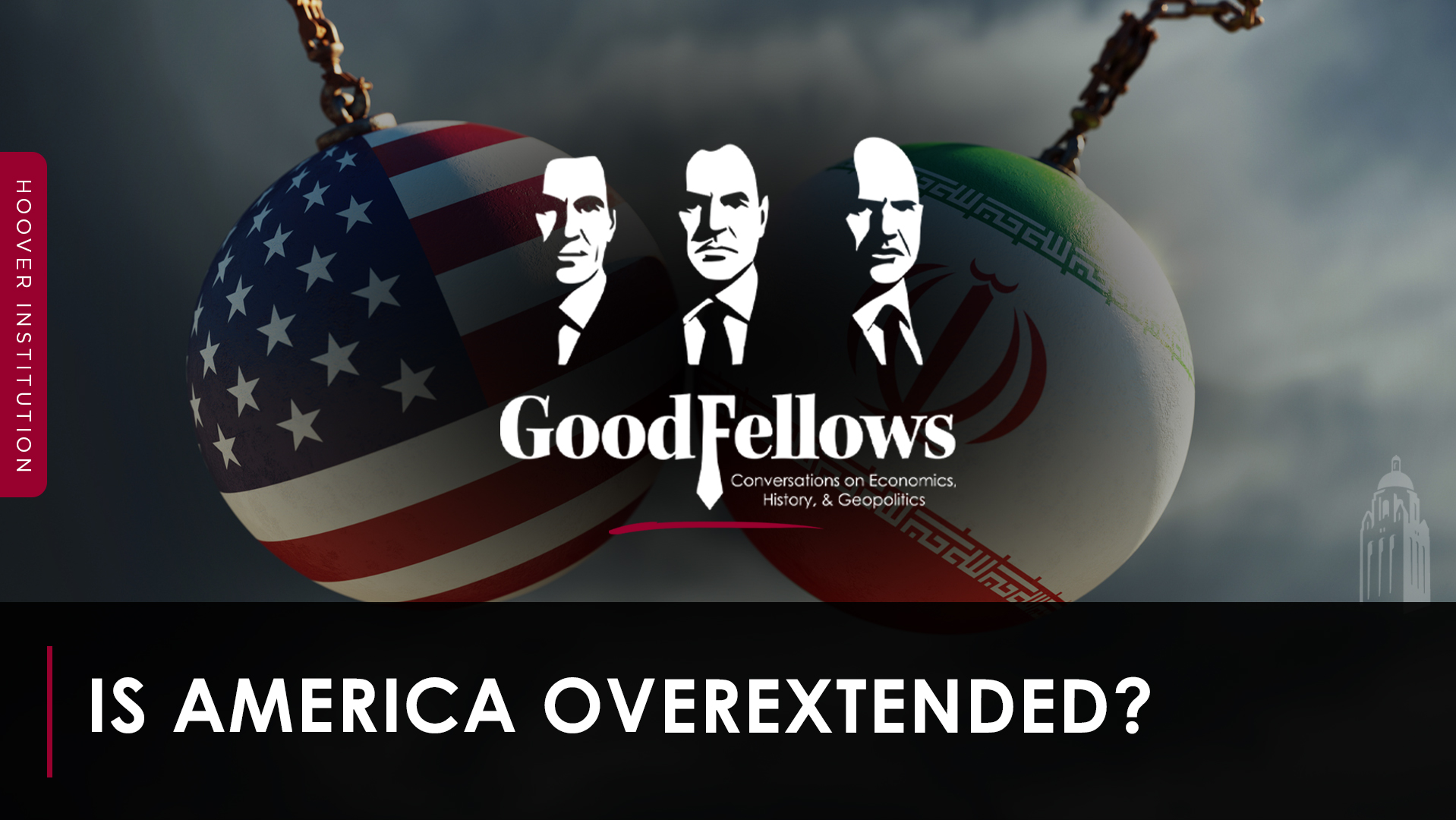
As the US and Iran prepare to sign a memorandum of understanding halting hostilities in the Middle East, will the agreement hold up for long given fundamental differences over Iran’s nuclear ambitions (another 60 days of negotiating), its funding of terrorist proxies across the region, plus Israel’s actions in Lebanon? If he succeeds in putting Iran in the rear-view window, does President Trump turn his attention to brokering a peace deal between Russia and Ukraine (that war now approaching four years and four months of fighting) as well as ending Cuba’s communist dictatorship? Finally, speaking of invasions, GoodFellows’ resident Scotsman explains the joy of his countrymen’s “Tartan Army” coming to Boston – thousands of kilt-wearing lads and lasses singing, marching and pub-crawling their way through Beantown whilst rooting on a Scottish national team making its first World Cup appearance in this century.
Recorded on June 17, 2026.
- The alternative would be a worldwide depression. You know, the stupid people want to have a worldwide depression, and they're, they're stupid people. So you can only go so far, drive somebody into the ground, and a lot of bad things happen. Number one, the straight would never open because they don't like floating billion dollar ships up and down a street when their rockets flying over 'em. And mines all over the place. So the straight would never be open. It wouldn't be open for a long time. So we have, we have a very hot stock market, and we have a very, started to be a very low oil price. It is Wednesday, June 17th, 2026. And welcome back to Goodfellows, a Hoover Institution broadcast, examining history, economics, and geopolitics. I'm Bill Whalen. I'm a distinguished policy fellow here at the Hoover Institution. I'll be your moderator today, and if you are watching the show, you already know that. And you also already know my next move, which is introduce the stars of our show, the Good Fellows, as we call 'em. So, my, my honor to welcome back to our show, the historian Sir Neil Ferguson, the economist, John Cochran, and former Presidential National Security Advisor, Lieutenant General, hr McMaster, Neil, John, and HR are all Hoover Senior Fellows. So gentlemen, we're gonna talk about peace of the Middle East today, and then time allowing get into perhaps Ukraine, maybe even Cuba. So let's get right to it. Sir Neil, I turn to you. There is an MOU to be signed on Friday in Switzerland. We haven't seen the MOU itself, the Trump administration not released it, but the Wall Street Journal did report earlier today. It saw a draft floating around at the G seven meeting. There are 13 points and all. And Neil, if you look at it, it's problematic from point number one, which says, no more hostilities in the Middle East, including fighting in Lebanon, which may be news to the Israelis who are not part of this agreement. Then you go to number item number three, Neil, which says the two parties will talk for another 60 days about what to do about Iran's nuclear program. And you go down to item number eight, Neil, which says Iran will forego any nuclear weapon development down the road. So you can see this having all kinds of complications. So Neil, here's the question. If you wanna channel your inner John Lennon, who famously said what all we're saying is get peace a chance. What chance do you give of the MOU surviving? Well, first of all, the version I've seen had 14 points. Okay? None of these versions is definitive, but they all seem to be pointing in the same direction. And I can't help feeling that Woodrow Wilson's 14 points were better than these 14 points, which broadly are dreadful. Why is it dreadful? Well, it, it's dreadful because it's obviously been agreed in order to get the straight of whom horn was reopened, first and foremost. And even the wording there is strangely asymmetrical, it's kicked the nuclear issue into a 60 day process. You know, it's not gonna get done in 60 days. And I think most importantly, there are four out of 14 points offering the Iranians sanctions relief and the unfreezing of their $100 billion worth of frozen assets. And some of that is right up front, the waivers for Iranian oil exports, this is a far cry from what the administration set out to achieve when it launched Operation Epic Fury. And the operation headline is, is likely to be Operation Epic fail. If this is it, it might not be. Maybe there's a twist in the tail, but judging by what I've seen so far, the sure ain't Woodrow 14 points Hr. I agree. Let's just be succinct about I agree completely with Neil. That's a disaster. I mean, first all, I mean, the, the first line as, as Neil said, you know, that including Lebanon, why the hell should the Ryans have any damn say about what happens in Lebanon? You know, and, and, and, you know, I just, I just think this is, you know, this is, it's a disaster, you know, and I, I think it is, it is based on, you know, as Neil said, this, this drive to, to open the trade. And, and, you know, I think it, it, it's the result of, of, you know, of not recognizing, you know, how damaged the Iranian regime was and what a position of advantage really we were, we were, we were in. The other thing that's striking, and, and I, I'd love to hear what Neil and John think about this in too, bill, is like, there's no mention of Israel in there, right? So there's respect of territorial integrity of, you know, the United States and Iran be by each other, but no mention of Israel, you know, who was, who was attacked by their proxies on October 7th, but lit the lit the ring of fire enmeshed Israel in the sixth front war, right? And, and, and, and so, you know, what the hell, I mean, I, I I think it's a disaster. Let me, my job is to be contrarian. So really, really luck while you guys talk on some thing, guys. I've been really working hard while you guys talk to find something contrarian to sand. And, and I must say to Neil, let's not praise Wilson too much. Those 14 points didn't work out so well either. That's a low bar as I read this deal. What, I mean, we've had a deal a week, it's, you know, barely news that there's a deal here. It's clearly papering over a deal. So what do we want? We're gonna spend hundreds of billions of dollars propping up our sworn enemies to hold our noses open the straits of harm, moves through the midterms, hold down the amount of missiles going back and forth to a tolerable minimum or tolerable maximum whatever, to, to an amount that can be called something quiet, get through the midterms and hail Mary the Democrats, don't win the midterms and come back and do something serious afterwards. It's the only optimistic scenario I can see. Otherwise, we have thrown in the towel and, you know, been defeated by the Iranians, and God knows what happens after that. Hey, and just one other point here of the 14th point, the 14th point, the, the, the final agreement will be approved by the UN Security Council. Are you kidding me? I mean, so, so really it, we are in a position of tremendous advantage, I think, where Russia and China were about to lose all influence in the Middle East because of the profound weakness of the Islamic Republic. Their, you know, their proxy and their partner, or if there have been a change in the nature of that government. But now we're gonna invite them back in to have a say, you know, in, in, in the Middle East. You know, I, it's just, ah, okay. It's, well, There won't be a, come on, there won't be a final agreement. We're talking to talk. Oh, I think it's done. I don't think it's ever gonna happen. I, we really don't, I don't think this thing is going anywhere. I mean, I, this is Just, You know, Hold, hold down the shooting for, to get through the midterms. That's Okay. Let me, let me play devil's advocate here. The alternative to peace is war. So hr, Neil and John, if we went back to fighting and President Trump has said earlier today that he'll go back to fighting if this doesn't work out. Where was the fighting getting us, gentlemen? Well, can I just say that, and I think I've been consistent about this. He should have now, probably nine weeks ago, used military force to take control of the strai of hormones. And he chose not to do that for I think bad reasons. The option certainly existed and I'm sure was presented to him by the Chairman of the Joint Chiefs and the commander of centcom. But President Trump elected not to take the risk. Of course there's risk, there always is. But the minute he did that and decided that instead it was gonna be done through economic pressure, I think we were on track to something like this. So I think it's much harder to do that now, and it's even harder for me to envision it happening later this year. But I think that was a fatal strategic error because none of this would be happening now if the Iranians had not successfully asserted their control over the straight, despite all the damage that had been inflicted on them in the first phase of the war. So we're, we're putting this ink to this memorandum of understanding, which I think we should call the memorandum of Incomprehension, because I'm struggling like HR to understand how we got here. I think we got here because we decided not to follow through in what would've been a necessary second phase of the war. I dunno if you agree hr. I agree, I agree completely. And, and, and that's associated as well with this, the timing of the ceasefire, right? As the campaign was about to shift to opening the strait, the ceasefire. And, you know, the presence seems to be enamored of, you know, field Marshall, er, you know, who's, who's was certainly doing the bidding of the Chinese, who were probably in a state of panic at that moment and desperately wanted to cease fire. And so, you know, I I, I think this is really, you know, re really, it goes back to, to not following through, you know, and, and you know, I'll tell you, president Trump, I mean, hey g you, you can give him credit for taking risky decisions, right? He does, right? Whether it's the, the serious strikes and, and and sustained campaign against os that we teed up for him in, in of economic and, and sanctions and so forth in, in April of, of 2017, or the South Asia strategy of 2017. But he has a really hard time sticking with decisions, you know, and, and, and people get in his ear and, and then, you know, he forgets the don't part of, don't take counsel of your fears. Yeah. And, and don't overestimate your enemies. I mean, our blockade of Iran was working pretty darn well too. And, and we are now removing that and in fact, giving them the money up upfront, the first thing possible undoes all of that economic leverage that we once had. It's 2015, you know, 2015, what did the Iran nuclear deal do? It it, it gave them, it gave the Iran, it gave the Irani regime, you know, the infusion of cash they desperately needed and got Ayatollah Honi, you know, up off the mat. But this is gonna be a bigger infusion of, of cash potentially. I think this is gonna be the hardest part for President Trump to sell. And he seemed on the defensive at the G seven meeting on this issue, because the easiest comparison to make right now is with the J-C-P-O-A, and you simply line them up and say this better than that or worse. Let me ask you about the nuclear thing though. The nuclear program is blown to bits, you know, set back quite a lot. They have economic pressure, I would think they would take the money and number one, keep the economy going. Number two, get the security state up and running. Number three, start building, you know, conventional missiles with which to reign down annoyance on and more on their neighbors. But a nuclear weapon is still years away and was in fact set back by a lot of the destruction. Am I wrong on this? Point nine is Iran will maintain the status quo on its nuclear program. What does that mean? Well, that means working slowly towards doing it, but the capacity to do it must have been set back a good deal. Yeah, I agree with that. And you know what, well, I mean, I don't know if they're smart or not, I don't think they're very smart, actually. But it, but if the, if the Iranians are smart, they'll just do exactly as you said, John, you know, continue to deepen the magazines of, of, of the, you know, missiles and drones because that's, that worked great for them, apparently. You know, and they keep, they keep talking nuclear because then we focus on nuclear and we ignore Lebanon, conventional support for terrorism and all the rest of it. So it's a great talking point for, oh yeah, we got this nuclear weapon, right, right over in the closet there. It's getting built any day now. And then we focus on that. But now there's built, can I, can I play devil's advocate slightly differently? Yeah. From, from you. Because I, I think one of the things about peace agreements, or for that matter MOUs, is that they're not really, the whole story in a piece isn't just a piece of paper. The outcome is often the second and third order consequences of the war, rather than anything that gets written down and signed. John had a little go at Woodrow Wilson's 14 points. Actually, most of the 14 points happened in the wake of, of the piece of 19, 18, 19. The empires in the other side were broken up. The League of Nations was created, even though the US didn't come on board, the thing that was fakely flawed was actually the treatment of Germany. And within 20 years, Germany was back in the war path. I think the law of unintended consequences always is worth bearing in mind here. So bad, though, this document looks today, and I think it looks bad. We agree on that. There are things that we can't foresee in the weeks and months ahead. For example, there are people in the administration who think, I think not completely crazily that this regime in Tehran might be able to hold on under conditions of war. But how exactly will it look under conditions of peace? Trump and CO will look very smart if the regime is in crisis before year end. There are other things that, that we can't predict that can come outta this. So before we consign it to the trash can or agree with all those people from the Obama and Biden administrations currently writing op-eds saying how terrible it is compared to the JCPO, let's remember that things can happen after a document like this is signed that nobody quite bargains for. And in that sense, I don't think we should be too critical, nor should we with too much confidence dismiss this as an epic fail. I would say though, I would say though, Neil, the key is just to follow up as you're saying, to see what it really happens. And if the infusion of cash happens, it's bad, right? I mean, 'cause I think we are where we are today because we got, you know, the, the regime up off the mat in 2015. And because the Biden administration helped them revive after the very successful Trump won sanctions, right? About $110 billion flowed into their coffers. Where did that money go? Hey, it went to Hamas, it went to Hezbollah, it went to Palestinian Islam Jihad. It went to Assad's, their proxy army that was propping Uped. It went to the Houthis and it went to the hostage shabi militias. It went to their nuclear program and it went to their missile and drone manufacturing. Hey, if we do that again, I mean, that would just be crazy. The, the one thing that could be possible. I, I don't, I don't know. Is there, is there a Delsey Rodriguez deal with Gabo or something? Neil, do you think, I mean, do you think there's something here about like an, an agreement to marginalize the IRGC or there, there's a fissure within the IRGC and gabo who we know is, is more than anything else, you know, a corrupt actor who's lined his pockets and has offshore accounts that he would probably want to continue to access. And I think we probably have a grip on those accounts at the moment. Yeah. Could there be something like that that's happening on Neil John? I think part of the thinking has been all along, and we've discussed this before, that there must be some divisions to be exploited in, in this regime. And they, they clearly exist. They're quite visible in Tehran. The idea I think has been, let's appeal to the corrupt with money, with boundless amounts of money, numbers, like $300 billion of being included in this document in their hope that their ity will undercut the fanaticism of the leaders of the IRGC. I think that's the thinking. I think that's one reason why this document looks like super generous considering President Trump was so critical of the JCPO a's carrots. But I think that's the logic. And, and one can't say with 100% confidence it won't work. If so, if so, it will be because we get lucky. I mean, from, from this vantage point, at least it does not look like the US is doing a lot to undermine the regime credit to the Israelis who understood that the central problem is the Iranian regime period. But we now look like we're supporting the regime as we are supporting the regime in Venezuela. You know, once you sign a peace treaty and give them lots of money, you're basically saying, look, here's the deal. We help you stay in power, you stop shooting. And that's the other way of looking at where we are right now, as opposed to, we work really hard to undermine you. So let's hope it happens. Neil, I'm completely with you. When this war broke out, there were two stated purposes. One, no nuclear weapons on the part of Iran, and secondly, we're going to compromise Iran's ability to shower the Middle East with missiles. As for a regime change, I don't think the president ever called specifically for regime changed, gentlemen, but he always hinted at what he'd like to have a regime he could work with. And then he sent another message to the Iranian people saying that if you decide to uprise, we've got your back. So, question gentlemen, where was the uprising and why did this regime manage to survive? Well, there was an uprising and it was crushed by extraordinary brutality claiming the lives of between 30 and 40,000, mostly young Iranians. And I, I don't think it was likely that there would be another in the aftermath of those events. Certainly not under conditions of aerial bombardment by the United States and Israel. But remember, this is still a hated regime. Perhaps one in 10 Iranians are still supportive of, of the regime. Everyone else hates it and wishes ill. And that's the best hope that President Trump has, that when the shooting stops, the fundamental antipathy of the Iranian population towards the regime starts to come back as a force. And I think it will. I, I don't think that repressive regimes can simply keep on shooting their own people. So that's the key issue. I can't predict it, but I think we'd be unwise to rule out that this regime is actually hold below the waterline, but we just dunno how quickly it's gonna sink. Oh, you know, the Israelis, until we stopped them, their major tactic was to go after the IRGC go after the mechanisms of, of repression in the hope of un unseeing regime. And the North Koreans and the Cubans show that if you're willing to be ruthless enough, you can stay in power a long time. Hr what about our golf friends, our gar allies? What, what is the view from Saudi Arabia? What is the view from Qatar? What is the view from the UAA and what's going on here? Well, we're gonna learn more about this I think in the coming weeks, but I, I think what happened is many of those countries got, they, they, they, they got cold feet essentially. I mean they, they, they saw that their energy infrastructure was, was threatened. And when Operation Freedom, remember that nascent effort to escort ships out of the gulf began, it was the Saudis, maybe others, the Aries who said, Hey, you know, you gotta stop that because what what Iran threatened to do and and telegraph that they would do is conduct, you know, massive attacks against Gulf oil and gas infrastructure. And they had already launched some of those attacks as to signal that. And so they, they, they, they, they were reticent about, about continuing a forcible entry of, of the, of the strai of Horus. And then, you know, I think the Emiratis at first said, Hey, we've gotta finish the job here, finish the job being continuing to progressively weaken the regime to the point of, of hopefully collapsed, excuse me. But, but then the, the reports are the emiraties are already already sliding money onto the table to the, to the Iranians. And so what you're having is the reaction to the apparent lack of us resolve to see the, the fight through. And that is encouraging a whole range of hedging behavior among, among the, among the Gulf States. Neil, I don't know and, and John don't what you're hearing, but I I I think that that's what we're seeing now is a return of, you know, if you, if you turn around, Hey, who's got my back? Does America have our back? No, we don't have, and they don't think we have our their back. They're gonna cut their own deals. And I think the other big story HR is that this was already a problem before the war. It's got much worse. That's the rift between the Emiratis and the Saudis. There are really quite different strategies being pursued now by the government Sin Riyad and Abu Dhabi. And, and I think when we, we try to work out what the longer run consequences are, I think there's a fundamental reconfiguration of the region happening right now for just the reason you give. And what does it imply? It implies that the United States is no as dominant as it was before, as the, the provider of the most important public good, which is freedom of navigation. The US really failed to, to deliver that. And it's left the straight of Uz a much less certain place than it previously was. We, we talk a a lot as if you just turn the tap back on open the spigot and the tankers flow, it will be much, much slower to normalize than it was quick to shut down. So I, I think that's partly why you are seeing these hedging strategies. The Carter Doctrine was that the United States should be supreme in the Persian Gulf. It has been until now. And I think it still is. We just decided to not, you know, to not do it. I mean I, so I, this is not an irretrievable situation in my view, but it's, it certainly is a setback in terms of uf US influence in the, in the Gulf John Sar. Yeah, Clear. Clearly a lack of will rather than a lack of means. But now we've shown the lack of will. And I would add to that the Europeans, for example, who might have been a little embarrassed initially at their reluctance to go along with this war grant that we didn't ask them in the first place, but then we were a little peeved at them for not helping. And I think they're looking around and say, oh yeah, well maybe that was a good idea. And so, you know, they, they are no longer I think apologetic about not helping and feeling pretty good about themselves. Well, you know, there's a lot of uncertainty about this, right? You know, about this MOU and the, and what's gonna happen next. But I think two things really are, are certain. One is that the supply chain associated with oil and gas from the Gulf is gonna be adjusted, right? There're gonna be new pipelines, there's gonna be new, there're gonna be new, new ways to access, right? That energy. And there's going to be all sorts of pickup of slack capacity in other places. It's already happening in the United States, for example. And the second thing is, hey, there is going to be innovation at scale in, in missile defense, drone defense, and long range precision strike capabilities. And I'm sure there are already tons of contracts being signed, you know, by the Gulf States to, to, to to, to infuse those capabilities into their armed forces. Alright, exit questions for the three of you gentlemen. 60 days of negotiations over nuclear programs takes us to August 19th. Neil, what happens on the morning of August the 20th? Action or talk There more days, they'll ask for an extension like students that I have known Hr, I think so too. Oh, there they'll be, there'll be new, new, something new will happen next week. This'll be yucky yackety yak with occasional missiles going back and forth through the midterms. And don't forget Lebanon. Don't forget Lebanon. Oh, because Israel will not hold back. I mean, I, I I, I they will not, Israel will not hold back. And what you're also gonna see is really I think the case made by, you know, by Prime Minister Netanyahu and others directly to the American people and to Congress to say, Hey, listen, what I mean, how is this possible? No, we're not even mentioned, you know, in this agreement except to constrain our ability to defend ourselves against Hezbollah. I mean, so that's, that's another aspect of what's, what's in the future here. And, and by the way, I think, you know, internal to Israel, 'cause there's the election coming up, I I think this is an area where, where yer lapid for example, and, and, and, and then Yahoo are totally aligned. Yeah. And Ron will certainly do test the limits to see what he can get away with. So it'll start by telling Hezbollah, Hey, launch some rockets, send some drones. Let's see what happens. Have the three of you seen the movie? The candidate starring Robert Redford is a Democrat who wins an improbable uphill race in California that tells you how dated the movie is. But it ends with a great line, which is him sitting on the bed after he is won this improbable victory. And he turns to his guru, his campaign advisor, and he says, what do we do? Now, Wait a minute, wait a minute, what? So the question Donald Trump, now what do we do? The president's sending again, mixed signals. He has said that Ukraine is quote unquote next he wants to piece deal with Ukraine and Russia. He's also said Cuba is next, that he wants to deal with that island country. So gentlemen, let's start with Ukraine, Neil, hr. John, what's gonna happen between Ukraine and Russia? Noting that next Monday marks four years and four months since the fighting began. Neil, While we've been looking at the Strait of Horus or discussing ai, there have been some significant developments in the war in Ukraine. One of these is simply that the Russians at the frontline have suffered reverses. It's been true since the beginning of the year that the Ukrainians have been killing Russian soldiers faster than Putin can recruit them. The other thing that's happening is that Ukraine is striking back in ways we haven't previously seen with drones and their own flamingo cruise missiles hitting targets in the Russian heartland in around Moscow, in around St. Petersburg. And this means that the war has significantly shifted away from the stalemate that we saw last year and the year before. We begin to see signs of real trouble for President Putin. And Russians know it, and they're complaining about it, which is why the internet has largely been on social media, have largely been shot down in Russia. So I think President Putin's position has significantly deteriorated this year while we've been looking elsewhere. And the problem that presents for President Trump is that the Ukrainians are not ready to sign up to the kind of peace deal that was being discussed late last year, which would've involved Ukraine giving up more territory and donbas to Russia. When I talk to Ukrainians right now, their attitude is no way. We don't need to, we're winning this thing. That's what's changed. I think it's exciting. It's another of these things that makes 2026 hard to predict. I mean, who knows? Perhaps by the end of this year we'll be talking about the extraordinary crumbling of Putin's position. That would be another cost to celebrate. And it would be another sign that president's luck is supernaturally good Hr. Yeah. Hey, that's, I think it is great analysis. I agree completely. There is much, much more pressure on Russia for all the reasons Neil mentioned as well as, you know, now severe gasoline and diesel shortages in, in, in, in Russia. I mean, they're restricting the sale in internally. I think the other big difference is, you know, there's less us has less leverage. I mean, we still have a lot of leverage on, on Ukraine, you know, but, but, but the, but Europeans have picked up a lot of the slack, you know, in terms of supporting Ukraine. And you know, I think Zelensky iss smart, he's kind of pushing the advantage at the moment saying, Hey, I'm ready to talk to Putin anytime. You know, why does he, why did he come to, you know, why did he come to France for the G seven and so forth? I think that's exactly the right, you know, the right message for him at the, at the moment. And so now the other factor would be, you know, and John maybe a comment about this, like what if, what if this, you know, 14 point MOU does result in the opening of the oil and gas and, and refined product spigot and, and then oil prices go back down to where they were $60 a barrel, you know, or maybe even less right? Then what happens to, to Putin and his financial situation? I mean, I think it could be devastating to him. Well, let me, let me ask you guys, 'cause I, I can see this a little bit, but then I, I don't know where it goes. I think from what I can tell, it's, it's even worse than what Neil said. The Ukrainians are working hard to cut off Crimea striking straight down to yes, stop the supply of Crimea. Sounds like Crimea is getting no supply from anywhere. So suppose they, they break through, cut off Crimea, retake Crimea, or completely isolate Crimea. That's a major advance in the war. Their long range strike ability domestically developed is getting stronger and stronger. Russians can't use starlink anymore. Russian air defenses seem to be fairly hopeless right now. So the domestic economy is cratering. There's yes, these, the military is falling apart. I, I see reports now this may be propaganda, but I see reports of some fairly widespread surrenders. I'm, I'm almost starting to think this is summer 1918 on the western front, though, that may be too hopeful. But That, and how, how about John, how about that? A couple weeks ago, Russians surrender to a completely autonomous, yeah, an unmanned Ukrainian force of, of drones and, and ground robots. The new ground robots are really interesting. But now I worry about the wounded bear. So put yourself in Putin's shoes when this happens. You know, as the Iranians turned around and did, oh, we have something else to do here. We have a card to play. We'll close the strait of ho Orm. This starts to threaten Putin's regime. I mean, losing this war would be really a regime threatening event. What does he do? And he could cause some real damage in the Baltics, for example, the way of saying you guys stop or else he still has that card. And then as far as the US right now, a US broker deal, that's not even, you know, after what we just went through in the Persian Gulf after not helping Ukraine, after refusing even to sell stuff to Ukraine, I don't think anybody's in any position to allows the us Oh yeah, you guys are great at negotiation. Come on in and let, help us do a deal. I think Ukraine is secretly help hoping to win, but that's a big danger for everyone else. Hey, we should, we should Bill, we should talk about one, one other thing here quickly on topic that, that, you know, Putin already is, is, is escalating horizontally with the shadow war, you know, or gray zone conflict. You know, you know, how about burn, trying to burn down Keir Steiner's house, you know, or, or the, you know, the cutting of undersea cables, the, you know, the bombing of warehouses, you know, bombs on DHL aircraft, you know, the, the drone incursions. He's trying to show that NATO's, that NATO's weak, right? And, and, and, and to, and to break confidence. He's making claims on, on, on Estonian territory, you know, and making noise about that. So I think this is, this is his game plan now is to escalate horizontally and to, and to, you know, to use the specter of, of a, a broader conflict in Europe as a way to kind of get what he wants and what does he want. He still wants the us to get behind terms for a ceasefire that are unacceptable to the Ukrainians and unacceptable to the Europeans. So this would be step A in breaking NATO apart and, and really doing permanent damage to the transatlantic relationship. Alright, let's move on to Cuba. One last question about Ukraine and Russia. Four years and four months into this war, gentlemen. And what is the legacy of this war? Is it a geopolitical one, as with Finland Russia underestimating its opponent, or is it military Russia fighting without data tactics? Yeah, I think there are a lot of lessons. I mean, first of all, and the ma main lesson is, you know, it's a hell of a lot cheaper to deter war than have to fight one. And what if we had provided Ukraine with the kinds of capabilities they have now earlier the war probably never would've happened. The second, I think key lesson is, is that, you know, hey, you know, war is hard, you know, and war is about the control of territory, populations and resources. We always want to kind of buy into this kind of pipe dream of easy war, right? But it doesn't turn out that way. And Russia, you know, made the same mistake. You could say that Germany made when it invaded the, the Soviet Union. It looked at the map, but it forgot to look at the scale on the map. And this is, this is what Klaus Woods calls, you know, the, the culminating point of an attack, right? Where you reach the point where your offensive power is no longer sufficient to overcome the defense. He also said the offense is the decisive form of war, but defense is the strongest form o of, of warfare. And the Ukrainians were, were very effective in, in, in their defense, you know, trading territory for causing more casualties on the Russians. And then delivering what again, Klaus, what's called the best moment of the defense, which is the flashing sword, A vengeance, you know, the, the counter attack a against, against the Russians. And, and now it's settled down as we've seen, not settled down. It's still quite intense, but it, it, it, it quite, it quite closely resembles, you know, the, the, you know, the, the, the western front of World War I, you know, and, and except the means of of warfare are quite different associated with FPV drones, for example, while others are quite similar, you know, with, with mass artillery and so forth. So I think the other key lesson for this is that the transparency of the battlefield has made it very difficult to, to sustain offensive operations of any scale. And so the, the first, you know, the first phase of any, you know, next war will have to be to blind and deceive the enemy. And this will be with, with air defense capabilities against drones and, and, and, and other and, and other aerial systems. But the next war is gonna go immediately, obviously, into cyberspace that it has already, but into low earth orbit to take out some of these capabilities that, that make that battlefield transparent. I think hr, you, you've got the lesson to the last half of the war, but I think that huge lesson was the first two months of the war, which is not about tactics, it's not about what's on paper, it's about the human organization of a military, which this is, I'm gonna invite you to, to say yes, yes, John, and tell me how it works. 'cause what we saw was the surprising rottenness of the Russian army on paper. They, they still had the Soviet Union, they still had all that stuff sitting around the, the US analysts were right, they should have been able to walk into Ukraine. What we missed is the incredible corruption of the Russian army, which is there to this day. They grab people off the streets, send them to the front lines, knowing everybody knows that they're gonna die instantly. You know, a proper military is, is well organized, not corrupt. And, and the soldier on the front line knows that his commanders have his back. Just that the rottenness of the human organization, of the Russian army is I think the news and, and perhaps one of our hopes for the Chinese army as well. Hr, how do you lead, how do you, Hey, agree, agree. Hey, this is why, I mean, you guys, I think you guys thought it was crazy, man, but I'm telling you, day one of day one of that attack, I said, Hey, they, they failed already. There's no way they can do it. And, and what they, and it, so it is on the Russian side, the rot as you mentioned, but hey, the Ukrainian army, you know, in, in 20, in 2022 was not the Ukrainian army in 2014. And the difference, the big difference was, you know, javelins and everything. But, but the big difference was the human dimension. The degree to which, you know, they had strengthened leadership. They had built cohesive teams that were confident in one another. Look at the defeat, you know, of the, of the Russian paratrooper attack on the airfield, right? And the initiative that territorial defense forces took in that. So it is, I mean, you know, war is, war is human, right? And, and as, as John Keegan says at the end of the face of battle, right? That, that, you know, what battles have in common is human. The struggle of men and, and women trying to reconcile their instinct for self-preservation with the achievement of some aim over which others are trying to kill them. And so what combat is, what battle is, it's about the disintegration of human groups. And what you wanna do is make sure you have the training, the capability, the confidence that your group doesn't disintegrate, and you have the confidence to disintegrate the enemy. And so what you saw is Russian units disintegrating during that offensive operation and, and cohesive, confident Ukrainian, you know, units fighting courageously. Okay, Neil Cuba, we have indicted a former president, Raul Castro. We have imposed sanctions on the current president in this family. We are trying to choke the island economically. What's gonna happen? Well, my guess is that it's going the way of Venezuela. That this regime is on the way out and it will be replaced not necessarily by the ideal liberal democratic regime that Cuban exiles in Florida would like to see, but by compliant successor regime that will deal with Washington DC this seems pretty likely it'll be a win for the president as well as I think from SEC for Secretary of State, Marco Rubio. But it's hard to see how something doesn't give because they're fresh out of just about everything. John, You know, in, in Venezuela, Iran and, and Cuba, the, the US took a situation where we're stuck on the 50 yard line, brought it back to the other side's, five yard line, just amazing, and then walked off the field. You know, imagine how different we'd be thinking about Cuba today if Delsi Rodriguez was running Venezuela, if the, we had finished it up and, and the Iranian regime had been actually replaced Trump's approval ratings through the roof and you know, the Cuba would have already had its revolution and new regime. So, you know, you know, perhaps I'll be just a little bit less optimistic than Neil. Yeah, something changes when we find a new regime that we will do deals with and, you know, we'll be a little more compliant. No big change, I would hope, you know, finally for Cuba to re recover to be a normal country. But, you know, we, we, we pun to twice, I guess I'm mi mixing metaphors here. We'll see John, let's assume there is a friendlier regime and let's also assume that regime wants economic help and at once a brain trust. And let's also assume that you and your Hoover economists go to Havana and help out. How would you help Cuba get back on its speed? Just simple, simple. Get outta the way. Let people run businesses. Let them use cash. Real cash. That's pretty much all you have to do. And, and that you know, that you can, you can have it grow tremendously. The key, the key thing I think will be John, the transition away from the Cuban army, essentially ownership of everything, you know, and, and not, you know, not creating kind of a class of oligarchs such as those that arose in Russia, you know, in the transitional period that then what, what, you know, puts into place another form of oppression and so forth. And I think the good news in, in Cuba and Venezuela is both those oppositions have decided to unite. You know, and you know, Rosa Maria Paya, somebody I had recently had on to the today's Ba Battlegrounds podcast, you know, she's pretty darn optimistic about it. And, and, and the Venezuelan opposition, I just talked to a, to a, a great guy, Hector Fuentes. He's on his way back to Vene Venezuela from, you know, from here at Stanford. He's very optimistic about the transition there as well. So anyway, I, you know, I I think it, it's, i it's important to, to recognize the need for political transition, but also, you know, this economic transition. I, I mean we have to, I think what, what make sure that the free market actually does, does prevail. And, and that's the main, you know, the, the main aspect of the, the transition. So what they own is worthless. So the important thing is the capacity to build new things that different people own as opposed to fight over the last crumbling remains of the Cuban economy. Re resorts John. That's what President Trump has said it resort place for resort. What Was Cuba? You know, look at the Godfather. What was, what was Cuban the 1950s? Yeah, that'd be a fine, the fine future for Cuba or first place Maybe. And maybe gentlemen, one day we'll be bigger than US Steel. We're bigger than US Steel. Alright, onto our final last segment. Let's make it a fun one. And it is Neil Ferguson's beloved sport of soccer. 250 years after the red coats left Boston and Army has invaded Boston. It is the Tartan army last seen marching in, in formation to Fenway Park to take in a baseball game. Last seen drinking Boston Dry. There was no beer. The Scots fans just drunk the place dry and all they had was like Bud Light. And oh by the way, winning matches on the pitch. They defeated who? Neil, I think they defeated Haiti, didn't they won nothing and having the match coming up, Neil, it turns out the Scots are fun people. Well, you only just heard the song that we sang at the last European football championship, and I'm calling it football, not Soccer, was no Scotland no party. And it's true. The Scotland fans are, I think the world's most fun. This is a change compared with my youth when we were certainly the world's most ferocious. I can vividly remember a Scotland fans looting Wembley Stadium where England play or used to play a regular fixture against Scotland. So we've mellowed. Why have we mellowed? I think defeat has chastened us. Back in the seventies, Scotland genuinely, genuinely thought they could win the World Cup. And I certainly did as a kid. It was a repeated disillusionment that changed us. And now I think we approach it in a more ironical spirit knowing that it's highly unlikely we'll get beyond the group stage. After all, we're in the same group as Brazil. Not to mention Morocco, the reigning African champions. So I think my fellow countrymen have taken this in the right spirit. They've gone to enjoy themselves for most of them. See Boston for the first time, as you said, drink it dry and remind the world that there is no more passionate football nation than Scotland. That's because the Scots of the highest per capita attendance at football games of I think any country we love football, we're not as good at football as the Argentinians of the French, but we love it and we love to party. Hey John Cochran, where do your sympathies live? Vis-a-vis the World Cup. World Cup? What, what? Is there something going on? I around here, my sympathies live with the Chicago Cubs. Hey, the United States. Come on guys. The United States. I'm a Typical American. Okay? Hr. Hr I am here on a mission. It's a kind of proselytizing conversion mission. We all are trying to persuade Americans to play real sports that everybody else plays. Instead of the weird ones that you took up 250 years ago when you stopped playing the real sports. And it's kind of, it's a struggle because you're very committed to these eccentric games like armored rugby, which you call football and rounders, which you call baseball and basketball a game based on Native American activities for the winter months in New England. Nobody else really cares about these sports. The world cares about football. Get with the program America, 250 years of going your roadway, it's time to move on and play real sports Stop this year. Gosh, Neil, I'll tell you, I'll tell you. You need to get, you need to get back to North America, man. Something's happened to you. I mean, you've just gone, you're just like, you're Regressing. You're another, you want another once that come to North America. Be careful what you wish For. I wouldn't agree with Neil. 'cause there's one nice thing, wonderful thing about soccer when you're young. 'cause I, I spent some time in Italy when I was a kid and you run out and you play soccer with loca, you can't bring your baseball bat. And it's lovely. You just go to the local pitch where we were. It just, it was a vacant lot. And play soccer. You don't need a t-ball and a coach and bases and all the other stuff or you don't need all the equipment of football. You don't need parents. Back then America tries to ruin it. We have ASO soccer now, it was very popular. But then there's freezing parents sitting around drinking their latte days while coaches tell kids what to do. No, just go out to the, to the, to the vacant lot down the street from our house and see who's there. That was a, a wonderful experience. Yeah, that's exactly right John. So Neil won final World Cup question and I'm getting back to the idea of sentimental favorites. Scotland has lasted the World Cup in 28 years. It would be an incredible experience to the nation, obviously if you won the whole thing. But what about Africa? Neil? I don't think an African nations ever won, won the World Cup has it? That's right. And one of the best African teams, Senegal took a hiding the hands of France just last night. But rest assured Morocco will take on Scotland on Friday. And I, I can't help feeling that The party will doubt this be good, but I I I'm not, not sure what we'll be celebrating after the final whistle goes in, in that game. True and form, I imagine Scotland losing to Morocco and then pointlessly beating Brazil after it's too late for us to go on to the next round. I know I've been a bore on this subject. I apologize to my American friends who can't abide football, but I was brought up in a, in a city that worshiped football and it's an addiction that I just can't kick. You should really feel sorry for me the way you would if I was an alcoholic 'cause it's, it's like a disease. I try to explain this in a column for the free press. The thing about football is it's an addiction and it really mostly consists of pain. You spend, most of the games you watch if you're really supporting a team in an agony because it's either nil, nil so nobody's winning or you are one nil up but that's still not very secure or they're one nail up, in which case you are in real agony. It's football is pain. The great author Nick Hornby put it very nicely. So you are probably wise to avoid it, Americans, 'cause you think life is the pursuit of happiness. Trust me, if you follow football, the way I follow football, it isn't the pursuit of happiness. Not really. You need Chicago Cubs, We'll give you pain. There you go. Alright gentlemen, we're gonna leave it there. Our next good episode will be at the end of June and our guest will be Rick Atkinson, the celebrated military author and historian. So this is going to be the HR McMaster show. Try to tell him that the Revolutionary War was a skirmish. See how that turns out. There you go. And we'll get his thoughts on soccer too. Alright gentlemen, great conversation as always. On behalf of the Good Fellows, sir Neil Ferguson. John Cochran h HR McMaster, all of us here at the Hoover Institution. Hope you enjoyed the show. We'll see you soon. Till next time, take care. Thanks again for watching Steve And Steve Clark Army.
Videos
Ian Rowe explains how Thomas Sowell’s uncompromising pursuit of truth inspires students to reject victimhood and become architects of their own lives.
September 8, 2026
Videos
Historian Andrew Roberts joins Peter Robinson to defend Winston Churchill’s legacy and explore how great leaders, historical memory, and the lessons of the past can guide a troubled West.
September 8, 2026 • 0 Min Watch
Podcasts
Historian Andrew Roberts joins Peter Robinson to defend Winston Churchill’s legacy and explore how great leaders, historical memory, and the lessons of the past can guide a troubled West.
September 8, 2026