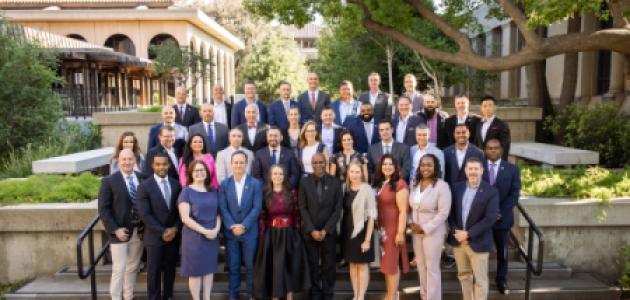


Hoover Institution (Stanford, CA) — A senior member of the Trump administration joined a comprehensive cross section of the Hoover fellowship to share insights with supporters at the Hoover Institution’s annual fall retreat on October 9 and 10.
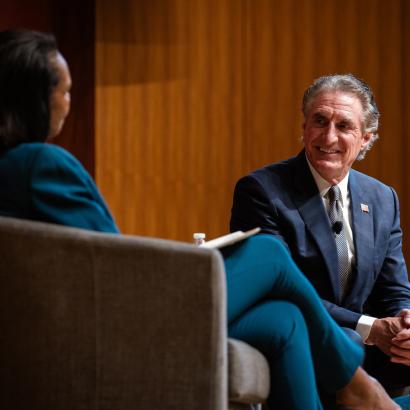
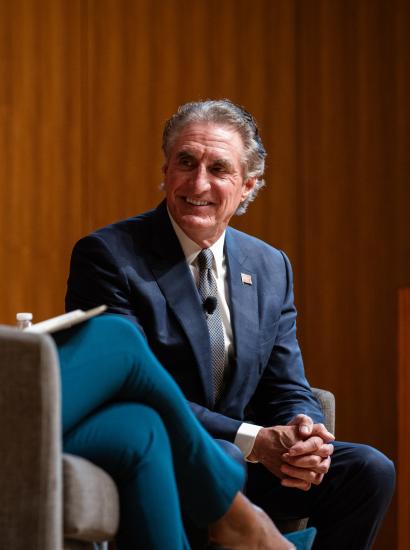
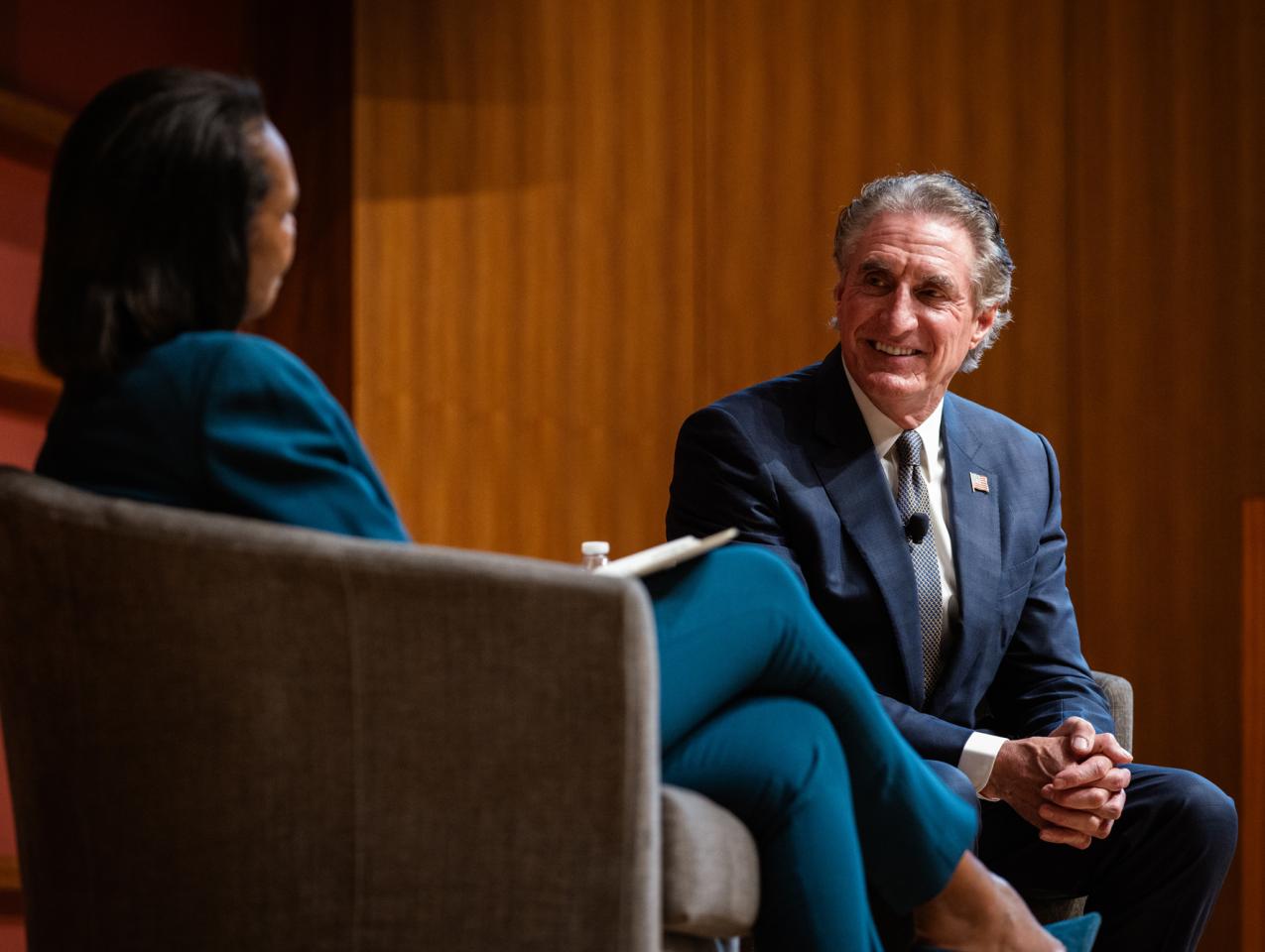
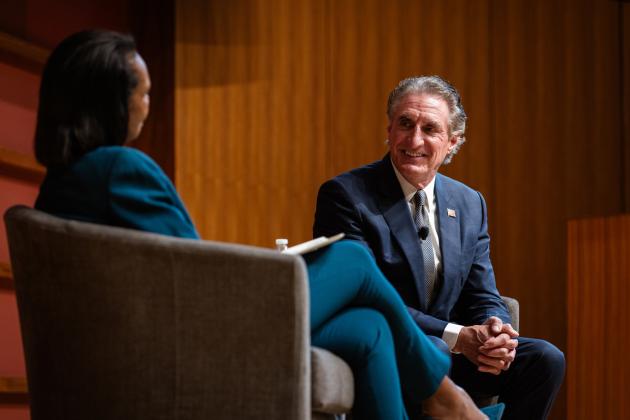
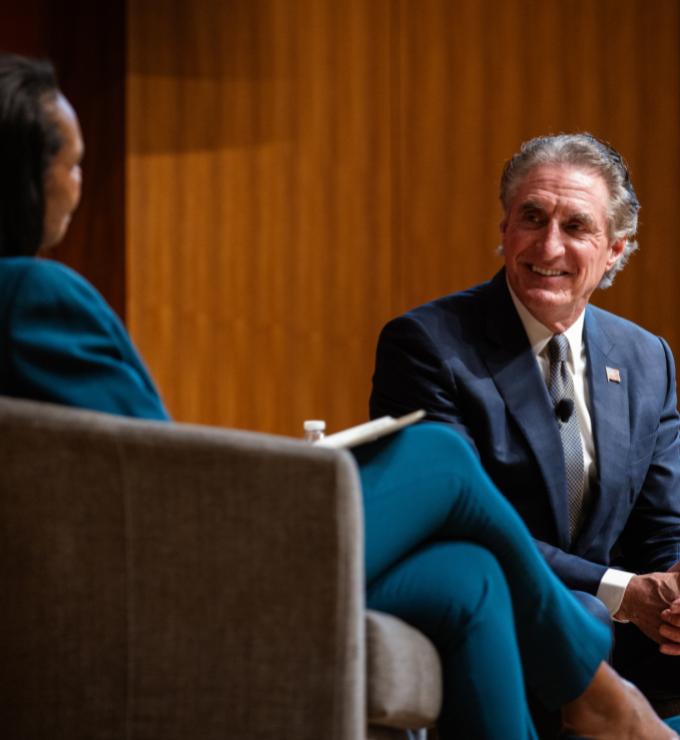
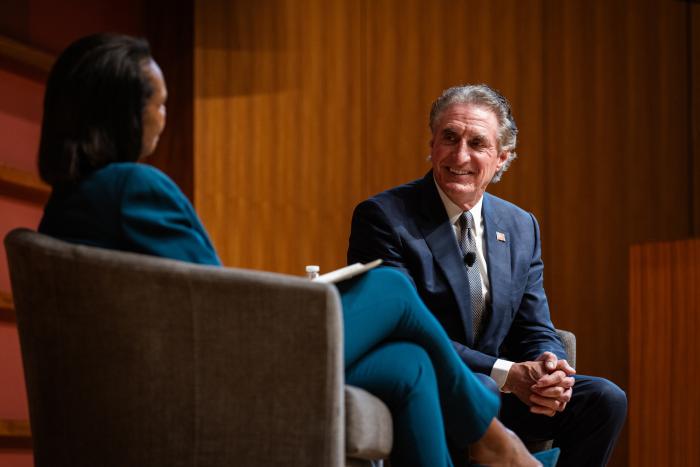
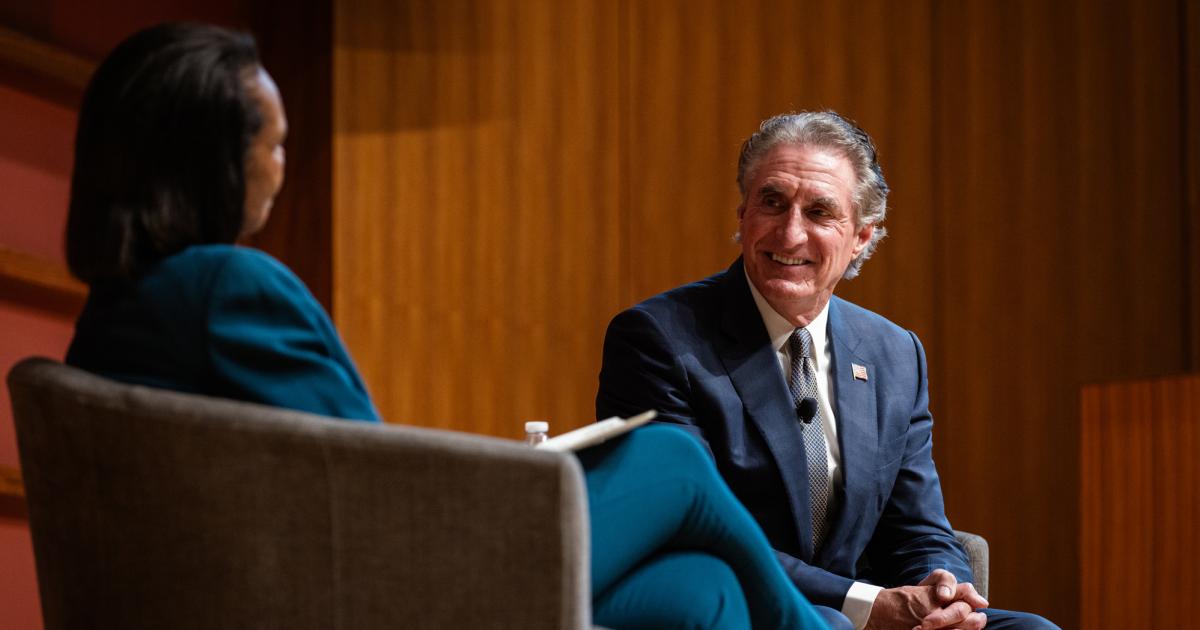
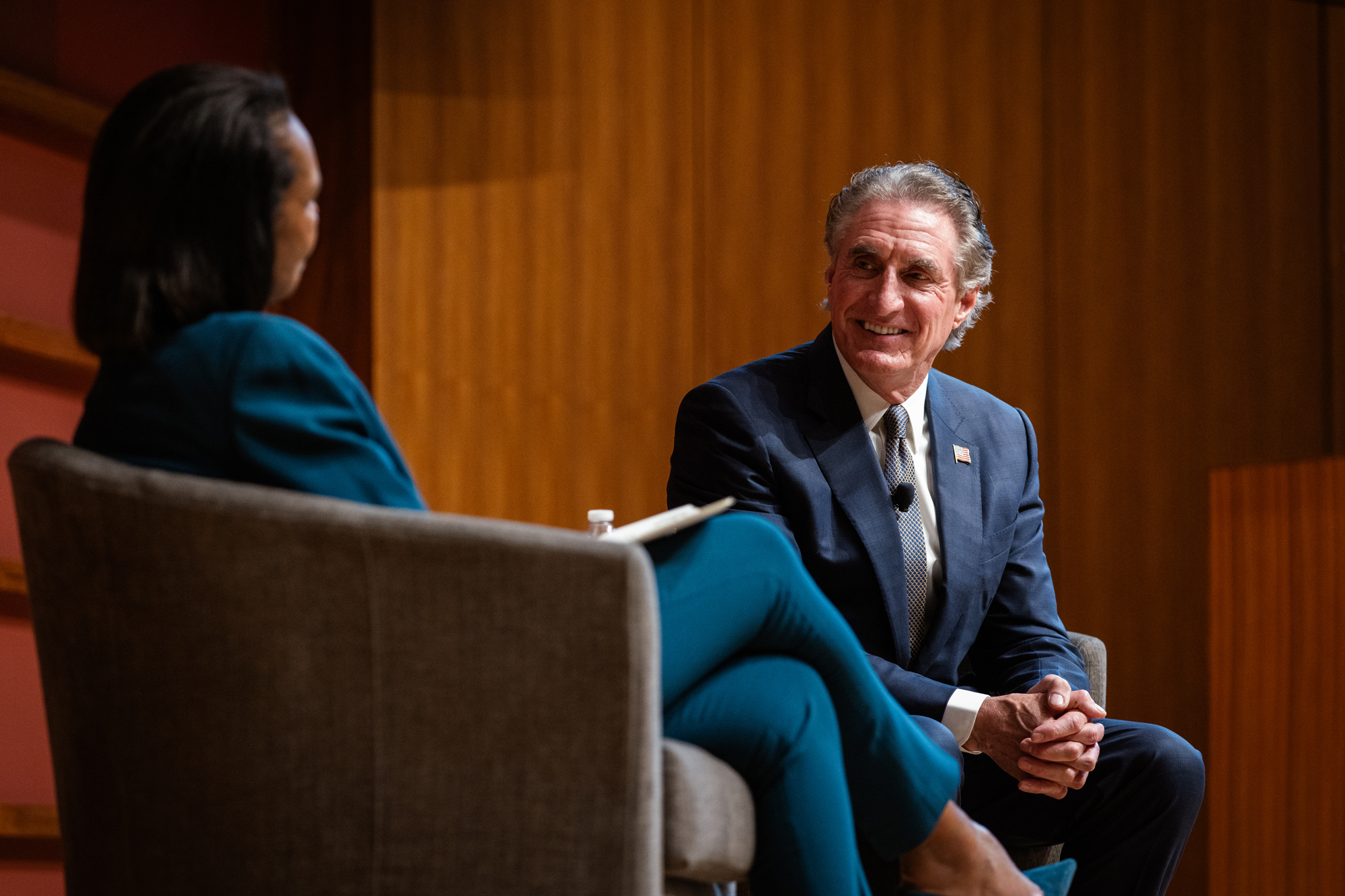
Capping two days of discussions about the future of the international order, the agenda of the second Trump administration, frontier technologies, and the threats America faces abroad was an appearance by US Secretary of the Interior Doug Burgum, who spoke with Hoover Institution Director Condoleezza Rice.
In his discussion with Rice, Burgum said, “It’s time for Americans to think about the country’s untold natural wealth, and not just stress over the national debt.”
He told attendees that a great many things have intrigued him since taking the job in January, but the fact that nobody has ever attempted to account for the untapped economic potential of America’s publicly held land and offshore territories encourages him the most.
“What’s the asset side of the balance sheet? I haven’t been able to find it,” Burgum said on October 10. “It doesn’t seem to exist, so we’re trying to put it together.”
But he said initial surveys have been promising.
He suggested that continued prosperity in America will require a change in mindset on the part of the public.
“Think of the national assets we have if you’re dismayed by the size of the national debt.”
Burgum, the former governor of North Dakota, said that his new role encompasses much more than an outsider, even the governor of an area containing vast expanses of federal land, would have expected.
“It’s the most misnamed organization in all of government,” Burgum said. “It implies you have the middle of the country, but in reality, it extends to 14 time zones, every territory of the US, including Guam, American Samoa, and Alaska.”
Across all of those territories, Burgum said, his focus is on how to unlock them to provide the United States with more of what it needs—energy, rare earth materials, and other valuable natural resources.
He said his office is working on ways to shorten the time it takes to complete environmental assessments to as little as six weeks, instead of the years they sometimes take today.
Measures like those will allow the United States to reduce dependences on China, which is increasingly flexing its muscle to control the supply of critical minerals and other supplies to the US and its allies.
Burgum’s visit was just one instance during the two-day gathering where Hoover scholars and guests helped navigate the nation’s newfound path under the second Trump administration.
During the remainder of the two-day gathering, attendees heard from Hoover scholars on a variety of issues related to changes underway in America and the world in 2025 and beyond.
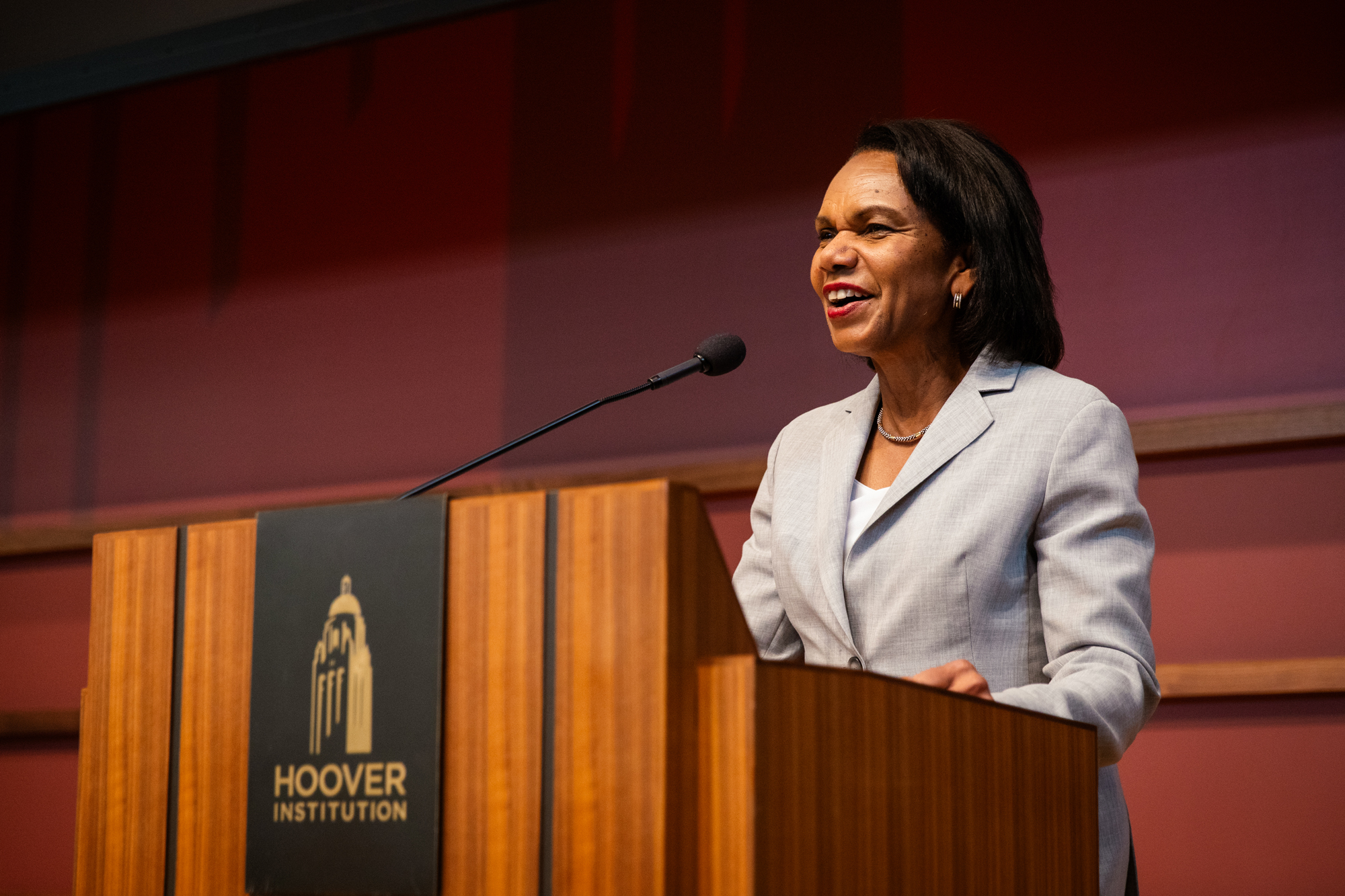
Secretary Rice spoke to supporters about new developments at Hoover this year, including the arrival of renowned legal scholar and Stanford law professor Orin Kerr as a senior fellow. Kerr will work on issues related to the Fourth Amendment and how it pertains to investigations involving digital media and devices.
Welcoming a New Fellow and Discussing the First Amendment
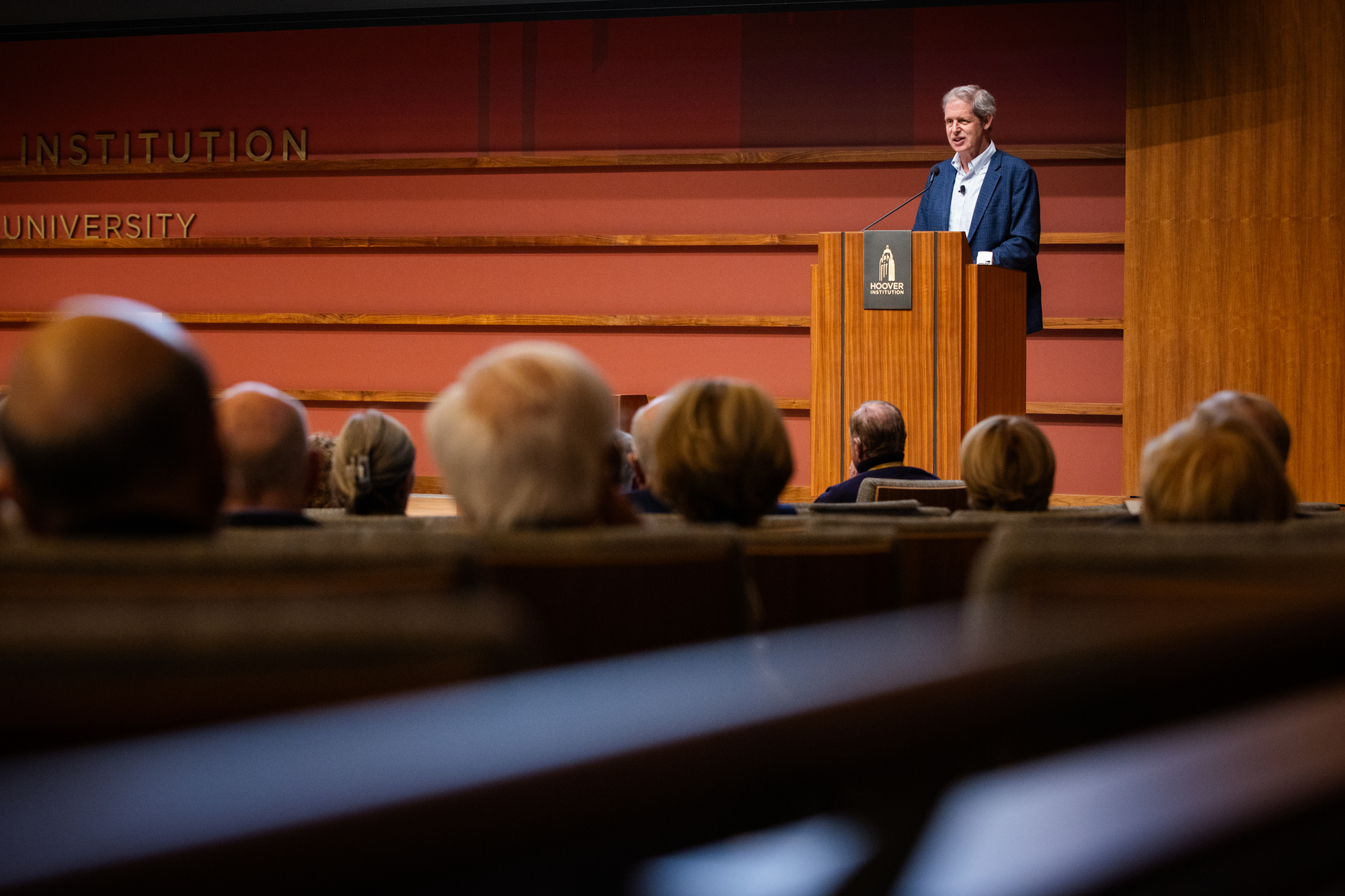
Senior Fellow Eugene Volokh spoke about challenges to free speech this year and what is at stake. He broke down the components of the Trump administration’s “Compact for Academic Excellence in Higher Education,” drafted to enforce new parameters around the conduct of universities, and spoke about whether the compact would be found to be constitutional when challenged.
Volokh also touched on the issue of the Trump administration’s pressure campaign that resulted in the temporary suspension of Jimmy Kimmel’s television program, and spoke about the impact of deporting noncitizens because of their speech.
What Will the Future International Order Look Like?
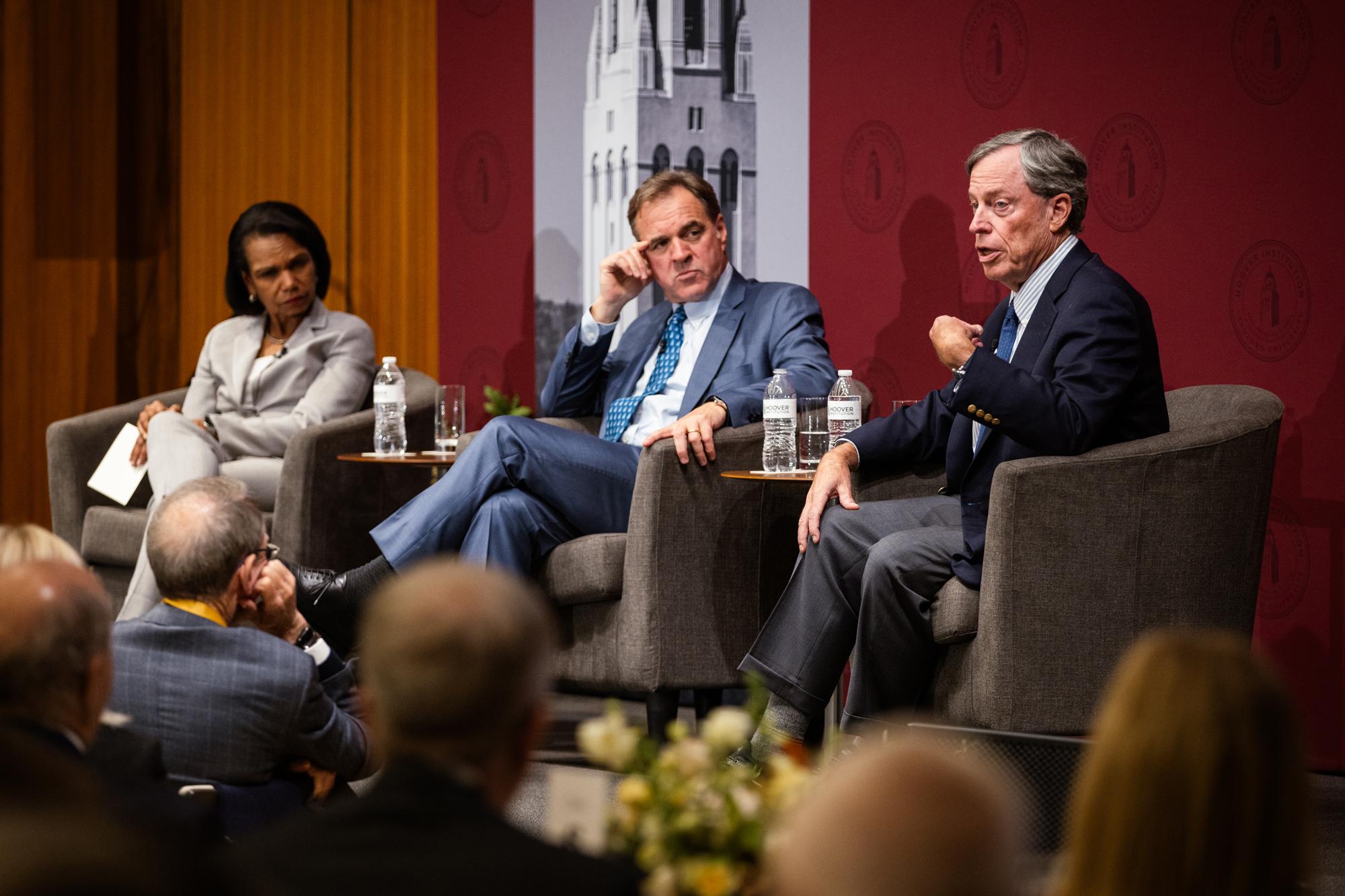
Rice also joined Senior Fellows Niall Ferguson and Philip Zelikow to discuss recent trips by Hoover delegations to Washington, Berlin, and London, where they heard from leaders including former British Prime Ministers Tony Blair and Rishi Sunak.
The goal of the trips was to build upon Rice’s ongoing effort to determine the future course and shape of the international order—what Rice describes as the economic and security “commons” that enabled free trade, openness, and democracy to flourish after the end of the Second World War.
On Self-Censorship
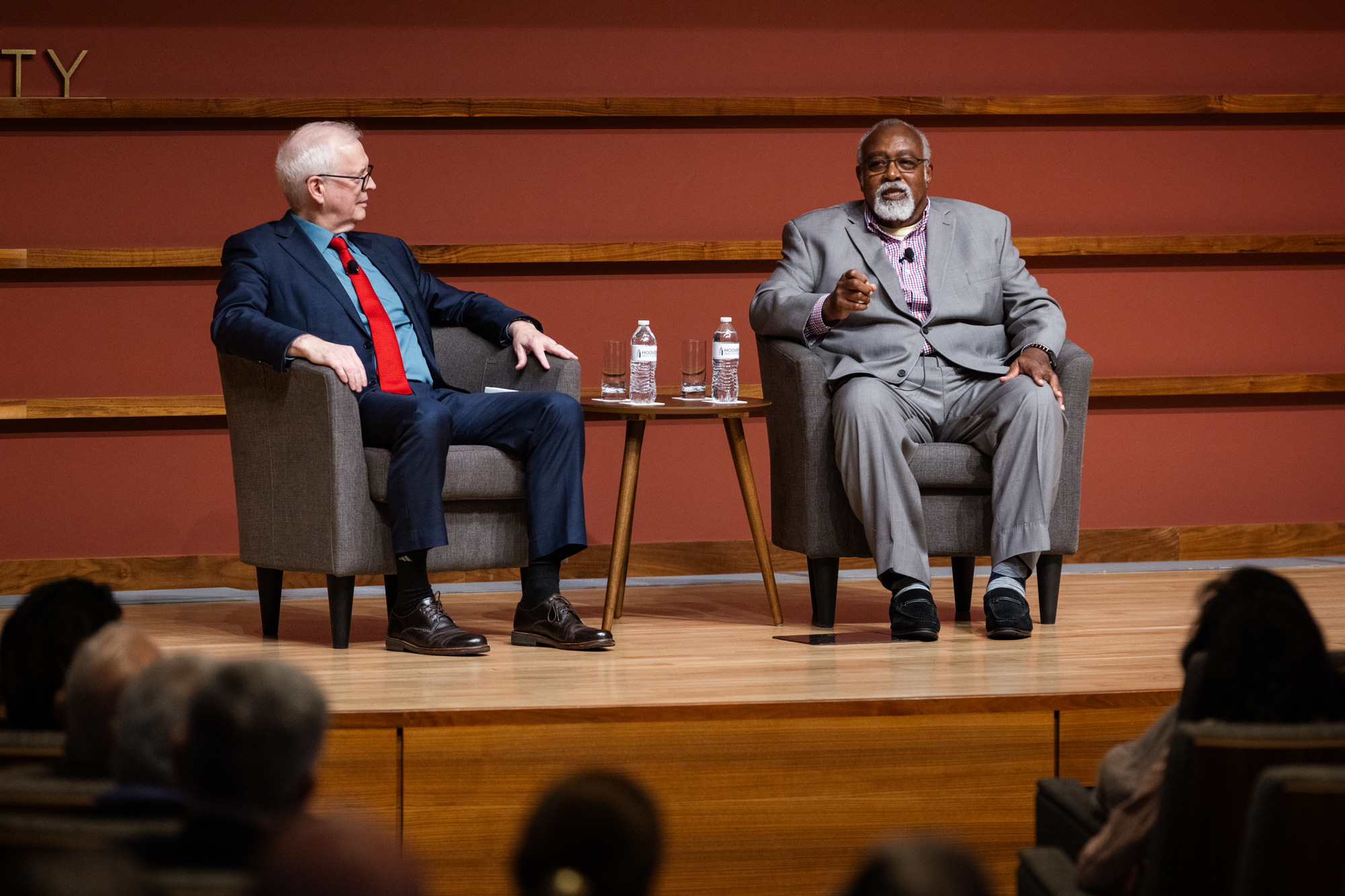
In a sit-down talk with Senior Fellow Steven J. Davis, Distinguished Visiting Fellow Glenn Loury spoke of his life and how his path in higher education led him to question elements of the common dogma present on most university campuses during his career.
He told Davis of the professional harms, threats, and damage to his reputation he suffered for merely pointing out the facts on issues such as urban decay and crime, and their impact on America’s Black population.
Trump and Counterrevolutionary Times
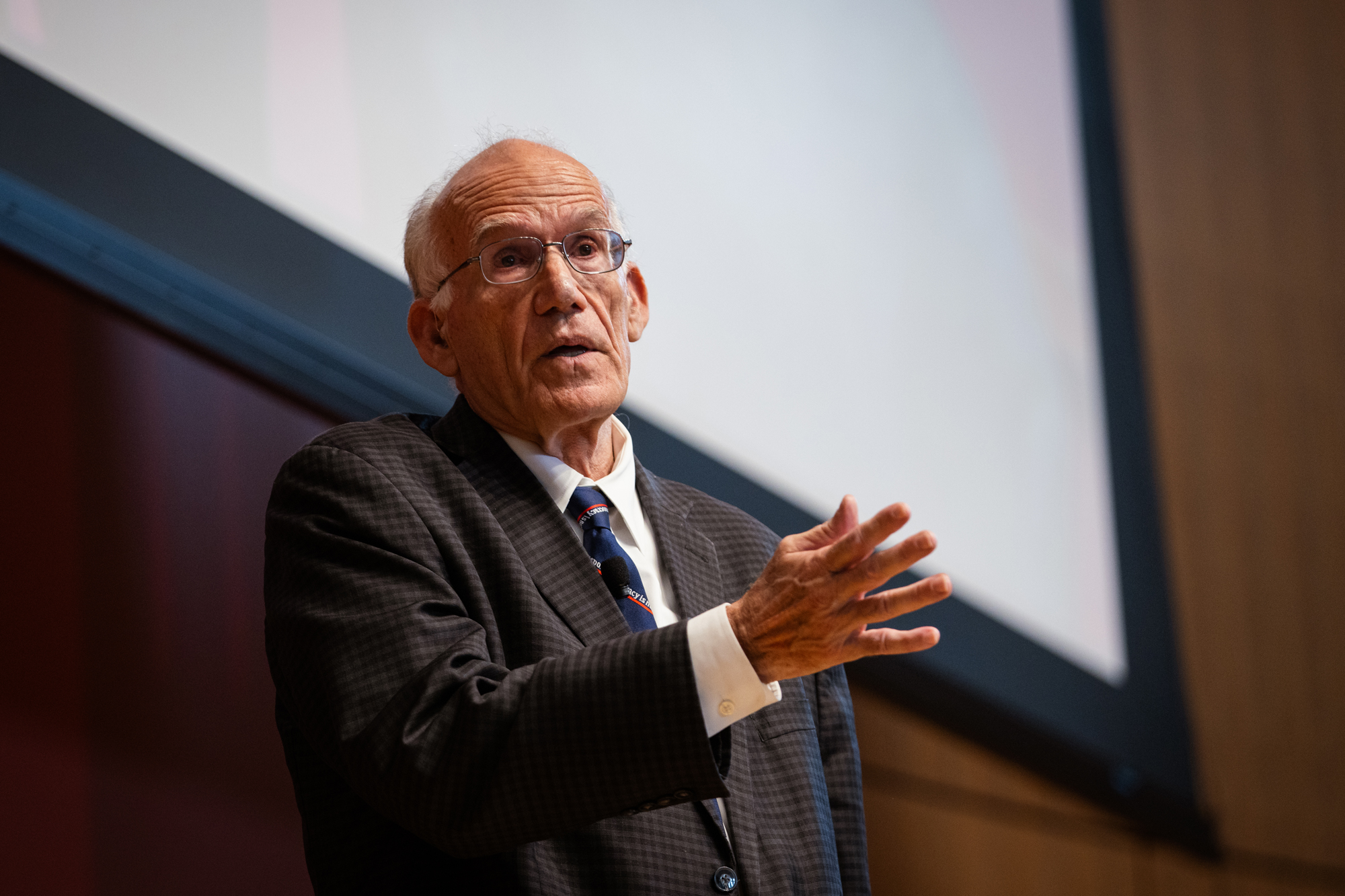
Senior Fellow Victor Davis Hanson, nearing completion of his second book on President Donald Trump, spoke of the “counterrevolutionary” times in which America appears to find itself—with the Trump administration eschewing the nation’s traditional major trade and security relationships, and unwinding and dismantling the diversity, equity, and inclusion efforts that have scaled up over the past fifteen years—and how Trump’s time out of office guides his second administration.
With his choices of people such as Tulsi Gabbard, Robert F. Kennedy Jr., and even Hoover fellow Jay Bhattacharya to senior government posts, Davis Hanson argues, Trump is putting people in charge who “each have a private grievance against the bureaucracy they are running.”
Securing America
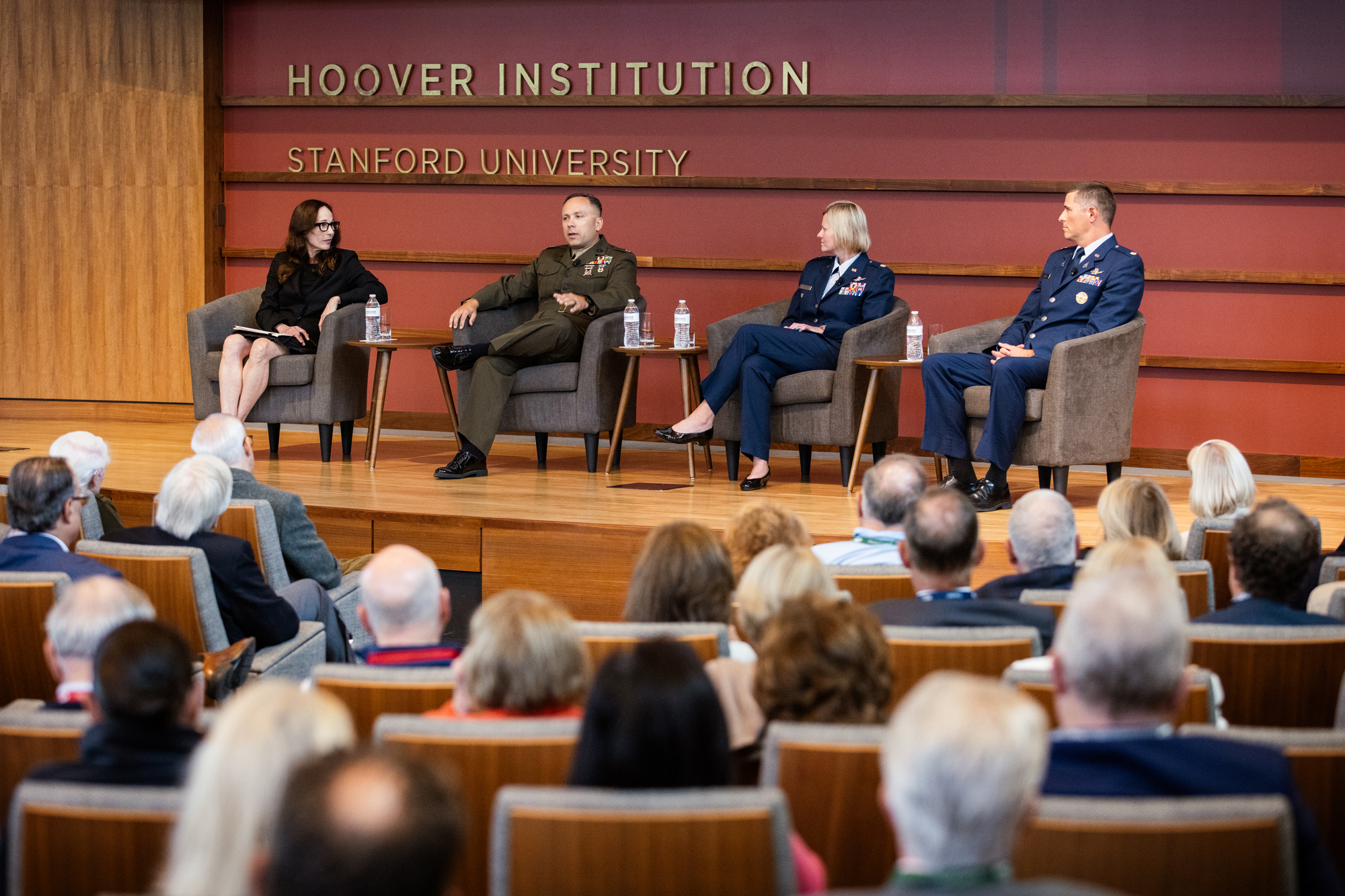
Moving to the realm of American defense, Senior Fellow Amy Zegart introduced the 2025 class of National Security Affairs Fellows with a panel discussion featuring Lt. Col. Leo Spaeder of the US Marine Corps, Lt. Col. Katherine Onstad of the US Air Force, and Lt. Col. Patrick Gaynor of the US Space Force.
They each spoke of contemporary challenges facing their service branch, from satellites that can maneuver and grapple with one another in space to drone warfare and the insulation of US networks from intrusion by malign actors.
Understanding Frontier Tech
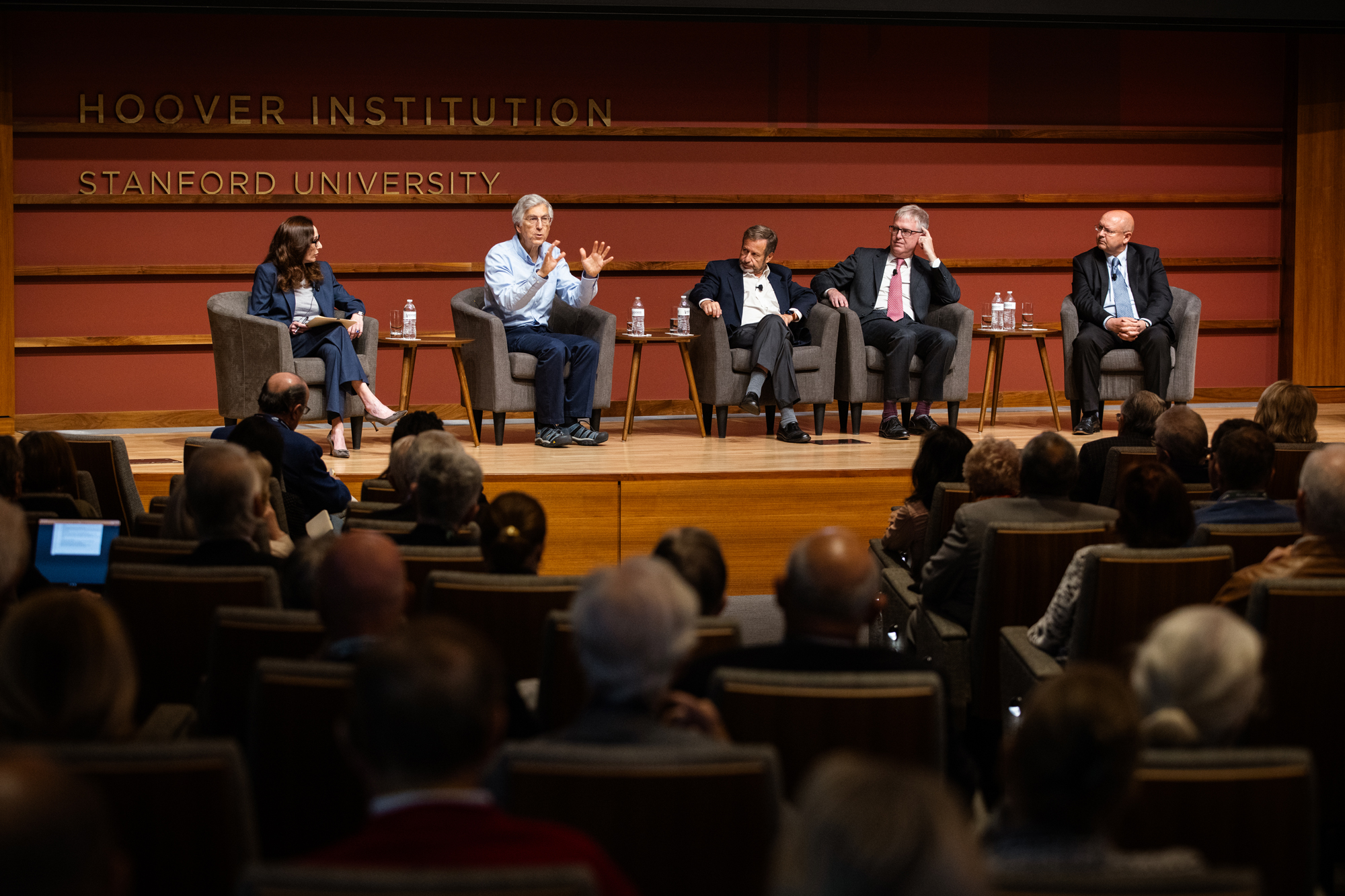
In the wider world of technological change, Zegart brought together contributors to the Stanford Emerging Technology Review (SETR), including Stanford Engineering professor Mark Horowitz and Hoover fellows Steven Koonin, Drew Endy, and Martin Giles to discuss the initiative and the pace of change in select industries, including electricity generation and synthetic biology. They also speculated on when quantum computing will become commercially viable and how America and other nations will meet the energy needs of the data centers that propel generative AI.
Formulating Credible Monetary Policy
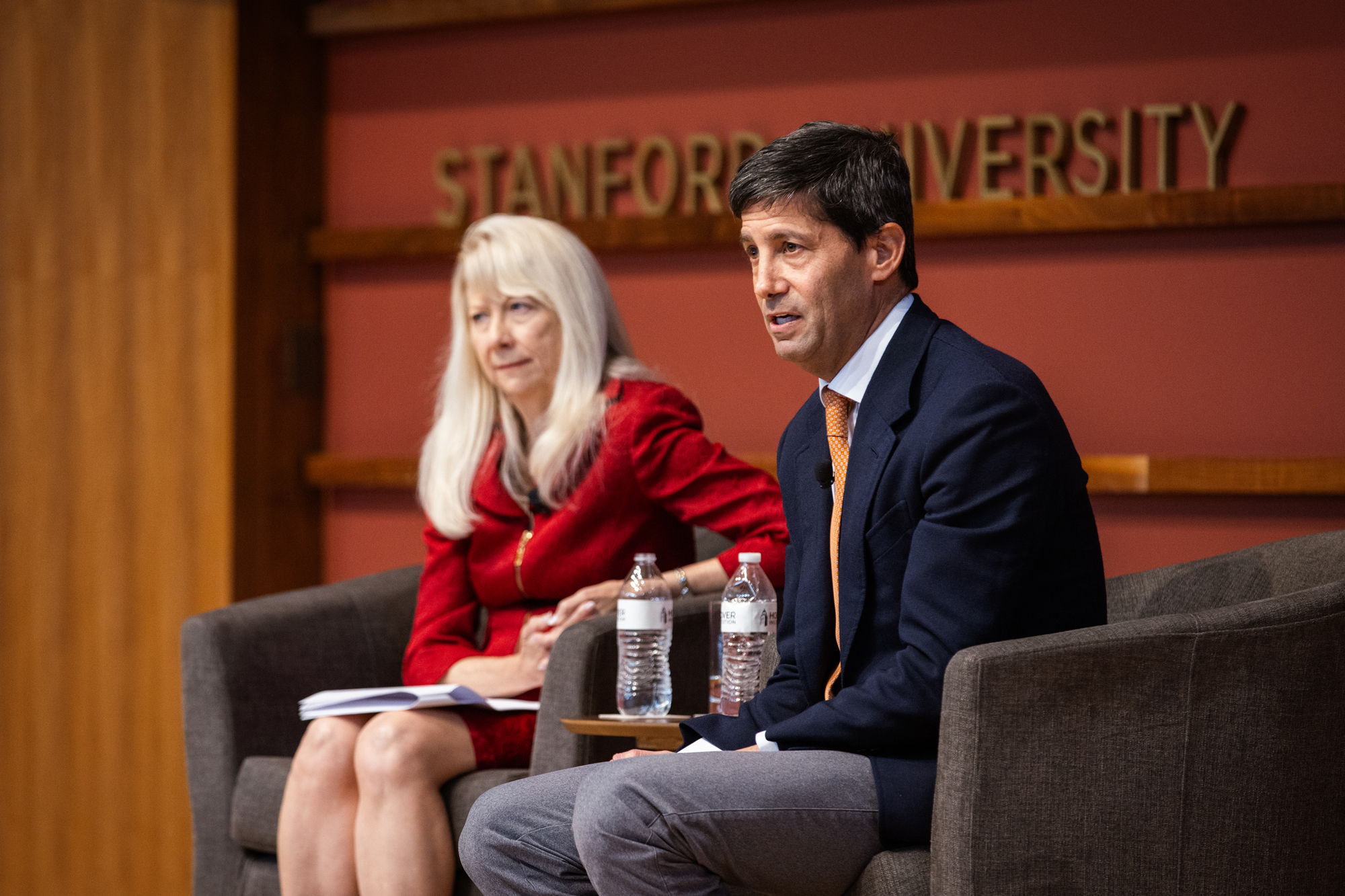
In a talk focused on monetary policy, Senior Fellow Valerie Ramey spoke with Distinguished Visting Fellow Kevin Warsh about the challenges facing America today. They also discussed ways to restore American credibility in bond markets and how to reverse the trend of Federal Reserve chairs becoming “celebrities.”
How to Govern AI
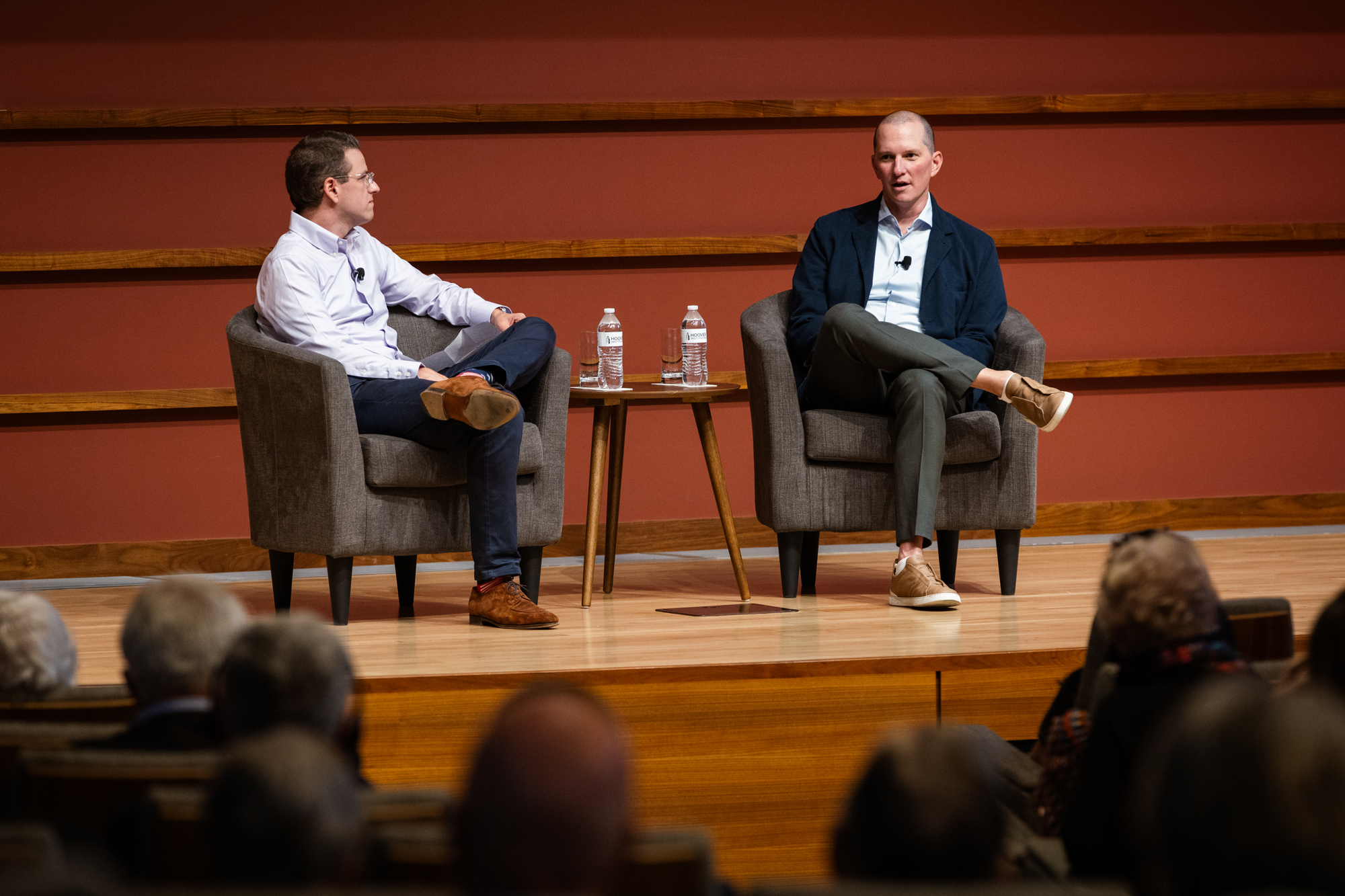
Looking to the future of technology, Senior Fellow Andrew B. Hall spoke with Brent Harris, vice president of wearables at Meta, about the future of the online world, and how societies, governments, and firms can work together to design optimal ways in which artificial intelligence is governed and managed in the free world.
Overall, the two-day gathering demonstrated how Hoover scholars are working to understand the global reorientation underway today, and are evaluating it through the lenses of geopolitics, finance, frontier technology, and historical precedent.