Hoover Tower (Stanford, CA) — On an early summer weekday at Stanford, high school senior Ahvish Roy started into a role that saw him examine the fundamentals of battle, reflect on military history with a leading scholar in the field, and inspired him to travel to a nation at war to apply what he learned.
He arrived at the Hoover Institution, opened his laptop, and began work as a Hoover Institution student fellow. He’d soon assemble notes for H.R. McMaster, the former national security advisor and current Hoover senior fellow. He moved between online sources, the Hoover Library & Archives, and Stanford’s Green Library.
Roy, now a senior at St. Francis High School in Mountain View, California, said he came to Hoover in June 2025 without a clear picture of what the fellowship would involve.
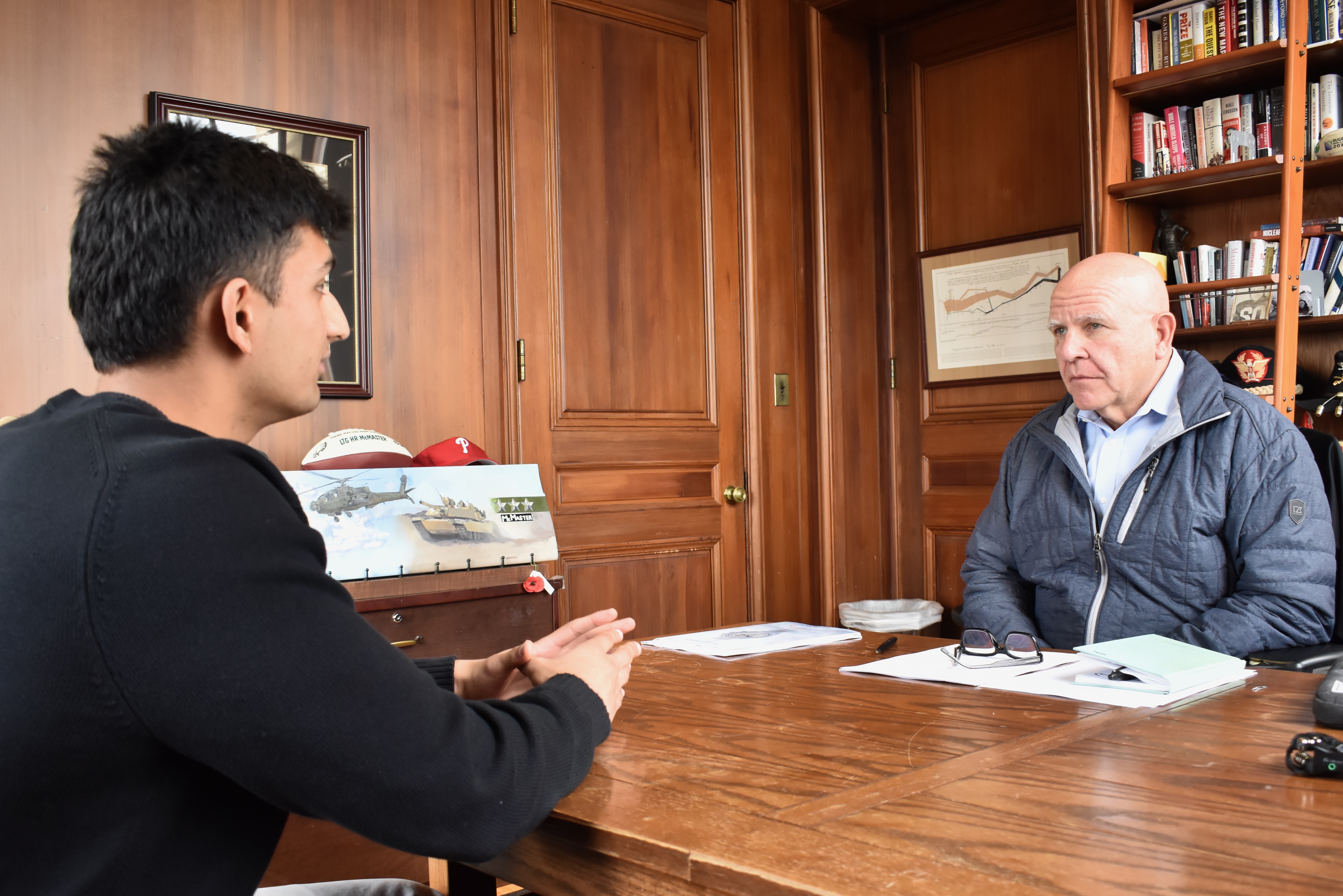
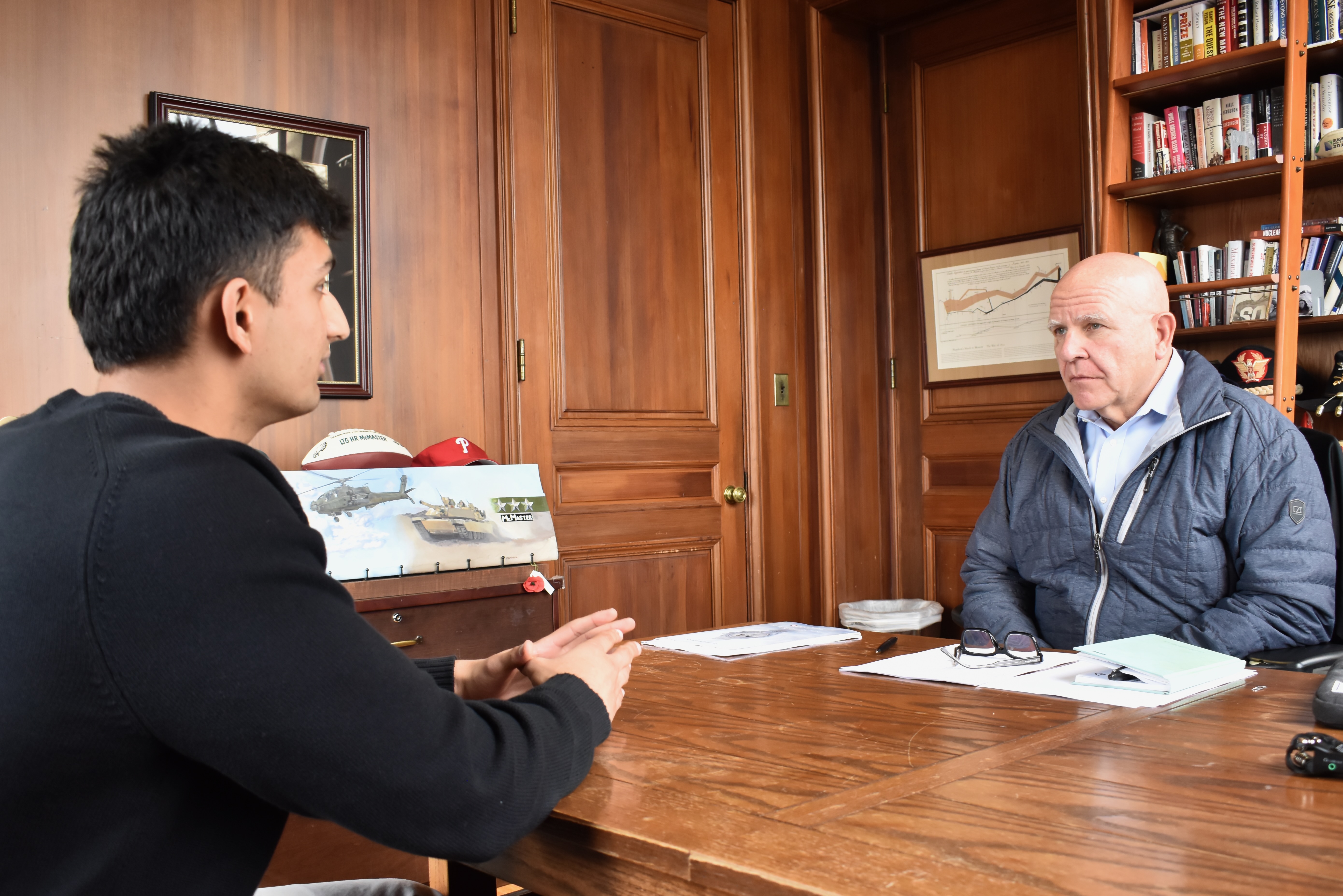
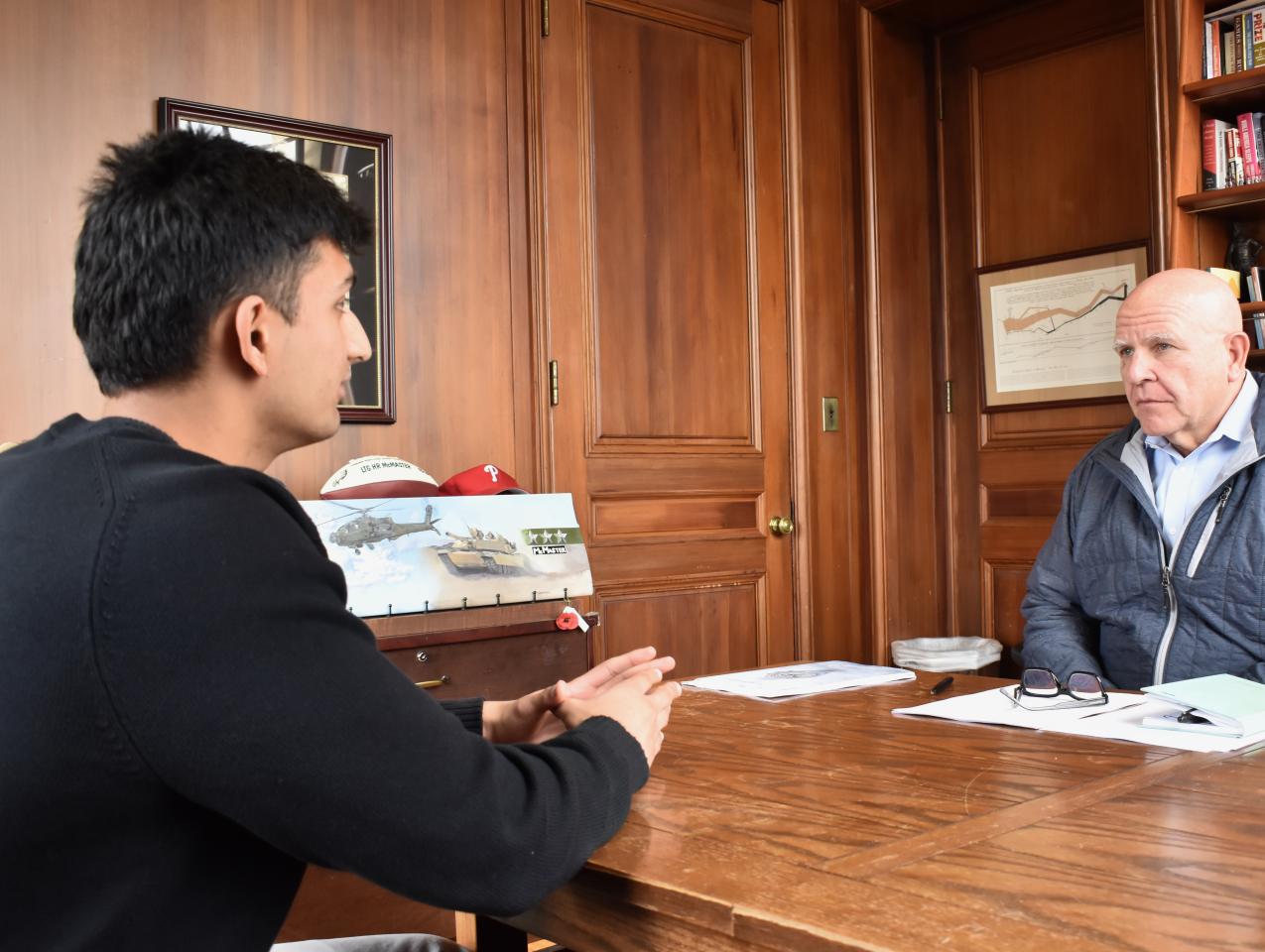
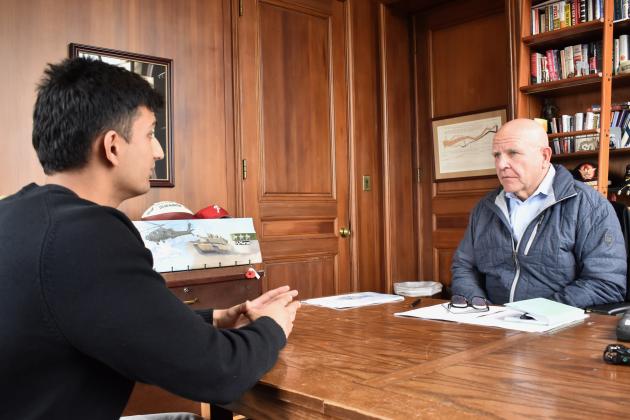
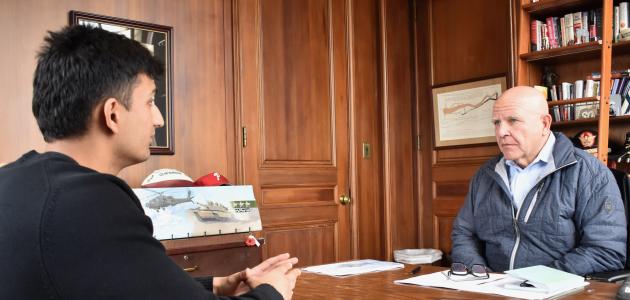
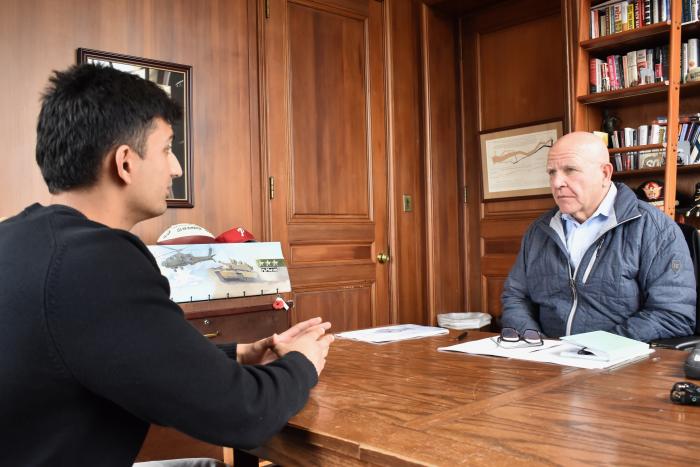
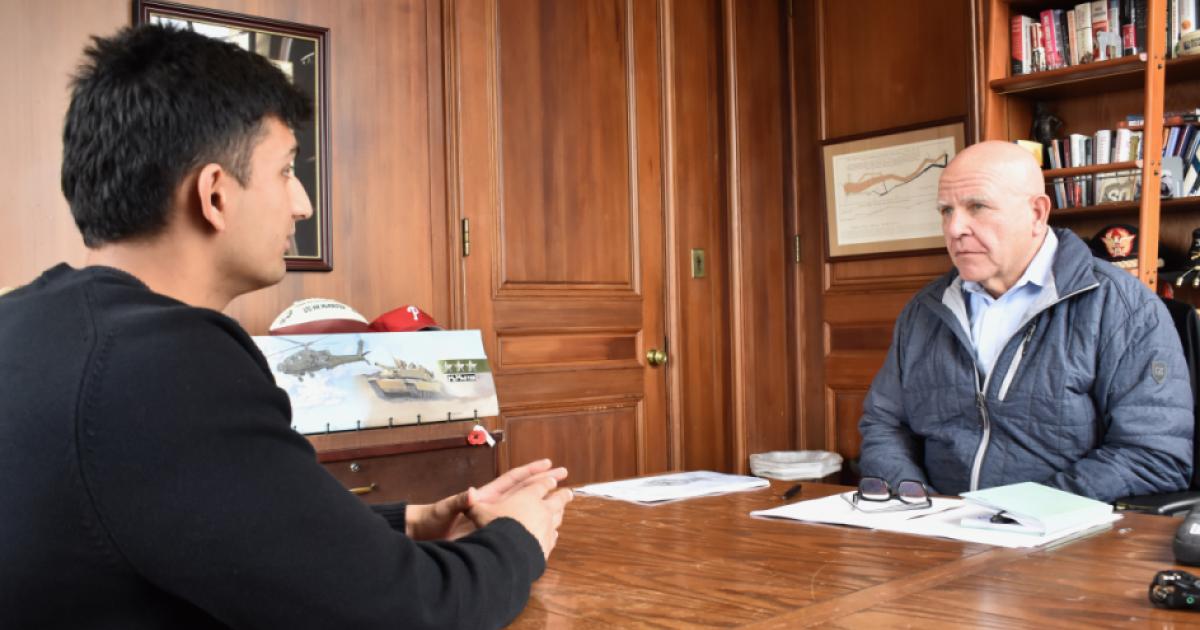
“I didn’t actually know what I was walking into,” Roy said to McMaster in a conversation in his bookshelf-laden Hoover Tower office. “The vastness, just how big it was.”
Over the next three months, Roy helped his mentor prepare research for McMaster’s new book, expected to be published sometime in 2027. Roy produced evidence sheets and background memos on how military themes have shaped wars across history. McMaster had Roy focus on one theme in particular: initiative.
Roy said he spent weeks collecting cases that showed how taking initiative in warfare, meaning proactively setting the conditions, pace, and location where fighting takes place rather than merely reacting to enemy movement, can change outcomes on the battlefield, even when forces are outnumbered, outgunned, or operating with limited resources.
He looked at episodes from the Revolutionary War, the Vietnam conflict, both Iraq wars, and the ongoing conflict in Ukraine, where small-unit decisions and rapid adaptation have become central to combat success.
The work was not limited to reading and summarizing. Roy said McMaster encouraged him to access to a wider community of scholars and attend policy discussions. He attended sessions of the 2025 Hoover Institution International Seminar and listened to McMaster and other speakers, including former Secretary of State Condoleezza Rice and historian Stephen Kotkin.
Roy said those sessions made the research feel connected to policy decisions with real geopolitical consequences.
“Hoover let [me] sit in on those discussions,” he said. “So, [students] really felt involved in the real world.”
That exposure was also part of what McMaster wanted to pass along. In an interview with Hoover.org, McMaster framed the student fellowship offered to Roy as more than a line on a resume. He described it as a chance for students to practice agency, curiosity, and responsibility.
“It’s great that Hoover is engaging high school students,” McMaster said, next asking Roy what he gained from the experience.
Roy said McMaster pressed him to think beyond abstract debates and to treat learning as an active pursuit. The goal, Roy said, was to build a habit of asking hard questions and seeking evidence, then testing those ideas against reality.
That approach took on a new urgency as Roy dug deeper into the conflict in Ukraine.
Roy said he became absorbed by the war while researching for McMaster, tracking places and battles that were often listed in daily newscasts but that otherwise felt distant. He read about the siege of Kharkiv, the recapture of Kherson, and the shifting lines in Donetsk. But he felt the stories behind the headlines were still missing.
“I knew from a distance,” Roy said. “But the actual stories that were going on there, I still felt like I didn’t know.”
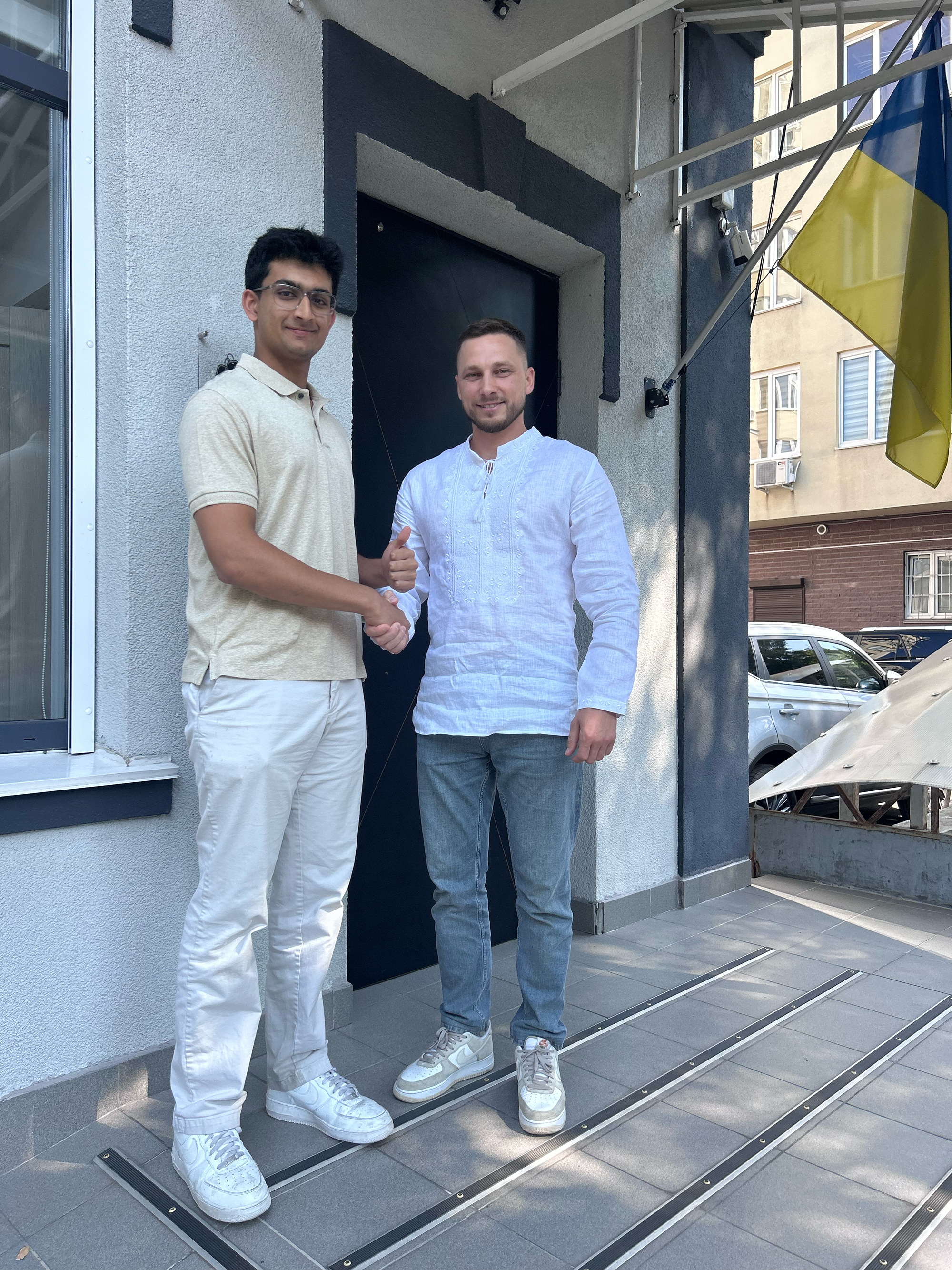
So, Roy made a decision that would take him out of his comfort in the Bay Area in a bid to learn more. He would go to Ukraine himself.
McMaster noted the leap. “You made the unusual decision as a high school junior, rising senior, to go to Ukraine and see it for yourself.”
Roy said he took the message he heard at Hoover literally: If civic responsibility starts with attention, then he wanted to pay attention in person. He said McMaster encouraged the idea.
“Hoover had told me to engage in the real world,” Roy said. “So, I was like, ‘Why not make this trip?’ And I found backing to go from yourself,” he said to McMaster. “You thought it’d be a great idea.”
Roy traveled to Ukraine in September 2025 and stayed in Kyiv for one week. His journey began with a flight into Krakow, Poland, then he rode by car for about fourteen hours to reach the Ukrainian capital. In Kyiv, he interviewed ten Ukrainian soldiers, including helicopter pilots, drone pilots, battalion commanders, and officers from the Ukrainian Territorial Defence Forces.
Roy has a strong interest in technology and plans to study computer science in college. He said he is drawn to emerging technologies and wants to use AI to address major challenges, including warfighting. Ukraine, he said, offered a view into how drones, electronic warfare, and rapid innovation are rapidly changing modern combat. But he said the human side of conflict, expressed firsthand to him by those who suffered, resonated further.
“The human aspect always interested me more,” Roy said. He said he wanted to understand how people in wartime endure fear, loss, and uncertainty, and how they keep moving under pressure.
In conversation after conversation on the ground in Ukraine, Roy said he heard the same idea: Orders may come from high headquarters, but the outcome often depends on decisions made quickly at the lowest levels. What he saw, he said, was a culture in the Ukrainian military that prized action and adaptation.
“Everybody loved and participated in one thing,” Roy said. “That was initiative on the ground, on the battlefield.”
Roy said the trip also sharpened his sense that Americans are often removed from the stakes in Ukraine. After he returned, he decided to write an essay to share what he learned and to reach other students and a wider public.
McMaster highlighted that point in the interview, saying Roy recognized “the degree to which a lot of Americans don’t understand what’s happening in Ukraine, what’s at stake there.”
When you’ve lived your whole life with total political freedom in the United States, McMaster emphasized, it becomes hard to absorb how others half a world away are willing to die just to enjoy even a passing semblance of the same thing.
Roy said one conversation in Ukraine stayed with him. A pilot told him he might not survive the war.
“I may not be here in a year,” Roy recalled the pilot saying, “but I want my stories to be here.”
Roy said he came home with a stronger appreciation for freedom and for the comforts of life in the United States. In Ukraine, he said, people were fighting for basic independence and security, often at immense personal cost.
“I went to Kyiv and people were fighting for their freedom,” Roy said. “They were giving their lives for freedom.”
Of specific interest to Roy is how that ongoing war is changing how humans fight on the battlefield.
“I want to tell people how drones are rewriting wars.”
Roy said his student fellowship helped connect those lessons. Research for McMaster taught him to look for patterns, like initiative, across history. Ukraine showed him what that idea looks like when lives depend on it.
Next, Roy will enter college, but his trip to Kyiv may not be his last.
“I want to return to Kyiv,” Roy said. “I plan to return to Kyiv this summer to talk even more with soldiers and do some even further work helping them.”
Learn more about Hoover’s Human Security Project research team here.