



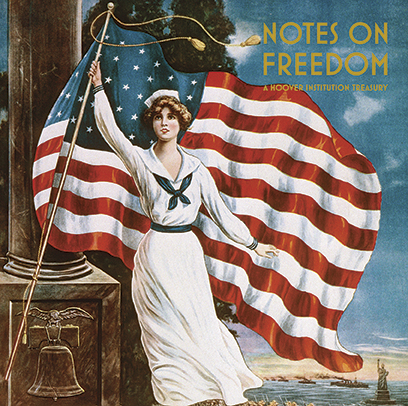
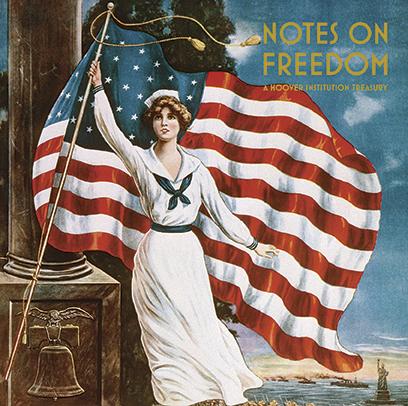
Hoover Institution (Stanford, CA) — Ahead of the 250th anniversary of America’s founding, the Hoover Institution is releasing a powerful and inspiring collection of essays, speeches, and other words of wisdom featuring renowned Hoover scholars and influential public voices, offering insights into American values, the enduring pursuit of liberty, and the meaning of freedom.
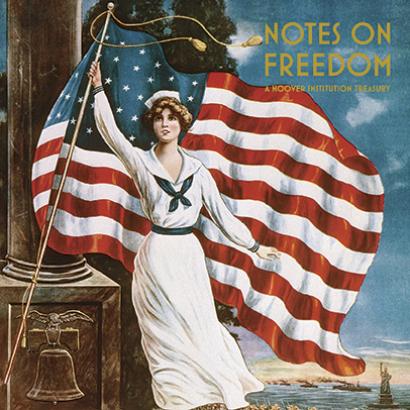
Notes on Freedom: A Hoover Institution Treasury offers reflections on the principles that have shaped the nation’s past, continue to guide the present, and illuminate the path forward—liberty, opportunity, limited government, and the meaning of freedom.
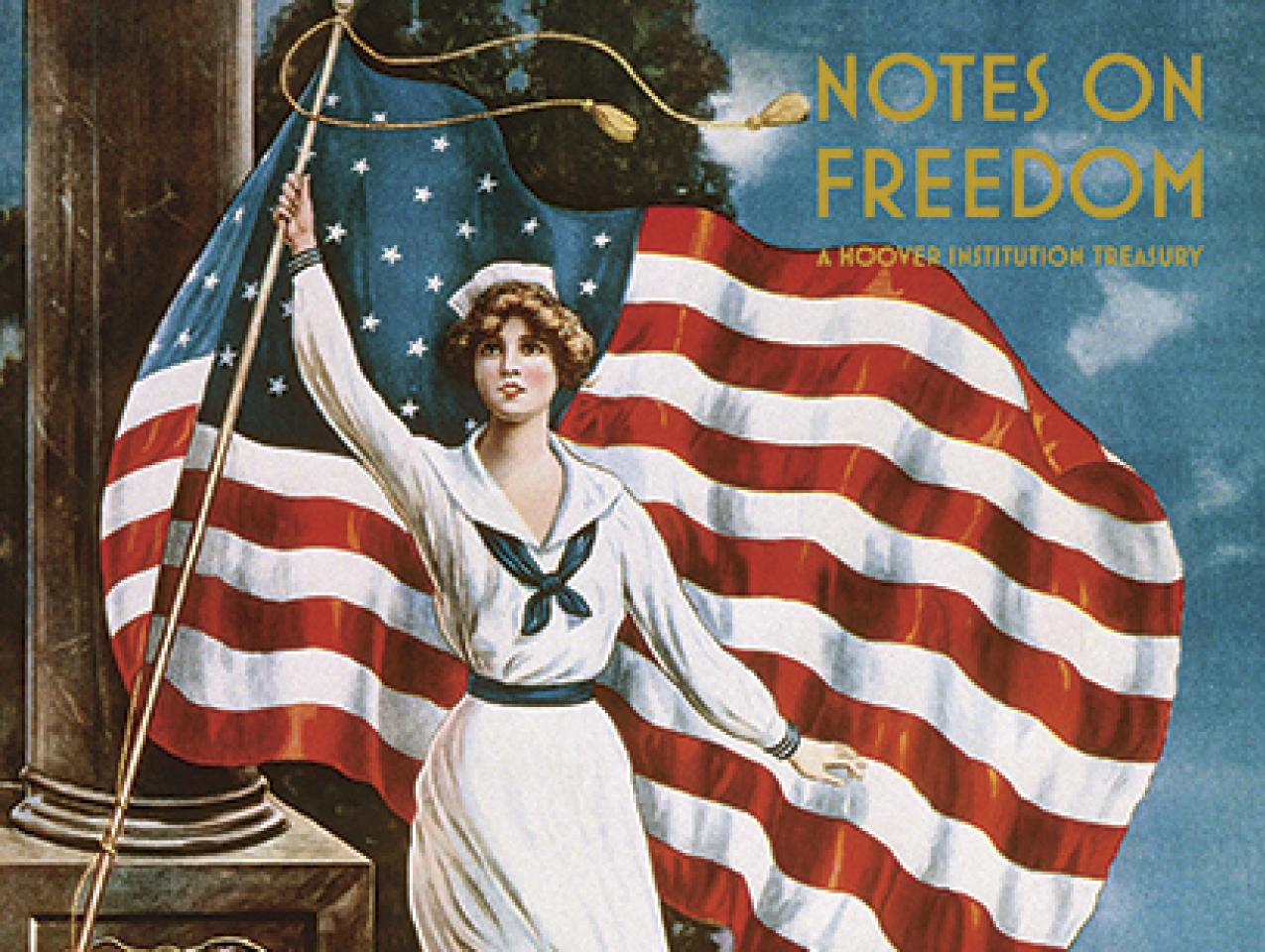
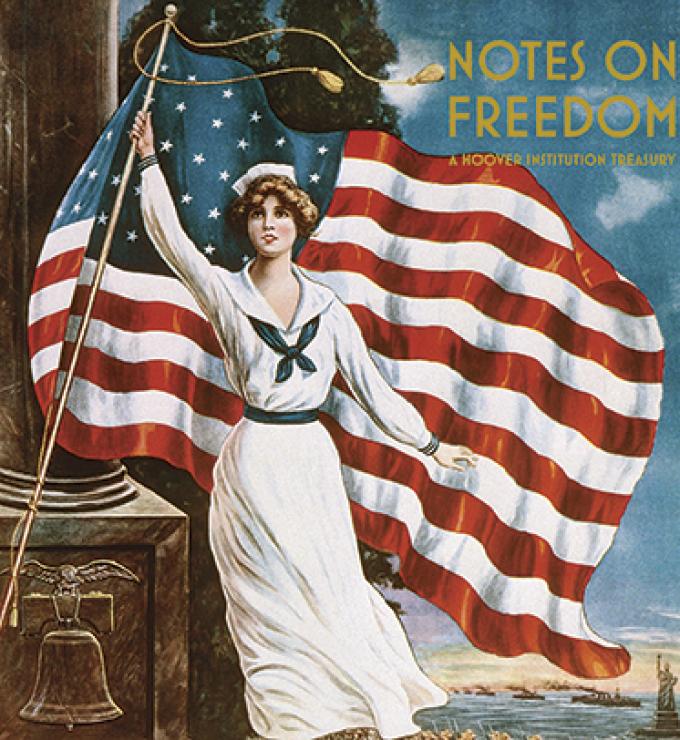
For over a century, the Hoover Institution has studied the ideas and forces that propel human liberty and well-being. This anthology continues that mission with thought-provoking insights and reflections, enhanced by a wealth of images including posters patriotic advertisements, and photographs from the renowned Hoover Institution Library & Archives.
The journey begins with reflections on what defines a free nation, featuring speeches by global leaders Ronald Reagan, Margaret Thatcher, and Herbert Hoover, as well as incisive essays on American exceptionalism from eminent Hoover scholars Annelise Anderson, Victor Davis Hanson, and George P. Shultz, demonstrating why America’s ideals continue to inspire those struggling for liberty around the world.
Notes on Freedom then turns toward personal experiences of freedom and oppression. The late Navy admiral and Medal of Honor recipient James Bond Stockdale stirringly describes how he learned the internal mechanisms of freedom as a prisoner of war in North Vietnam for seven and half years, while Jimmy Lai inspires with his commitment to a free Hong Kong in the face of political persecution and looming imprisonment by Communist authorities. Hoover’s Shelby Steele and Niall Ferguson, among other leading thinkers, examine the forces that threaten and protect liberty, from fascism to the civil rights movement.
The book continues by exploring the economic principles that sustain a free society, including the inimitable Milton Friedman's clear-eyed defense of free markets. Towering intellectuals and champions of freedom including Thomas Sowell, Walter E. Williams, and John H. Cochrane explain how limited government and the rule of law foster prosperity and enhance human liberty.
Finally, the book examines the challenges of our time and looks to the future. Scholars including Jim Mattis, H.R. McMaster, and Stephen Kotkin offer insights on civic renewal, civic engagement, and the importance of respectful debate, as well as the defense of freedom amid a rising new geopolitical order. Contributors also examine the potential impact of today’s emerging technologies and how America can steer them toward a promising future.
Notes on Freedom is a celebration of the ideas that have fueled the American experiment, as well as a timeless contribution to the tradition of free societies.
Contributors:
Fouad Ajami, Annelise Anderson, Scott W. Atlas, Peter Berkowitz, William F. Buckley Jr., Mary Bush, John H. Cochrane, Drew Endy, Niall Ferguson, Chester E. Finn, Jr., Milton Friedman, Victor Davis Hanson, Ayaan Hirsi Ali, Herbert Hoover, Freeman Hrabowski III, A. Ross Johnson, Stephen Kotkin, Jimmy Lai, Fei-Fei Li, Jim Mattis, H.R. McMaster, Mont Pelerin Society, Ronald Reagan, Condoleezza Rice, Russ Roberts, Peter M. Robinson, George P. Shultz, Thomas Sowell, Shelby Steele, James Bond Stockdale, Margaret Thatcher, Walter E. Williams, Amy Zegart.
“Down through a century and a half this American concept of human freedom has enriched the whole world. . . . Wherever in the world the system of individual liberty has been sustained, mankind has been better clothed, better fed, better housed, has had more leisure. Above all, men and women have had more self-respect. They have been more generous and of finer spirit.”
—Herbert Hoover, “Constitution Day Address” (1935)
For coverage opportunities, contact Jeffrey Marschner, 202-760-3187, jmarsch@stanford.edu.