Barriers to Climate Adaptation: Hoover Workshop
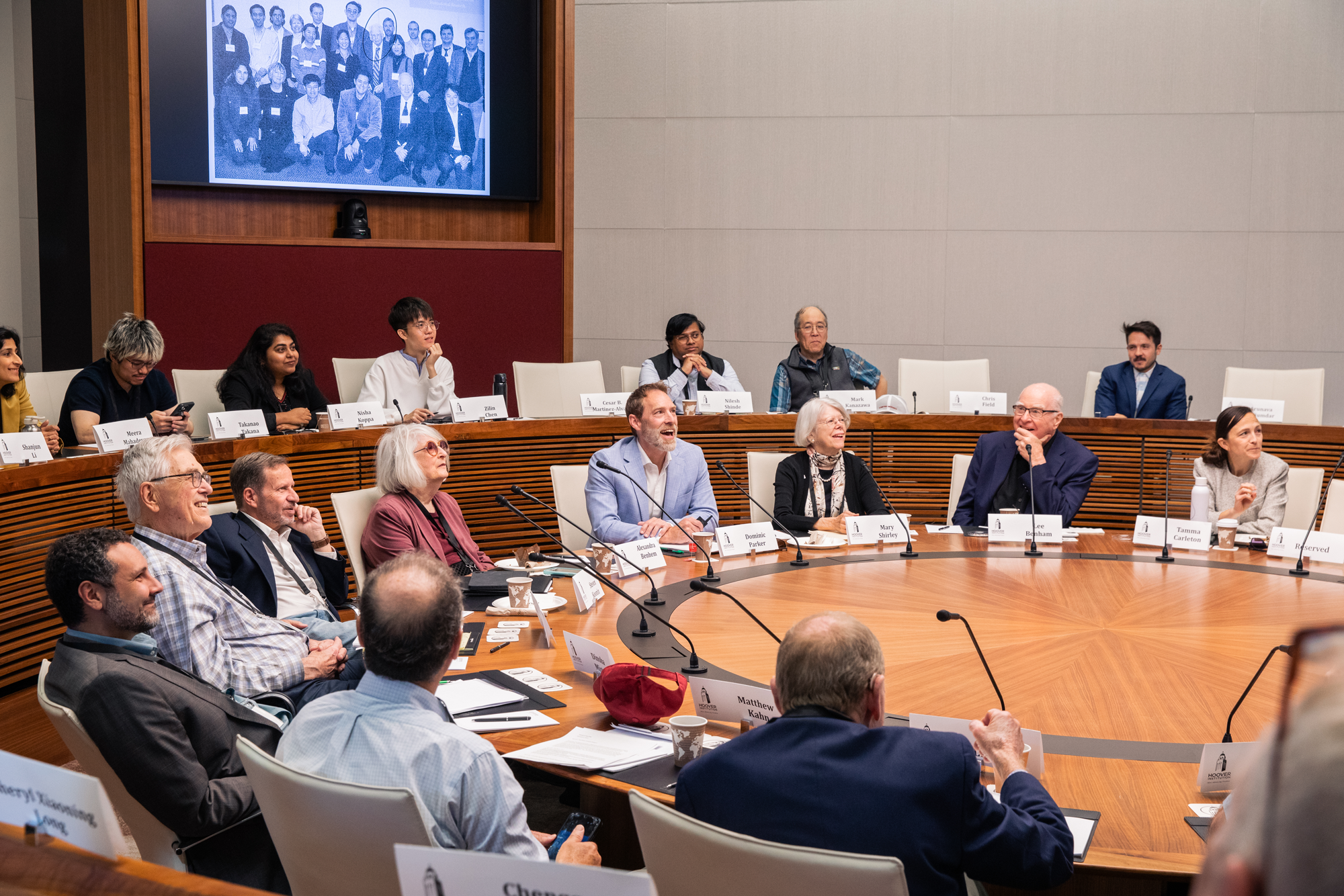
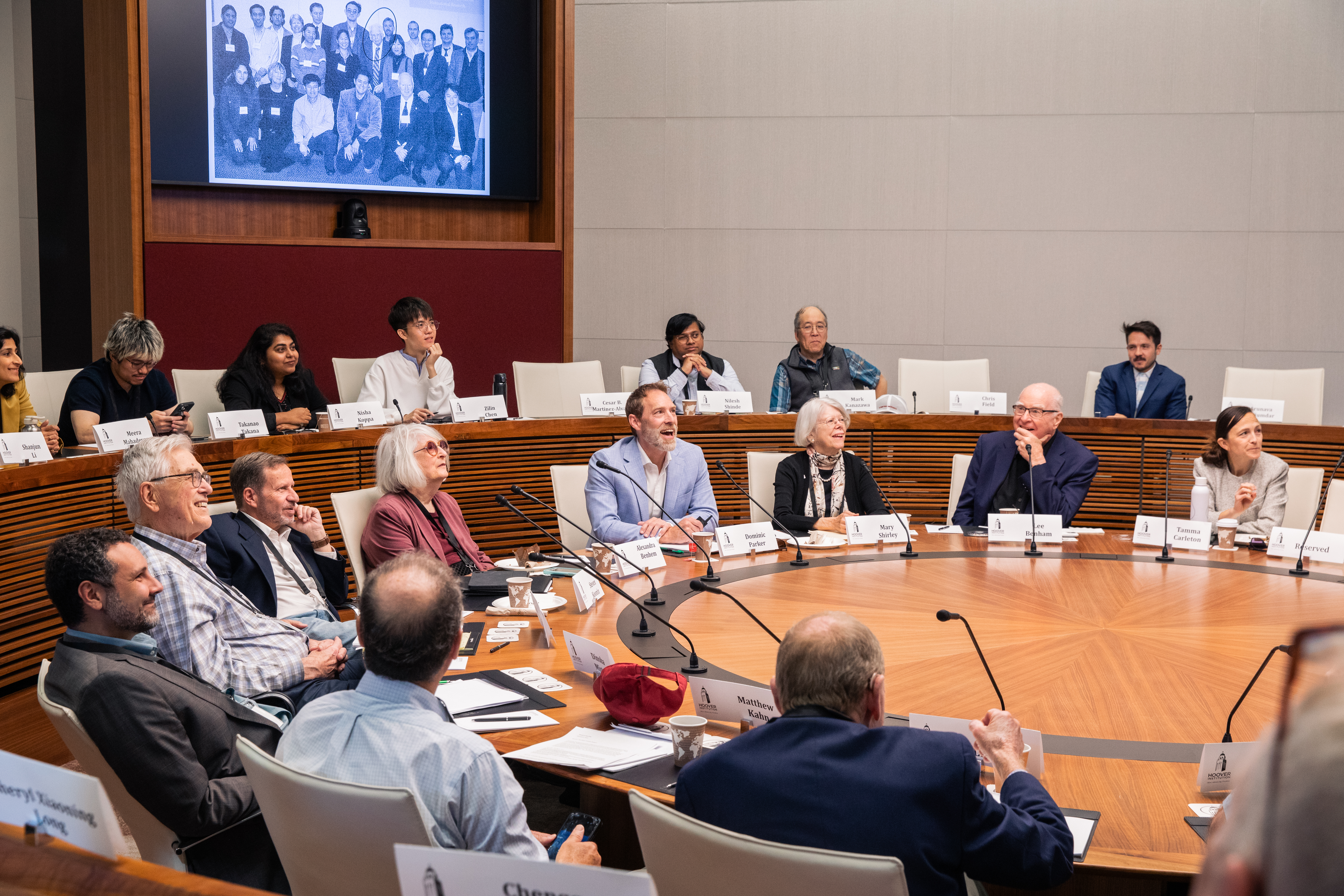
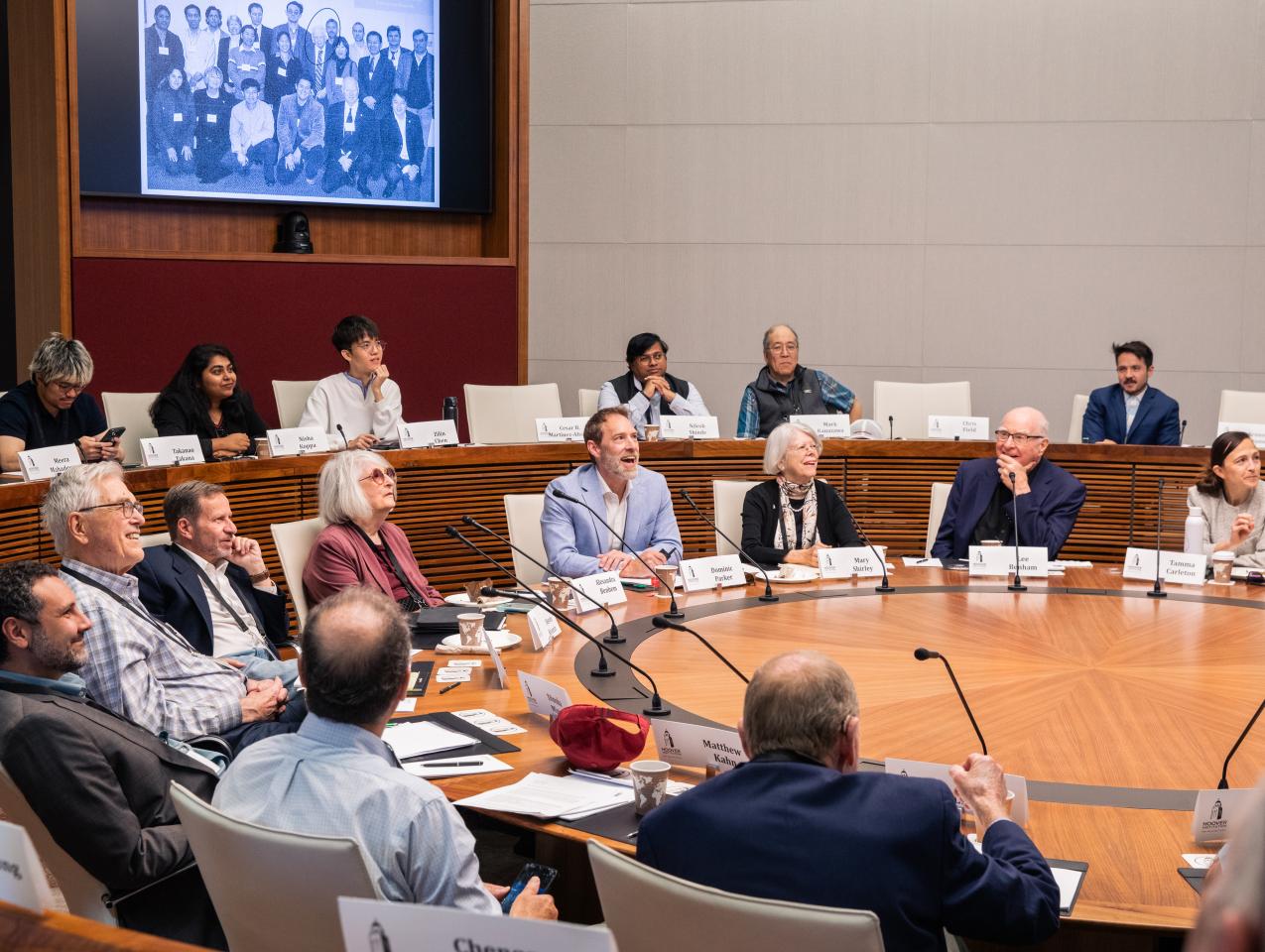
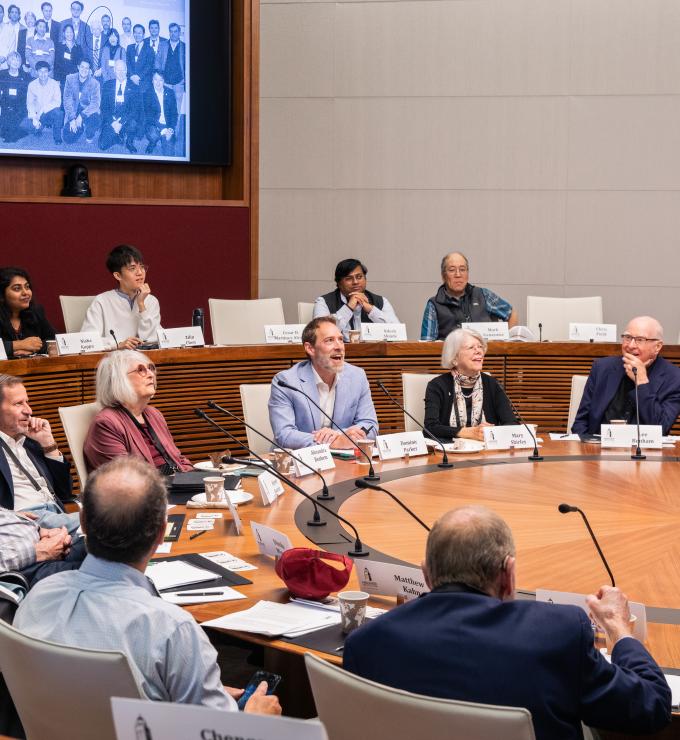
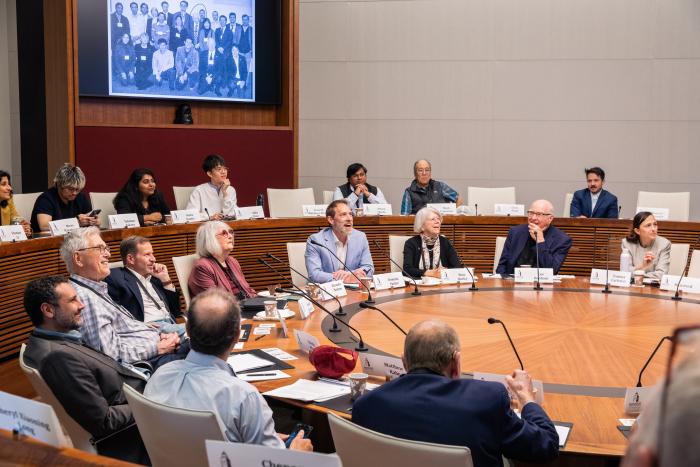
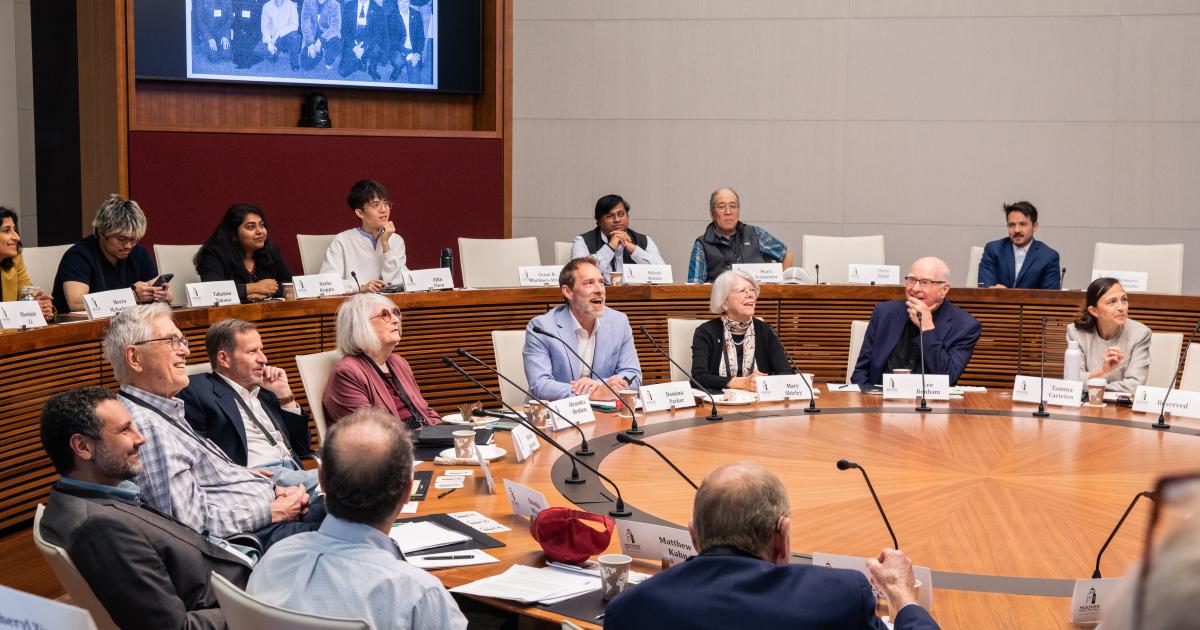
Hoover Institution (Stanford, CA)—Thirty-five scholars gathered at the Hoover Institution on May 18, 2026, to discuss research on how institutions —laws, rules, and norms— hinder and promote adaptation to climate change across the world.
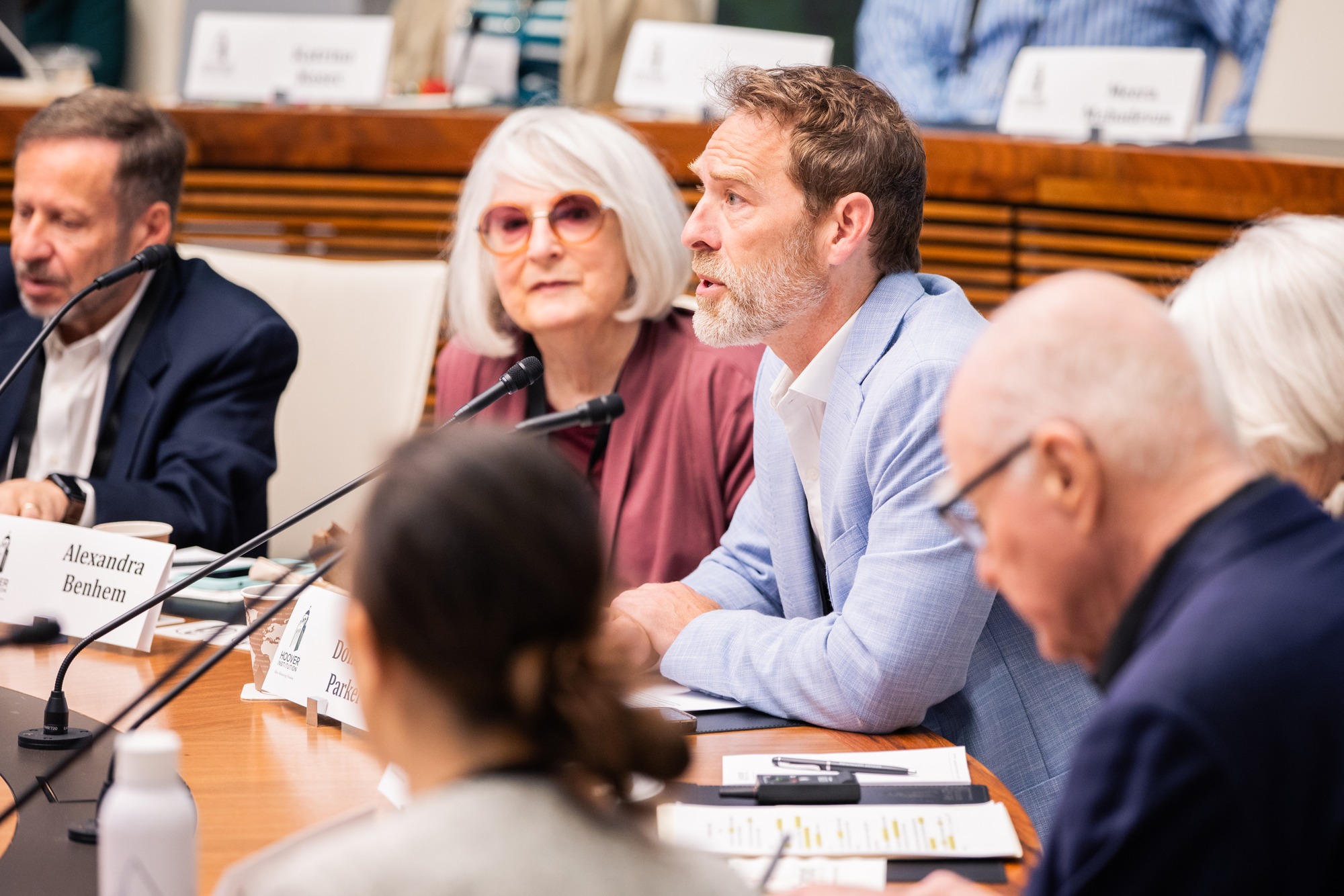
The workshop, directed by Senior Fellow Dominic Parker and co-sponsored by the Ronald Coase Institute (RCI), featured evidence from young scholars in developing countries where benefits from adaptation are salient and institutional barriers are common. Presentations highlighted constraints on adaptation ranging from high energy prices in Japan, to weak property rights in Ethiopia and India, to perverse policy incentives in Indonesia and Brazil.
As Parker said, the workshop identified “major policies affecting how millions of people respond to change, for better and for worse.”
Legacy of Ronald Coase
Parker and Mary Shirley, President of the RCI, welcomed participants by emphasizing common goals of Ronald Coase and the Hoover Institution. Coase, a Nobel laureate in economics and former Hoover Fellow, shared Hoover’s interest in data-driven research promoting economic opportunity and freedom. Coase was a generous mentor who Parker fondly recalled meeting at a University of Chicago event 20 years ago. When asked by a student if it was still possible to find good research topics, Coase responded: “Young man, there is gold everywhere. Just pick it up!”
Shirley described the RCI’s efforts to honor Coase by encouraging young scholars to study how institutions function in their own countries. After 25 years, the Institute counts more than 700 alumni from 78 countries among the ranks it has supported through grants and mentorship. As teachers, researchers, and policy advisors, the alumni have persuaded their governments to remove institutional obstacles to economic development.
Linking Adaptation, Institutions, and Prosperity
Parker launched the workshop by previewing its three premises. First, the ability to adapt to change – whether economic, technological, or climatic – is key to human prosperity. Second, high adaptive capacity requires an abundance of substitutes so households are not reliant on a single, volatile commodity for well-being, and that firms can adjust land, labor, energy, and capital inputs fluidly when change occurs. Third, market-supporting institutions – rule of law and clear property rights – increase adaptive capacity by making more substitutes available through markets, including those for credit and insurance.
Tamma Carleton, an economist at UC Berkeley, reviewed the literature on climate adaptation. Starting with definitions, she said adaptation involves private and public actions that flatten damage responses to extreme temperatures. Adaptation can be a reaction to weather realizations (e.g., increase in irrigation water on a hot day), or an investment based on expected change (e.g., installation of air conditioners or building a seawall). Carleton reviewed empirical estimates of how wealth mitigates climate damage, and she highlighted positive and negative effects of governmental interventions (e.g., income support for farmers who adopt new practices).
Dilemma Between Mitigation and Adaptation
The next session presented a dilemma: policies reducing carbon emissions by raising fossil fuel prices make adaptation more costly. Zilin Chen, a PhD student at Peking University, presented his study of carbon pricing effects on human mortality. Using data over 1991-2021 for 193 nations, he and coauthors find that carbon pricing led to 1.3 additional deaths per 100,000 people per hot day with effects largest in countries with high electrification and carbon-intensive power generation. Deaths increased through reduced electricity use (e.g., less heating on cold days) and fuel substitution: carbon pricing shifts households to dirtier indoor fuel use—wood and coal—leading to worse indoor air quality.
Case study evidence from Japan also shows higher energy prices kill people. Takanao Tanaka, a PhD student at UC Berkeley, presented his research on the effects of government energy savings campaigns and high electricity prices resulting from the 2011 Fukishima nuclear accident. Households responded by reducing their use of air conditioners, and this resulted in higher mortality on hot days.
Two discussants, Hoover Senior Fellow Steven Koonin and Stanford Professor of Global Sustainability Shanjun Li, commented. Koonin listed three fronts on which the world can address climate change — mitigation of emissions, geo-engineering, and adaptation — and argued that only adaptation is presently yielding short-term benefits to humanity. He said this means mitigation policies that raise adaptation costs are important to study but dangerous to implement. Li emphasized how revenue from carbon pricing might be used to support adaptation so to avoid the mortality effects documented in these two studies.
Property Rights Promote Adaptation
Improvements in property rights support two pillars of climate adaptation – agricultural resilience and forest conservation - according to research in India and Ethiopia. Aliz Toth, a Political Scientist at London School of Economics, presented her study of India’s land-records digitization reform over 2008-2022, the world’s largest effort to computerize ownership records to improve transparency. Comparing subdistricts before and after digitization, the evidence suggests the program improved agricultural productivity and forest health by reducing land-use conflict and improving access to credit.
Dagmawe Tenaw, an economist at Dire Dawa University, presented evidence that strong property rights increase investments in climate-smart agricultural practices in Ethiopia. Using data on formal and perceived land rights, Tenaw reported positive correlations between stronger rights and investments in long-term productivity such as improved seeds, irrigation, and watershed management.
Discussant Gary Libecap, Professor Emeritus at UC Santa Barbara, emphasized why property rights are critical for adaptation: they encourage owners to make long-term investments in anticipation of future conditions. Discussant Dinsha Mistree, a Hoover Research Fellow, suggested titling and, especially, digitization, were unique reforms because they promote adaptation without having clear drawbacks beyond administrative costs.
Policies Hindering Adaptation
Three afternoon presentations quantified how major government policies are hindering adaptation. Allan Hsiao, an economist at Stanford, used data from Jakarta to estimate the effects of the government’s failure to commit to refrain from building a $60 billion seawall in the future. His estimates suggest this failure will lead to a viscous cycle of coastal lock-in and moral hazard, meaning developers will build 60 percent more coastal development by 2050 than they would otherwise leading to a 40 percent increase in wasteful expenditures on coastal defense.
Nilesh Shinde, an economist at Indiana University, highlighted incentives created by land titling policies in the Brazilian Amazon. His coauthored study combines satellite data on forest loss over 2000-2022 with 7 million data points on parcels and land titling to show that 1) efforts to claim ownership via clearing under titling rules are accelerating deforestation and 2) rules that prevent parcels above a threshold size from being logged are causing subdivision and deforestation on parcels below the thresholds.
Nina Koppa, a PhD student at Colorado University, presented evidence that India’s agricultural price supports create a potent disincentive for farmers to diversify crops in response to heat stress. Whereas heat reduces yields from heat-sensitive crops, making switching more attractive, guaranteed prices for supported crops weaken incentives to switch. Koppa’s data show evidence of this in practice: in areas where price supports do not bind, farmers switch from rice to wheat, but that response disappears when rice receives price support.
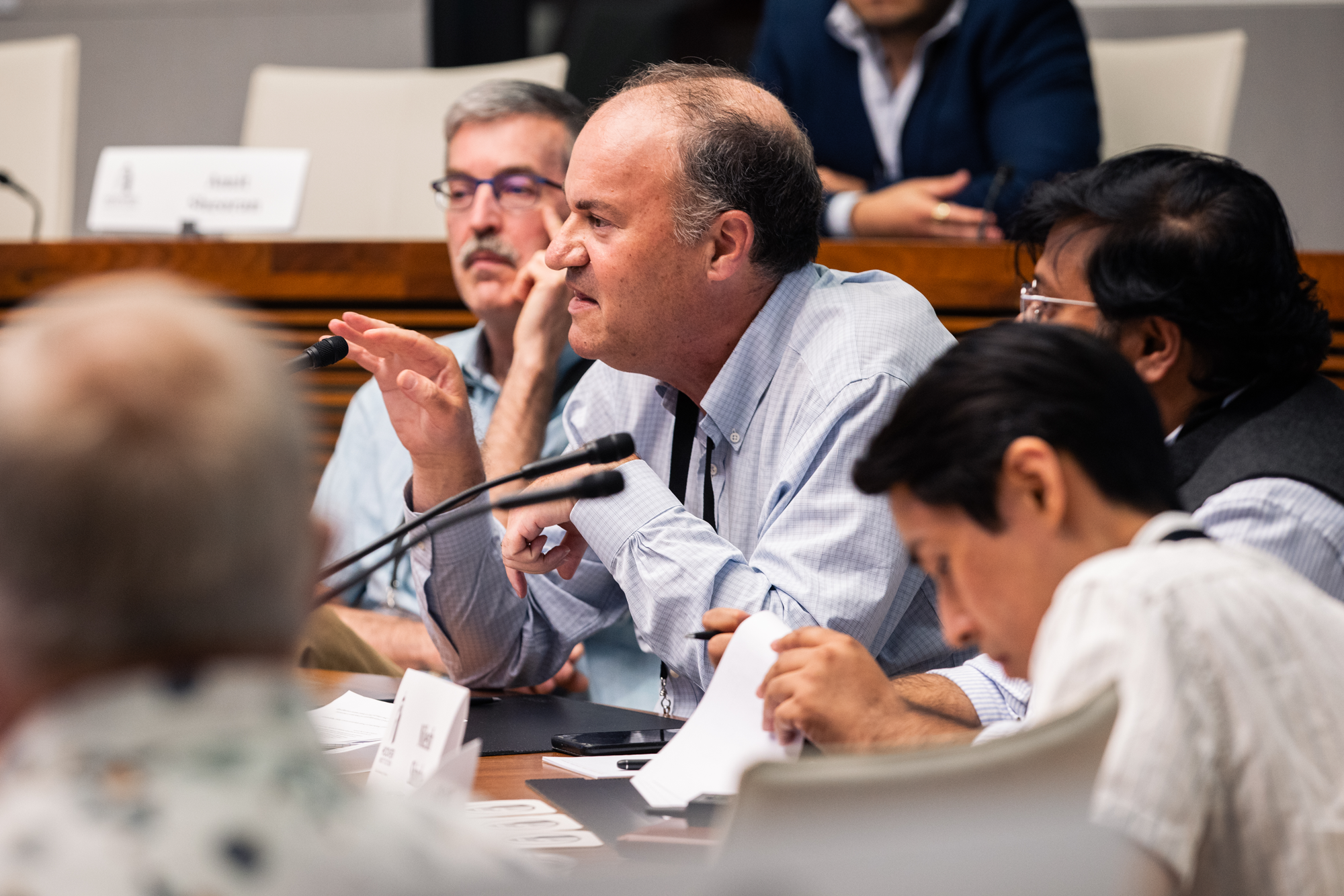
Three discussants commented. Hoover Visiting Fellow Matthew E. Kahn suggested citizens of Indonesia could be better off with a Coasian transaction. The 85 percent of residents outside of Jakarta would likely prefer to pay the government to not build a $60 billion seawall. Inter-American Development Bank economist Phil Keefer asked about the Brazilian government’s motives behind creating use-it-or-lose-it rules that accelerated deforestation. John Hopkins political scientist Katrina Kosec suggested the perverse effects of India’s price guarantees should be even stronger where credit markets are fluid enough to help farmers finance crop switching costs.
Are we Adapting?
The final session featured a presentation by Marshall Burke, Stanford Professor of Global Environmental Policy, on “Are We Adapting”. Burke summarized his coauthored effort to assess adaptation at a global scale, across nations and sectors. The study focused on evaluating whether climate responsive outcomes such as crop yield, human mortality, and GDP, were becoming less sensitive to climate over the past 50 years.
Burke concluded there is limited evidence that, on average, we are reducing damages from climate extremes. Whereas some measures show sensitivity improving, others show sensitivity worsening. He said the implication may be that past damage estimates are a reasonable guide for future damages. And, if we want to avoid these damages, Burke said that understanding constraints on adaptation—the workshop’s theme—is a key priority.
Discussant Roger Noll, Stanford professor emeritus of economics, said he has no doubt people are trying to adapt. The question is whether adaptation is detectable in data aggregates when it is such a small factor for people focused on short-run concerns, such as farmers worried about how trade policy with China will affect crop demand and how war in the Middle East will affect input prices.
Discussant Terry L. Anderson, a Hoover Senior Fellow, asked “Where’s Coase?” His point was that if adaptation is an institutional challenge – the premise of the workshop – then it is impossible to understand whether we are adapting without understanding the institutions that hinder or encourage adaptation.
Making Magic
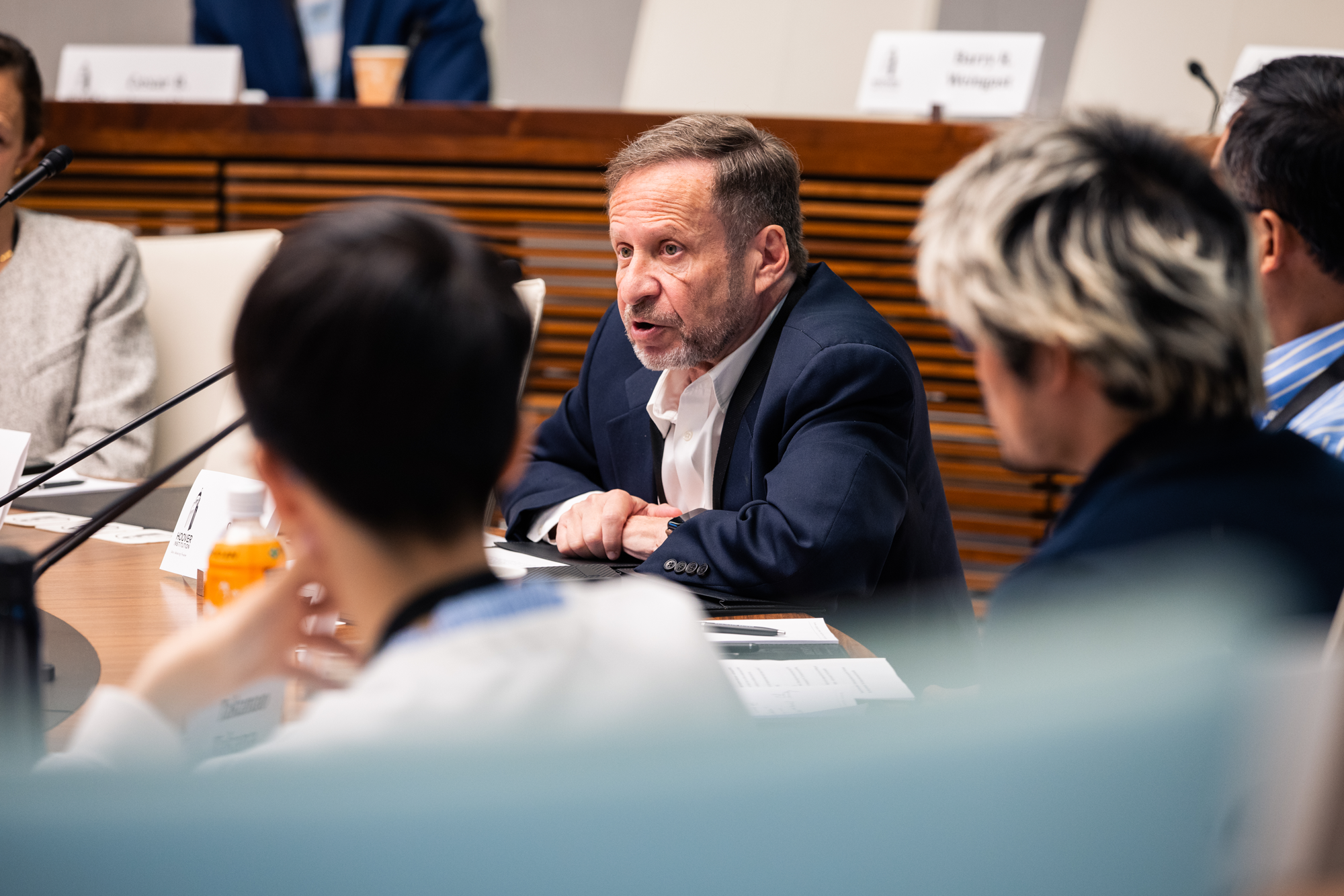
In closing comments, Alexandra Benham and Lee Benham of the Coase Institute remarked on the “magic” that happened at the workshop, which was the arbitrage of ideas between senior and junior scholars. They said this is what Ronald Coase predicted would happen when we are able to lower the transaction costs of communication across fields, and across generations, as the workshop successfully did.