Military History/Contemporary Conflict Working Group

Role of Military History in Contemporary Conflict

Explore Research

Filter By:

Topic

Type

Author

Enter comma-separated ID numbers for authors

Support the Hoover Institution

Join the Hoover Institution's community of supporters in advancing ideas defining a free society.

Support Hoover

Related Commentary

Bolster U.S. Military Presence in Eastern Europe

by Williamson Murrayvia Strategika
Wednesday, February 18, 2015

It is useless to talk about Europe taking any steps to counter Russian ambitions. For the British and French, Eastern Europe is too far away, and the problems of Russian aggrandizement too insignificant for those powers to take any steps that might have any impact on Vladimir Putin and his crew of former KGB thugs. In the case of the Germans, the situation is even more dismal.

Related Commentary

The Language of Power and Force

by Peter R. Mansoorvia Strategika
Wednesday, February 18, 2015

Two and a half millennia ago during the ruinous conflict between Athens and Sparta, Thucydides recorded a conversation between Athenian negotiators and the representatives of the people of Melos, a Spartan colony that the Athenians wanted to bring into their orbit. In reply to Athenian demands, the Melians argued that justice demanded that the Athenians respect their right to remain neutral and at peace.

Related Commentary

Western Military Aid for Ukraine

by Frederick W. Kaganvia Strategika
Wednesday, February 18, 2015

Vladimir Putin’s neo-imperialism has already brought inter-state warfare back to Europe for the first time since World War II. Its likely continuation threatens the existence of Ukraine, but is also the first traditional military test of the NATO alliance in Europe since the end of the Cold War. Western responses to Russia’s unprovoked and illegal aggressions in Georgia and Ukraine have been inadequate.

Related Commentary

Countering Russian Ambitions

by Angelo M. Codevillavia Strategika
Wednesday, February 18, 2015

Any thought of countering Russian ambitions in Europe must be premised on the fact that Western Europeans’ interest in doing this is verbal at best. Absent Western Europe’s active cooperation, U.S. attempts to strengthen the front line states of the former Warsaw Pact and of the former Soviet Union would face formidable hurdles and perhaps invite Russia to test our seriousness.

Related Commentary

Inaction in Ukraine Sets a Dangerous Precedent

by Max Bootvia Strategika
Wednesday, February 18, 2015

The U.S. and Europe have been slow and hesitant in countering Vladimir Putin’s outrageous land grab in Ukraine. If allowed to stand, Russia’s annexation of Crimea and its ability to wrest the eastern part of the country from Kiev’s control will set a dangerous precedent that will encourage aggression by China and other states. A more serious counter to Russia’s actions is necessary.

Featured CommentaryAnalysis and Commentary

To Restrain Russia, Drop The Ambiguity

by Angelo M. Codevillavia Strategika
Wednesday, February 18, 2015

Lack of means is no part of the reason why U.S. policy is failing to restrain Russia. Rather, that reason lies in the U.S. government’s simultaneous pursuit of self-contradictory objectives, what Henry Kissinger extolled as “creative ambiguity.” This has opened a fateful gap between words and deeds. Clear, univocal policy that unites words and deeds, ends and means, has ever been the prerequisite of seriousness.

world war i
Analysis and Commentary

Reliving The 1930s

by Victor Davis Hansonvia Tribune Media Services
Wednesday, February 18, 2015

World War II was the most destructive war in history. What caused it?

Related Commentary

American Leadership, Commitment, and Perseverance in the Middle East

by Peter R. Mansoorvia Strategika
Tuesday, February 17, 2015

U.S. disengagement from Middle Eastern affairs, highlighted by the Obama administration’s withdrawal of American forces from Iraq, its failure to lead an international stability force in Libya after the overthrow of the Qaddafi regime, and its unwillingness to enforce self-proclaimed red lines in Syria, has reduced U.S. influence in the region to an all-time low.

Blank Section (Placeholder)Analysis and Commentary

Interest, Fear, and Honor

by Thomas Donnellyvia Analysis
Tuesday, February 17, 2015

For both structural and cultural reasons, it seems likely that China’s rise as a global great power will provoke conflict with neighboring states and even farther abroad. Rising powers throughout history have sought to reshape the international balance of power to their liking, and the particular East Asian order that China wishes to restructure–led by the United States but with a hub-and-spoke design that is problematic for collective deterrence and defense –is inherently vulnerable and made more so by the seeming weakness of current US policy.

Blank Section (Placeholder)Analysis and Commentary

Is Iran an Ally or Enemy?

by Bing Westvia Analysis
Wednesday, February 11, 2015

In Syria, the besieged government of the Assad regime clings to about half of the territory, while Sunni factions fight over the other half. In Iraq, the Shiites control the south, the Kurds control the northeast, and the Sunnis in the northwest are controlled by the Islamic State of Iraq and Syria (ISIS). The Sykes-Picot division of Mesopotamia no longer exists, except in the minds of Obama White House operatives who will leave a full-scale disaster to the next administration.

Pages

Chair
Martin and Illie Anderson Senior Fellow
Participants
Payson J. Treat Distinguished Research Fellow in Contemporary Asia
Research Fellow
Tad and Dianne Taube Senior Fellow
Senior Fellow
Annenberg Distinguished Visiting Fellow
Research Fellow / National Security Affairs Fellow 2008-2009
Milbank Family Senior Fellow
Distinguished Visiting Fellow
Davies Family Distinguished Fellow
Fouad and Michelle Ajami Senior Fellow
Senior Fellow
Roger and Martha Mertz Visiting Fellow
Robert and Marion Oster Distinguished Military Fellow
W. Glenn Campbell Research Fellow
Corliss Page Dean Visiting Fellow
Research Fellow
Robert Alexander Mercer Visting Fellow

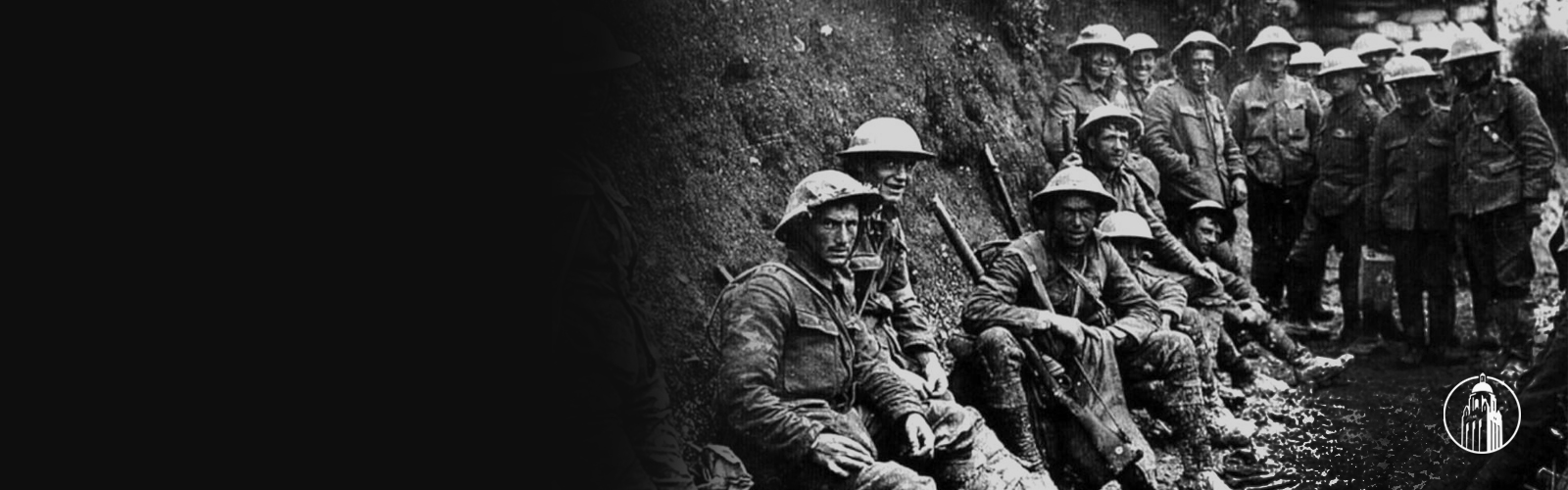
The Working Group on the Role of Military History in Contemporary Conflict examines how knowledge of past military operations can influence contemporary public policy decisions concerning current conflicts. 


As the very name of Hoover Institution attests, military history lies at the very core of our dedication to the study of "War, Revolution, and Peace." Indeed, the precise mission statement of the Hoover Institution includes the following promise: "The overall mission of this Institution is, from its records, to recall the voice of experience against the making of war, and by the study of these records and their publication, to recall man's endeavors to make and preserve peace, and to sustain for America the safeguards of the American way of life." From its origins as a library and archive, the Hoover Institution has evolved into one of the foremost research centers in the world for policy formation and pragmatic analysis. It is with this tradition in mind, that the "Working Group on the Role of Military History in Contemporary Conflict" has set its agenda—reaffirming the Hoover Institution's dedication to historical research in light of contemporary challenges, and in particular, reinvigorating the national study of military history as an asset to foster and enhance our national security. By bringing together a diverse group of distinguished military historians, security analysts, and military veterans and practitioners, the working group seeks to examine the conflicts of the past as critical lessons for the present.

Victor Davis Hanson on War in the Contemporary World — WATCH

The careful study of military history offers a way of analyzing modern war and peace that is often underappreciated in this age of technological determinism. Yet the result leads to a more in-depth and dispassionate understanding of contemporary wars, one that explains how particular military successes and failures of the past can be often germane, sometimes misunderstood, or occasionally irrelevant in the context of the present.

The working group is chaired by Victor Davis Hanson with counsel from Bruce S. Thornton and David L. Berkey, along with collaboration form the group’s distinguished scholars, military historians, analysts, journalists, and military officers.