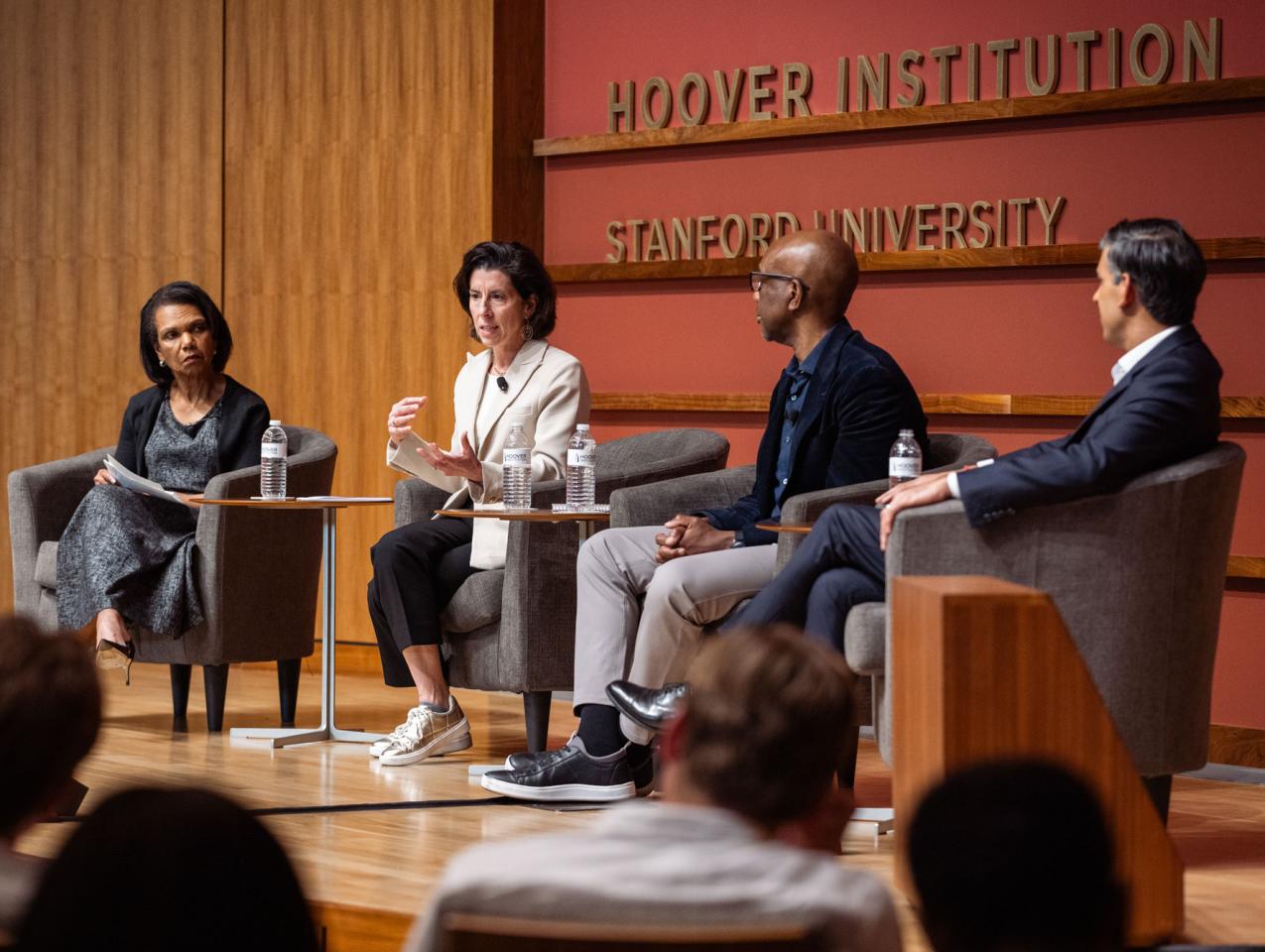
Hoover Institution (Stanford, CA) — AI’s introduction into all workplaces could spur one of the most consequential transitions in history, and governments need to not only plan for the transition but also remain positive with citizens about the technology’s potential.
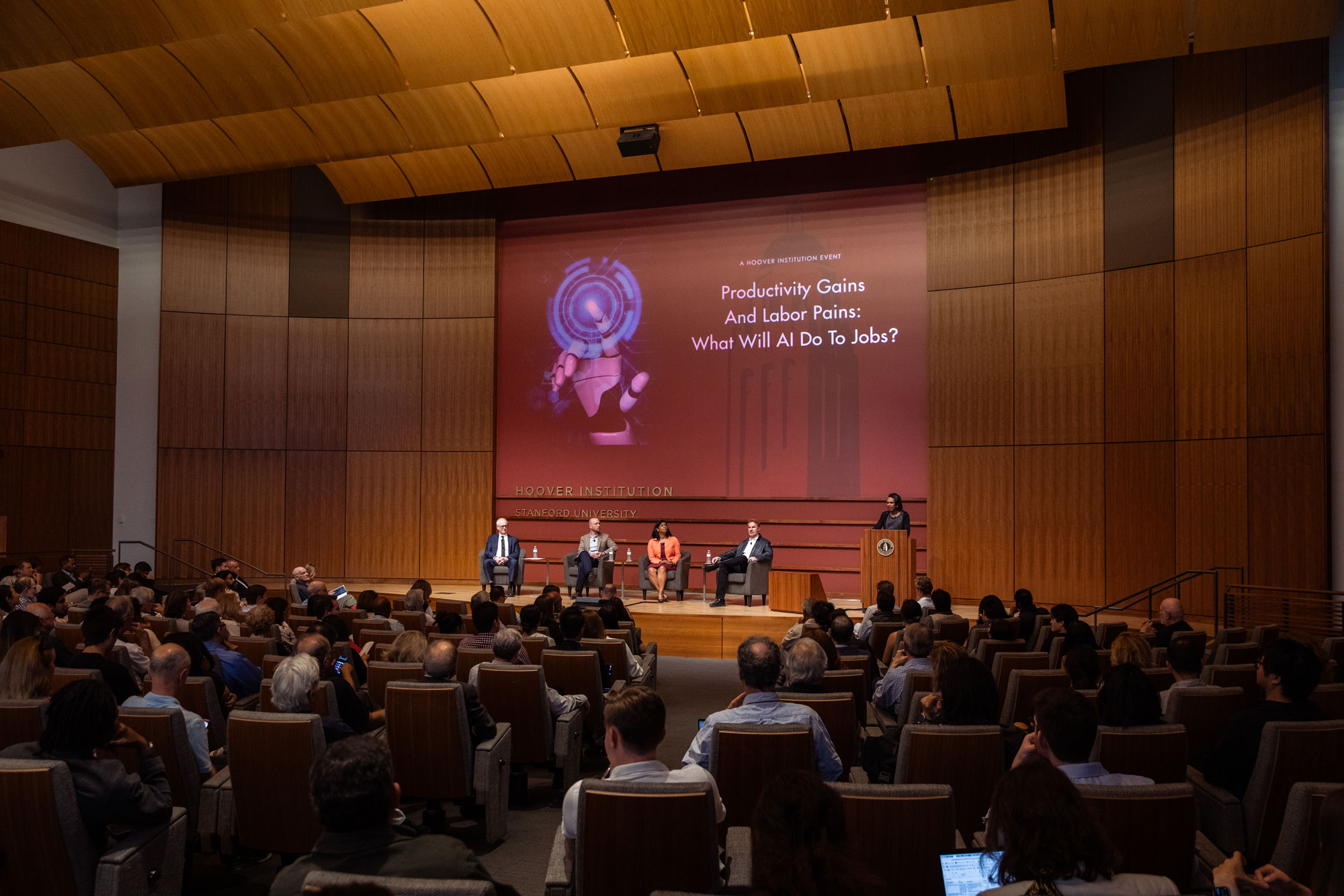
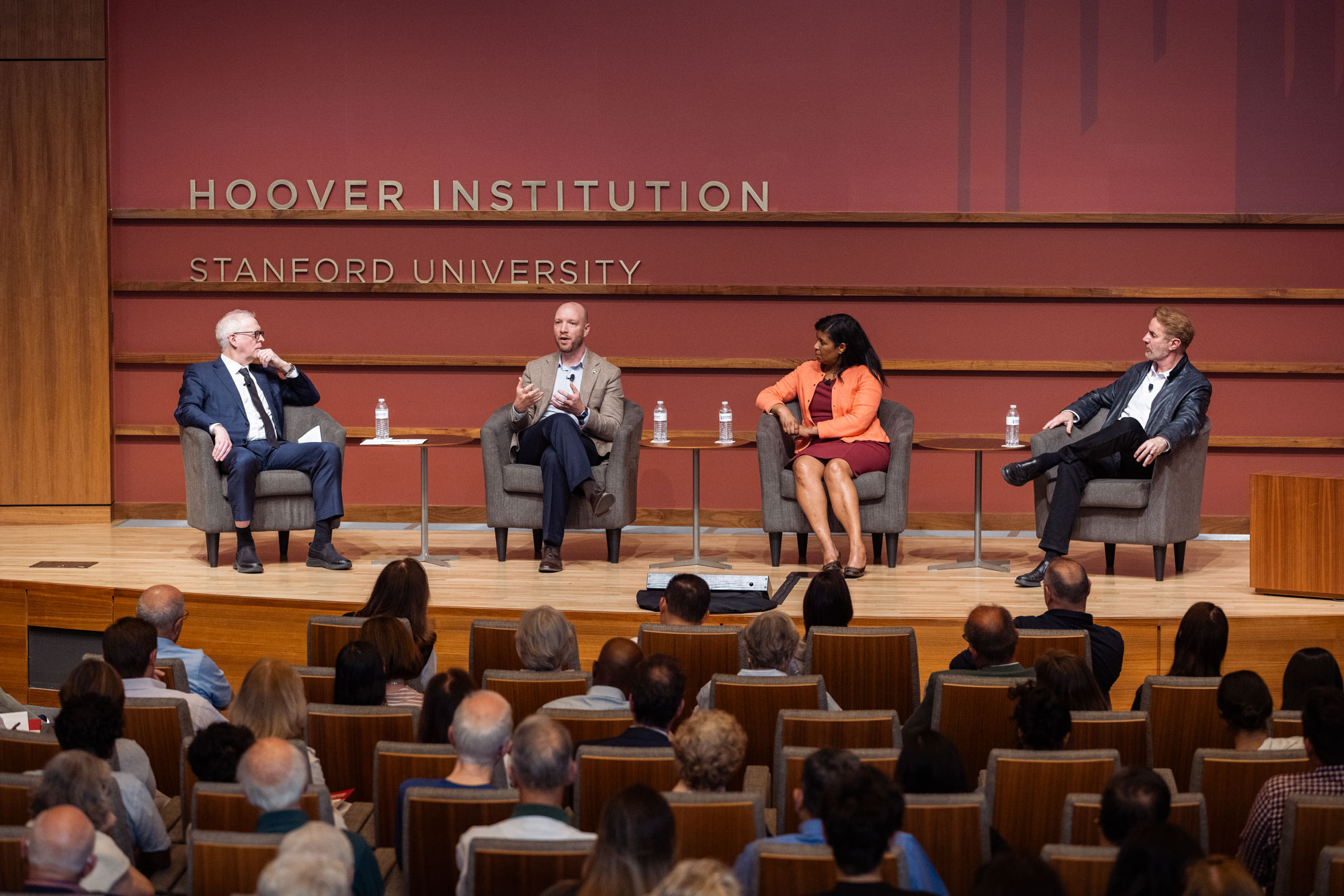
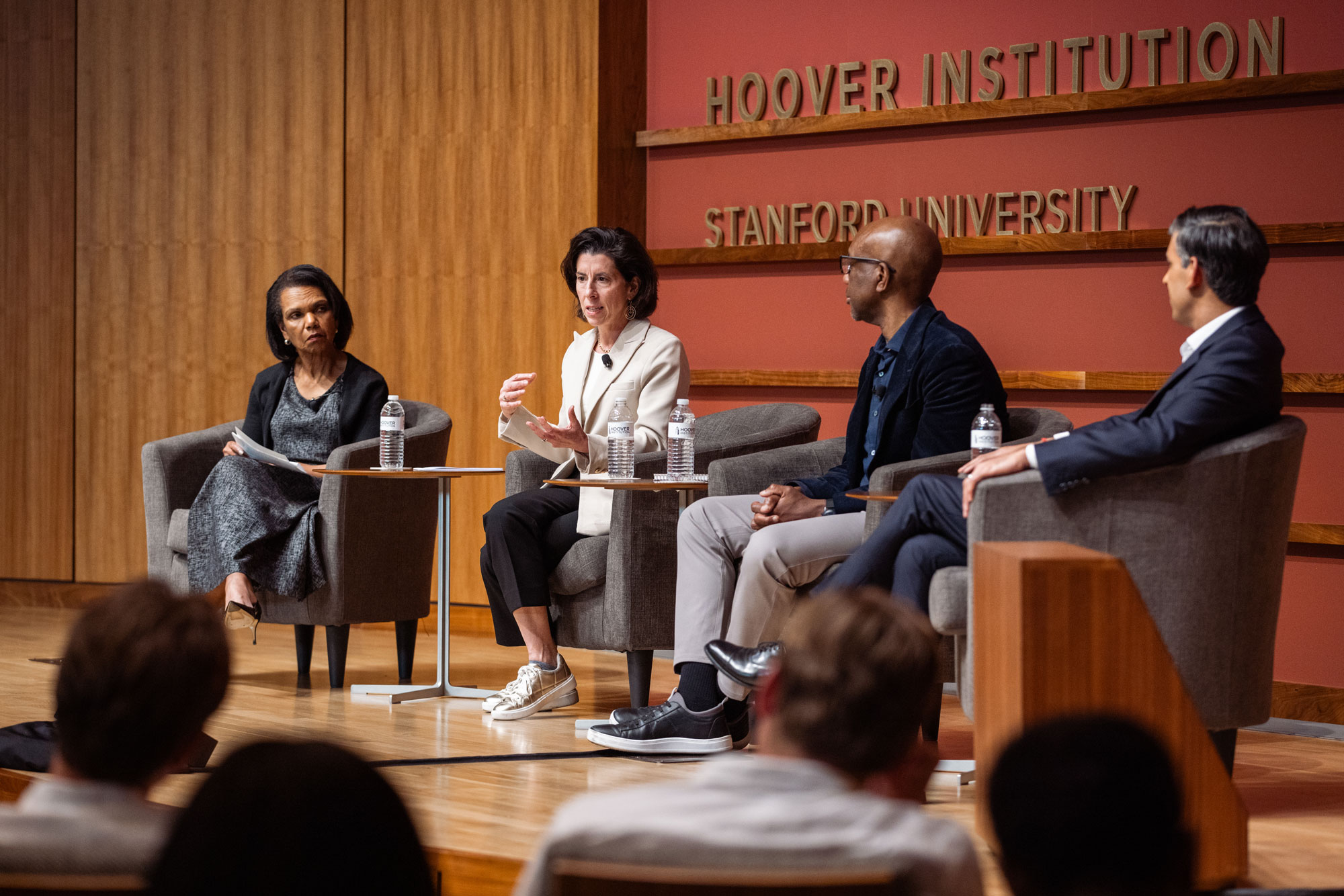
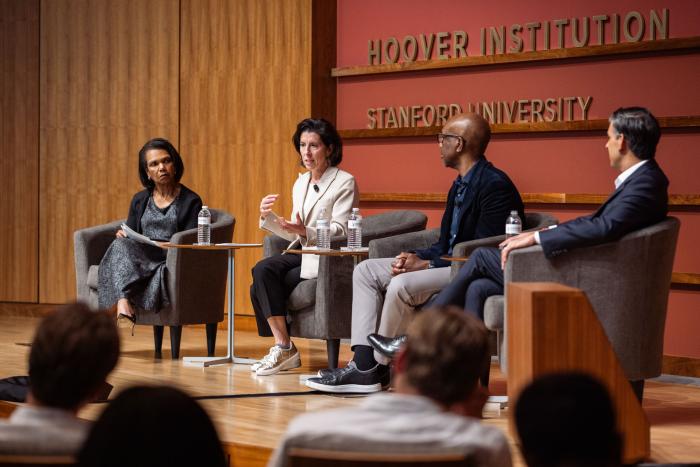
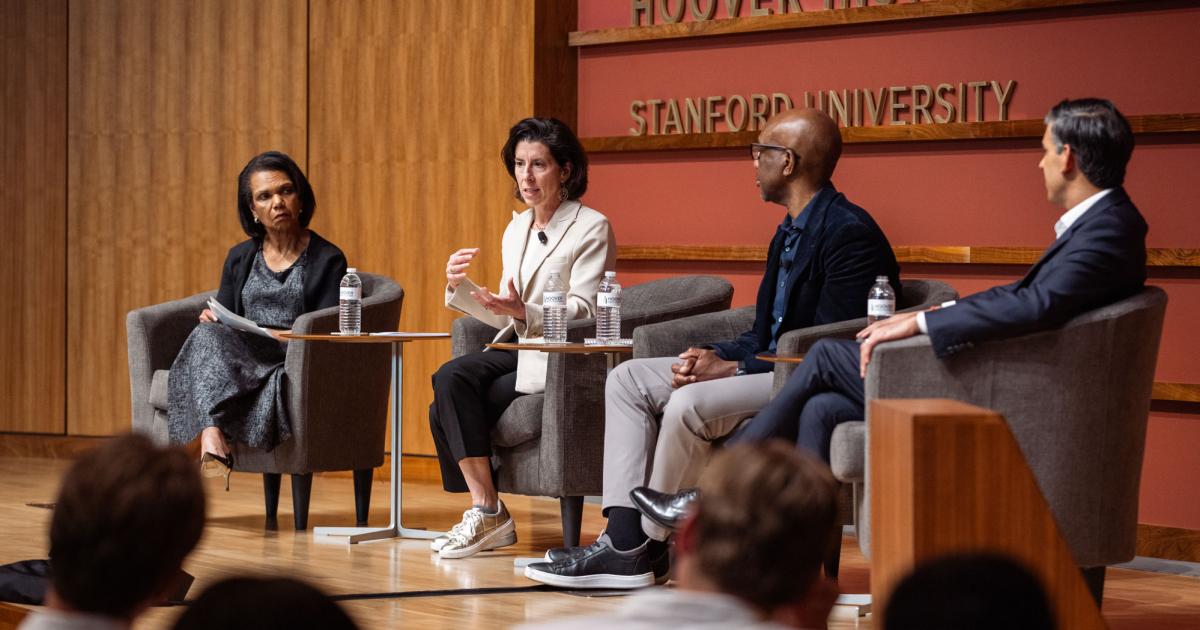
That was the message from a pair of panel discussions held at the Hoover Institution on March 17, 2026, that featured leading scholars, industry participants, and former senior policymakers.
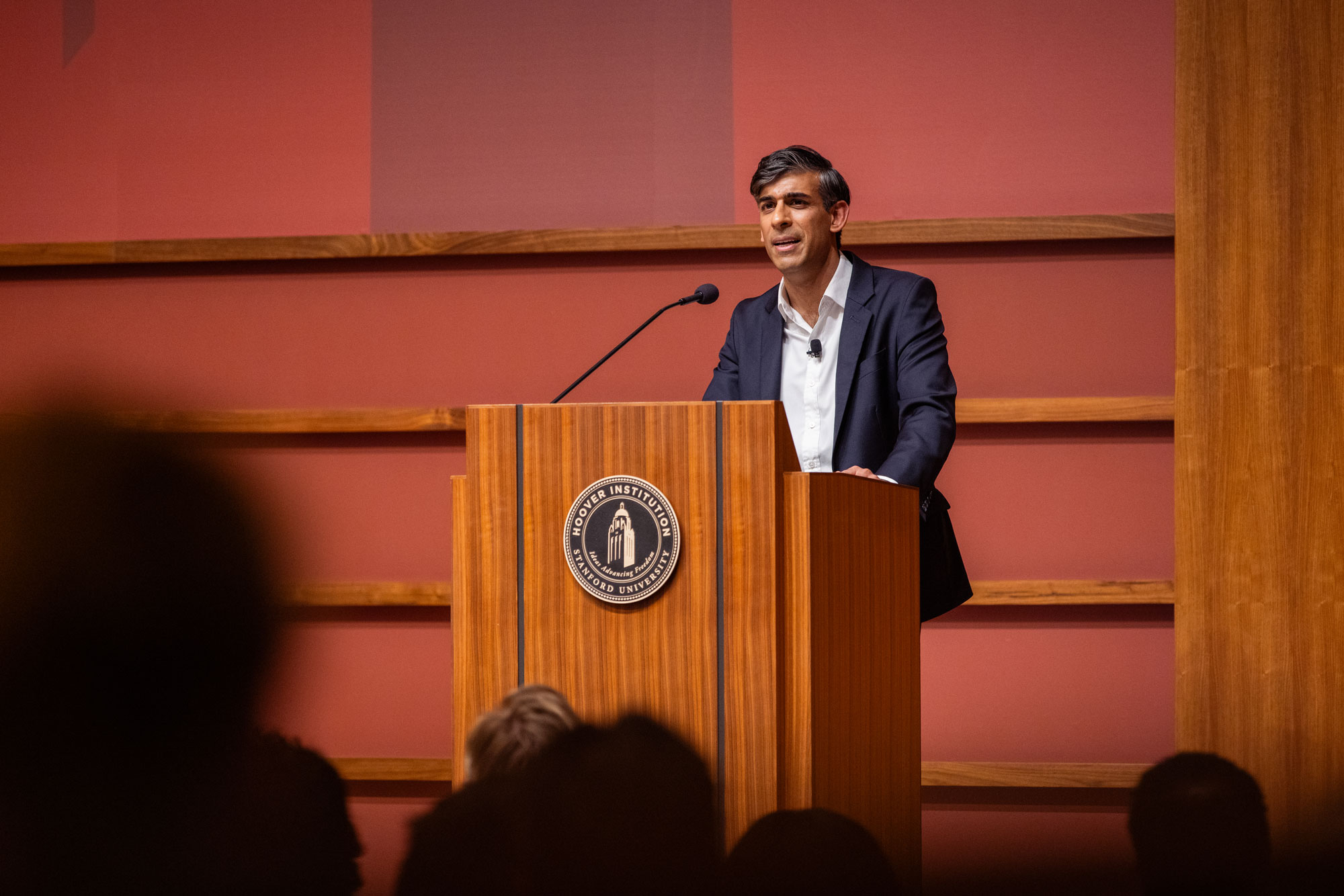
“(It’s) something very special that we get to live through,” Distinguished Visiting Fellow and former UK Prime Minister Rishi Sunak said of the rise of artificial intelligence. “But every time that I'm here [in Silicon Valley,] I'm reminded that change is coming far faster than our politics realizes. A conservative estimate is that AI is going to have twice the impact of the Industrial Revolution in just half (of) the time.”
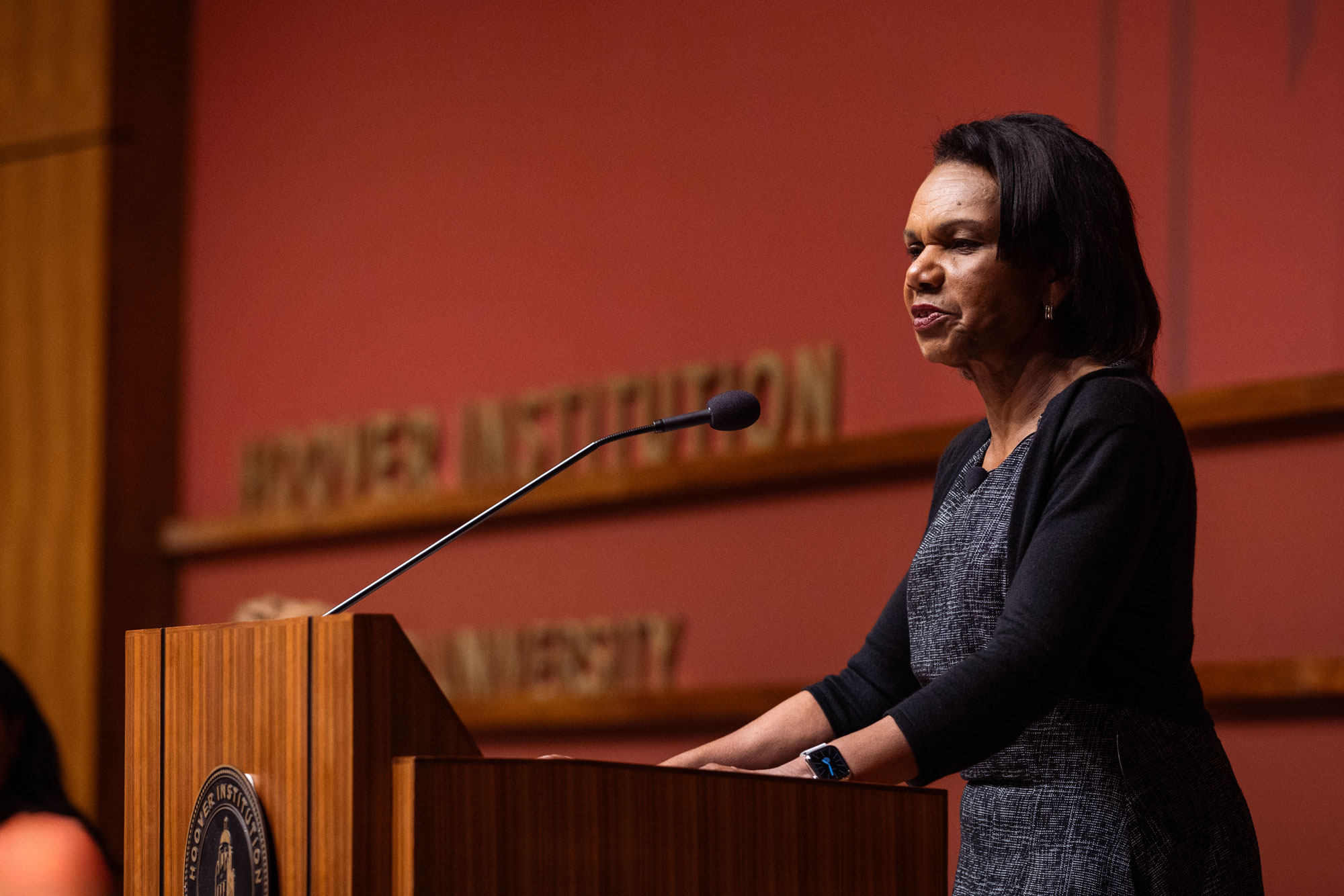
Hoover Institution Director Condoleezza Rice framed the moment as one defined by speed, not speculation. She cited a recent exchange with Stanford AI pioneer Fei-Fei Li, a professor of computer science and a founding codirector of Stanford’s Human-Centered AI Institute. Rice recalled asking what was coming next, only to be met with a reality check about the compressed timeline.
“Can you tell us about what’s coming over the horizon?” Rice said, recounting the question. “And [Li] said, ‘You mean in six weeks?’” The implication, panelists said, is that politics, education systems, and labor market supports must adapt to a pace that greatly exceeds traditional legislative or bureaucratic cycles.
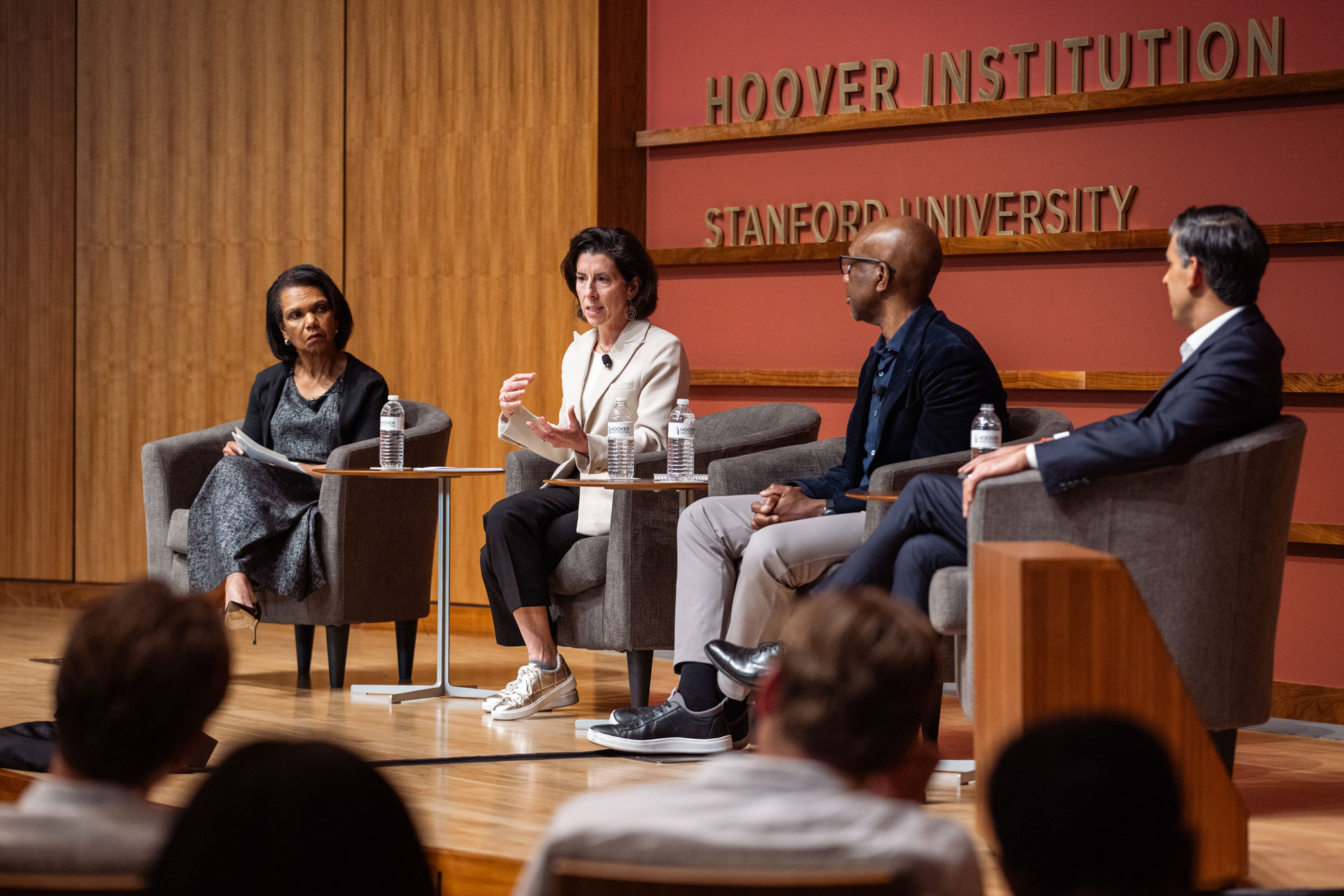
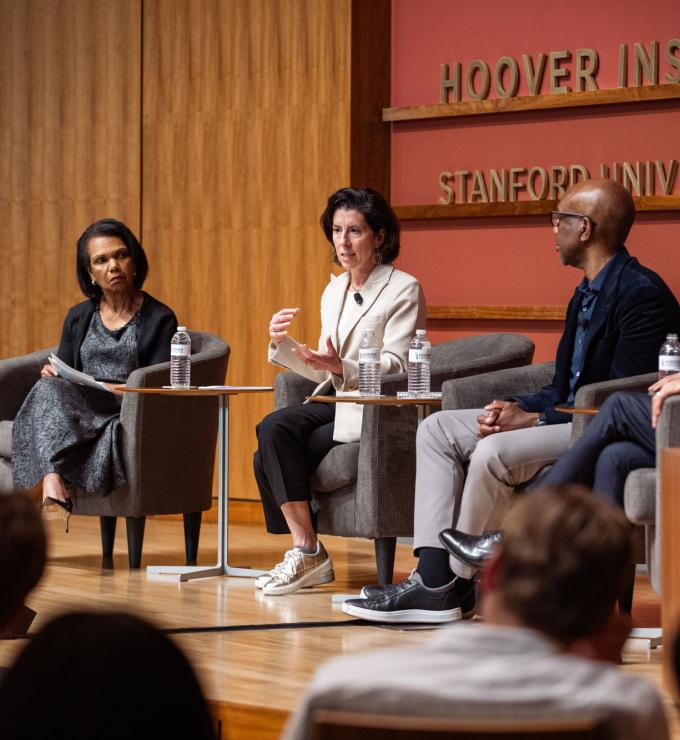
To answer these challenges, Rice and Sunak joined with Google-Alphabet executive James Manyika and former US Commerce Secretary Gina Raimondo to entertain the policy response to the rise of AI.
Across the discussion, panelists returned to underlying core tensions. They cited uncertainty over how quickly firms will restructure jobs and limited real-time data on workplace adoption that tells contradictory stories about AI’s value and impact. They noted rising public anxiety against a backdrop of an existing “reskilling” and job training systems that are too slow, too fragmented, and too disconnected from employer practices to handle what many expect will be sustained churn in the labor market for many years to come.
What Does the Data Tell Us?
In an additional panel, Hoover Research Director and senior fellow Steven J. Davis, who himself is building a growing stable of data on AI adoption and its impact on workers, asked Stanford Digital Economy Lab Director Erik Brynjolfsson, Anthropic Head of Economics Peter McCrory, and LinkedIn Chief Economist Karin Kimbrough to paint a picture for the audience: How is AI changing the labor market and productivity right now?
Brynjolfsson cited his recent work, including a study on how AI improved productivity and job satisfaction at a large call center that responds to customer complaints.
The study found that productivity across the call center’s workforce increased by an average of 14 percent only a few months after AI was deployed. AI use boosted productivity of the youngest and poorest-performing employees the most and also improved overall retention and job satisfaction.
One way the LLMs (large language models) helped call center workers was to offer them suggested responses to customer concerns, giving them access to the best-performing solutions other members of their cohort had developed in the past to deal with various complaints.
“It's going to take a while for those spot benefits in customer service, coding, sales, certain management applications to start being more widespread throughout the economy,” Brynjolfsson said. “And as that happens … I think we will see a world of much higher productivity.”
But he also cited another study that showed that in very AI-exposed job categories—like remote customer service, software engineering, and web development—employment among entry-level workers ages twenty-two to twenty-six is declining, and the size of the decline since 2025 in those fields continues to grow.
Meanwhile, Kimbrough cited data from the 1.3 billion individual profiles on LinkedIn that indicated the advent of AI has led to about 1.3 million new job postings. But as Brynjolfsson also found, it has meant hiring has ground to a halt in recent months in some sectors prone to automation, ranging from medical transcriptionist to legal assistant or copywriter.
The boom in AI, which enables individuals to build and formulate things that previously would take whole teams of workers to create, has also generated a boom in entrepreneurship, Kimbrough said, citing her firm’s findings that “there’s been a 60 percent increase in the number of people who are doing entrepreneurial-type work and showcasing it on LinkedIn.”
In both panels, participants expressed concerns that official statistics about the economy, generated in large part by government itself, would not materialize fast enough to help policymakers make informed decisions about how to manage the rise of AI and its impact on jobs.
“What would you do in a scenario where labor’s share [of] income is declining pretty swiftly in a world where unemployment is spiking pretty rapidly?” McCrory asked. “Having a state-dependent response thought out ahead of time to anticipate that uncertainty to navigate (it) effectively is very important.”
What Should Policymakers Do?
In many modernized economies, AI is starting this transitionary period in the doldrums of public opinion.
“AI is less popular than almost anything else that you can think of, including politicians from all parts,” Sunak said.
Perhaps that’s for good reason. Populations of working people in both the United States and United Kingdom can still recall times in decades past when free trade eliminated entire sectors of their economies, such as manufacturing that moved offshore.
Former Commerce Secretary and Rhode Island Governor Gina Raimondo envisioned what might happen if millions of jobs similarly evaporated today because of AI.
“Three or four million people lost their jobs, and they were concentrated in a handful of states, including in my state of Rhode Island, and we are still paying the price for that,” she said of the manufacturing job losses in the 1990s and the 2000s. “Those people who were left out were justifiably pissed off, and that's what's been playing out in our democracy. If we just add this AI disruption to that tinder box, I don't know how we can handle it, truthfully.”
The answer, Sunak, Rice, and Raimondo agreed, is a more robust, flexible, and customizable jobs training program to help people impacted by the economy-wide rollout of AI.
While existing job retraining and “upskilling” programs spend hundreds of billions of dollars, Rice and Raimondo agreed the existing models need updating.
Sunak pointed to reforms he launched in the United Kingdom while prime minister that transformed state university tuition assistance into a program that was more flexible and encouraged lifelong learning with support for career changes throughout a person’s life.
Beyond this, Raimondo said, any emphasis on a stronger reskilling effort by states or the federal government needs to be paired with a matching effort by the private sector.
“We need businesses, and principally AI companies, to yes, share your data, but help us recreate a modern system in America that is effective at transitioning [the] workforce and change the way you recruit, hire, retrain, and redeploy so that the average American does have a chance,” she said. “And could you try to paint a clearer, more concrete picture today of the new job opportunities that you think AI will create.”
Raimondo said she has been speaking with governors about proactive steps, but even the terminology can trigger backlash. “I’m encouraging them to become an AI ready state, make the changes in their states so they can be AI ready,” she said. “And many of them who are my friends, they were my colleagues, say, ‘Okay, Gina, I’ll work with you, but can we not use the word AI because my constituents hate it so much?’”
Sunak said governments could encourage AI adoption by “showing and not telling” how AI is making people’s lives easier, from speeding up processing benefits and passport applications to double checking a worker’s income tax return.
“There's a gazillion things that governments need to prioritize making better, faster, more accurate using AI,” he said. “If people can see that their day-to-day lives are improving as a result of this technology that [Manyika] and his colleagues are developing, then that is going to help us.”
While thinkers and policymakers past and present continue to formulate the winning combination of smart regulation, revamped education and job training, and other steps to make people more comfortable with AI’s impact on jobs, Sunak brought up his daughter, who he said has her own approach to navigating this tumultuous period.
In her interactions with AI chatbots, Sunak notice his daughter was being unfailingly polite, saying things like “that was so lovely” when the chatbot completed a task.
Sunak said he told his daughter she didn’t need to be so polite to the chatbot, because it just wastes time and the chatbot is not a person, to which she replied, “You know what, Daddy? If AI takes over the world, I want to have been nice to the AI.”