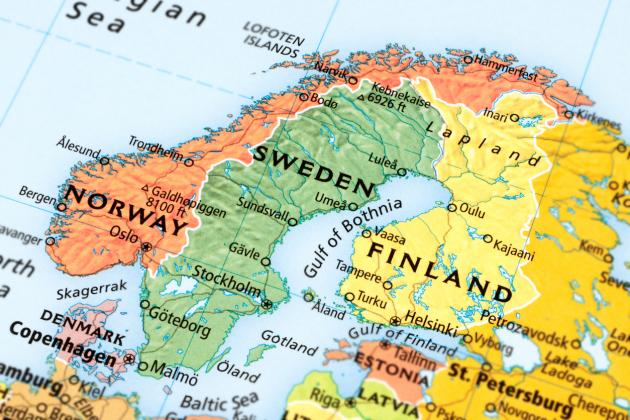
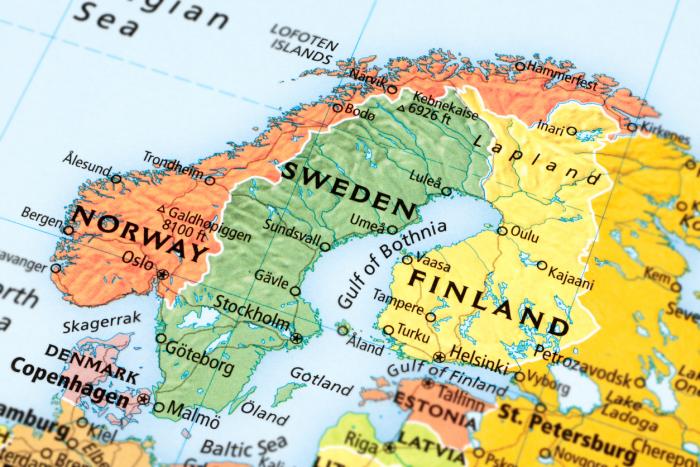
The Hoover Institution Program on the US, China, and the World held Navigating International Research Partnerships in Choppy Geopolitical Waters - the Swedish Experience on Monday, February 9th 2026 from 4:00 PM - 5:00 PM PT in Herbert Hoover Memorial Building, Room 160.
As the global landscape becomes increasingly complex, navigating international research partnerships presents both challenges and opportunities for collaboration. STINT, the Swedish Foundation for International Cooperation in Research and Higher Education, aims to enhance the internationalization of Swedish research and education. It plays a crucial role in fostering collaboration between Swedish and foreign academic institutions, thereby strengthening global ties in research and education.
In this session, Erik Forsberg, a representative from STINT, shares his expertise on navigating the complexities of cross-border research collaborations. Drawing on Sweden's unique experiences, he discusses the challenges researchers face, strategies for effective collaboration, and the vital role of international cooperation in advancing knowledge and innovation. The conversation will be moderated by Glenn Tiffert, Distinguished Research Fellow at the Hoover Institution.
- Thank you so much for joining us today in the latest installment of the program on US, China and the World Speaker Series, where we're really lucky to have a conversation entitled, navigating International Research Partnerships in Choppy Geo Political Waters, something we are all learning how to do in real time, the Swedish experience. Our guest today is Dr. Eric Forsberg, the stint representative in China and Sian. Dr. Forsberg has been the stint representative there since 2018, and he is worked in China for over 17 years. He was the founding Vice director of the Sino Swedish Joint Research Center of Photonics at Joji University and has also served as a postdoc and associate professor there. His research focuses on photonics and nanoelectronics as well as research policy, international cooperation and science diplomacy. And I think we'll be hearing about all of those topics today. And he's here on behalf of stint, which is the Swedish Foundation for International Cooperation and Research in Higher Education, which was established in 1994 to make Swedish research and higher education more international. They've been especially active in the area of research security, which is a major interest of our program here at Hoover, and is advocated for a position of responsible internationalization that has been very influential in the global conversation about these topics. Eric, thank you for joining us and over to you.
- Well, thank you. It's a, it's a pleasure, an honor to be here. So the, the teacher in me is just standing up, but I'll do my best doing this sitting down. Right. So as Glenn Glenn mentioned, stint is the foundation that was set up by the Swedish government 32 years ago with the purpose to support Swedish Academia to internationalize. We were set up by a one time endowment of 1 billion Swedish corners, and we've, by now spent more than that and we still have almost as much left as you stress that we are while we were set up by the Swedish government. We are completely independent. So the, the, what we did originally was to, to support internationalization, was to use our money to give away grants, to allow swish researchers to go abroad and work in with partners in, in other parts of the world. But, but as, as I'll get to soon in this talk, as the world has changed over the years, so has stint, we've evolved from being only a funder to being some sort of hybrid between a think tank and a funder because we, we believe it important to support Swedish academia with knowledge and understanding of what happens in the wider world and the changes that are taking place as, as in any relationship. So also in research partnerships, it helps to know your partner. And originally this work was perhaps mainly focused on promotion, about, about research partnerships and, and promotion of regions and countries we thought were interesting and perhaps overlooked of late. Our work is also central a lot on helping, managing and sustaining research partnerships in, in, in somewhat less positive times, if you can say it like this. So if, if we look then on how, how things have changed for Sweden during the 30 plus years stint has been active. So when, when stint was founded, Sweden research in Sweden wasn't particularly international, perhaps that was one of the reasons we were founded. So roughly 30%, a little bit more of research done in Sweden or other publications that came from Swedish universities were co publications with researchers outside Sweden. Since then, this ra this share has grown to about 70%. So Sweden is now highly international. In, in, in, in this research. I guess we esteem can take some credit in, in, in, in that development. So who we work with hasn't changed that much over the years. In 1996, our, our main scientific partner was the, was the US and the US remains our, our key partner. The, the volume of collaboration has of course grown, but not necessarily who we work with. It's the US is our, our, our number one partner in the uk. Number two, Germany, number three. And throughout most of this past three decades, this has been followed by a cluster of other European nations. The one change that has taken place is that China has risen from being an insignificant partner to now Sweden's fourth largest research partner. Once you put that in perspective, though, the distance, as you can see in the graph between China and the third largest partner, largest partner in Germany, is still substantial. Right? But you know, China has now passed by Norway, Denmark, and, and the Netherlands as as a research partner. So the situation we find ourselves in right now is that Sweden is Sweden. Sweden's research system is highly internationalized, as I mentioned, and and far more so than, than than the the major science nation and also more than most European nations. Our main partners, as I mentioned, are in the us, uk, Germany, China, and then a clutch of other European nations. Sweden's research tends to be of high quality. We spend quite a lot of our GDP on, on on r and d, 3.4%, which is at the, the higher attire within Europe. We, we get quite a lot from what we spend the citation performance of research coming outta Sweden is high. We have the fee, you know, if you look at the field rate citation impact, we, we are, we're quite high compared to to to, to our peers. We also have high levels of researcher per capita. I think number three in OSCD and the number of publications per capita coming outta Sweden is, is also significant. So we can, we can sort of summarize where Sweden is. So Sweden is a high quality, highly internationalist research system. Our strengths are, we could argue openness, global integration, and the impact of what we do. We do face some challenges, as I'm sure most of you're aware, Sweden is a rather small country. So scale is an issue. And what has been, and I would argue still remains our strength, openness and, and global integration is unfortunately starting also to be a challenge, right? Given how the world is turning. But that, that's where we find ourselves. And then we can also look at how the world has, has evolved during the, the, the, the time stint has been active. So in 1996 about, well, was it two years after stint was founded, the world looked like or other, the world of science looked like this, where the, the, the colors, the, the countries on the map that are colored in blue are the countries that at the time contributed significantly to the global total of high impact research. Not the global total research, but the global total of high impact research, right? The, you know, the best research in the world, we can see that. So for instance, Sweden contributed with about 2.6% to the global total of, of, of high impact research. In 1996, the world was the United States was extremely dominant, contributing more than 51% of the global total of high impact research. And we can see that what is, at least for us that are a little bit older, a familiar picture that, you know, the world of science was dominated by North America and Europe. But if we fast forward to, to present day, the map has changed significantly. The, the, the share of North American and, and, and, and European countries to the, the of our share of the contribution to the global total of high impact research has, has shrunk in the case of the United States, quite significantly, from 51 something percent down to 18, and a number of new countries have, have entered the, into the freight, so to speak, the, the South Korea, Saudi Arabia, India, and of course most noticeably China, that now contributes almost 44% to the global total of high impact research. So a very significant shift of how the world of science looks like. And, and we can, we can clearly see that sort of the, the global center of gravity of science has migrated, migrated towards Asia. We can, so this is how sort of the, a geographical look at it. We can also look at this shift in terms of, you know, we, which universities are, are, are leading the phrase, so to speak. Like, so, so we can, we can look at this in several different ways in easy ways to look at the nature index and see which are the top, top research universities in the world. 2015, the picture still looks rather familiar, you know, the usual suspects on top, this Harvard, Stanford, MIT and you know, mainly American and, and UK universities. But, but if we, if we fast forward to, to almost now, the picture has changed dramatically. Again, Harvard is holding, is holding out at number one, but the remaining the, the following nine universities in the top 10 are now Chinese universities. So I, I wrote a report about this last year and, and we in Sweden to tend to process unexpected or bad news by, you know, challenging the method. So, so I I I, I included different types of data to, to, to look at, to, to sort of come to a similar conclusion and mindful of time. I didn't include this here, but I have the view graph if you wanna see o other ways of looking at this. But the point is that no matter which method you use, and whatever objections you ha might have about a specific method, they all point in the very same direction that that in, in my time in China, I've seen, I've seen this sort of on the ground firsthand as well, right? The reason I moved to China in early 2004, some 22 years ago was that my, my my alma mater in, in, in Sweden, KTH, Royal Institute of Technology had just signed an agreement with Ang University in China to set up a, a joint research center in the field of photonics, which is, you know, my, my, my original field of research. And I ended up going to China to, on the one hand do my postdoc, but also to work on establishing this center. So there's three logos in the logo there. That's because Loon University joined at a later date, right? But at the time of, at the time of establishment, it was KDH and Surgeon University. And the reason or the rationale for setting up this center was different from the two sides, right? So from the Swedish side, a key key rationale was that by, by a quirk of the Swedish university system, PhD students are very expensive in Sweden. So research groups tends to not have that many. So, you know, working with, with a Chinese university opened the, the, the possibility of a large pool of highly talented, hardworking students, right? So people from KTH saw the opportunity to just do more research basically, right? There was another reason which was basically, this seems like fun from the Chinese side. A a key motivation was A-A-K-T-H. We had a a, a large state-of-the-art clean room focused on opt electronics and the, the, those materials in that, that, that, that's used in that field and, you know, all the surrounding knowhow, et cetera, right? A a a secondary reason for them was the international prestige that this kind of setup would give them, et cetera. So, so we were, we had different diff different, different reasons for joining this. And, you know, as, as they say in China, it was a win-win. So the situation when we started was that KTH was the senior partner scientifically stronger, internationally recognized and leading lab in Europe, right? Surgeon university, by no means a bad lab, but, but they were the leading lab in China. But then time has moved on and things have changed. So, so by by 2024, the situation was that on the Swedish side, the, the KTH was in the, in this particular field was facing funding challenges, senior faculty, retiring low student numbers, limited replacement of faculty, which all amounted to sort of a fading strength in the, in, in the research. Whereas Surgeon University sort ahead grew in size and capability and has, is by now ranked by US News as the number one university in the world, in the field of optics just ahead of Stanford University as it were. So it's, it's, it's not a, it's, it's, it's telling what, what sometimes happens, right? That it's, it's not a bad thing for KTH that their partner in China has turned out to be really good. But it is, is it's, it's a sad fact that when sort of the students become the master, the, the, the ma the teacher cannot capitalize on, on the student success, right? So, so KTH is not able to make use of this partnership when we as, as we increasingly do see, see data that China is doing fantastically in science. One should remember that it's not going fantastically software everywhere, right? So there, there's a few areas where China is still not a leading, leading science nation. One is in, in the, in the area of sort of translation of applied research into commercially viable innovation. This is a recognized problem in China. They are doing their best to sort of rectify the, the, you know, a lot of things to to, to make this better. Something is clearly going right 'cause, 'cause there is rapid improvement. If you look at, for instance, the global innovation index, China entered the top 10 last year by being ranked as number 10, which is a significant improvement compared to 10, 15 years ago when China was down in the low thirties. Another area is curiosity driven, research development of completely new ideas where China is still rather behind Europe and the us perhaps in many ways not surprising. I mean, first of all, China has some, has is spending a much lower share of the research budget on basic science. They have recently started to rapidly increase the spending on basic science, but it's, it's a recent development and it, even though it's, it's a rapid race, it's, they're still below Europe and the us right? And of course also China has been up until basically yesterday been playing catch up, right? And that's not really the time in the development of, of a science nation when they do groundbreaking research, right? So the future will tell, right? We, we could have a discussion about, you know, whether the political system in China is suitable for generating a lot of groundbreaking research. I would argue that, you know, it's not certainly neither way, right? So we, we'll find out, but in these areas, China is still behind. So if we then go back to Sweden's situation, right? So if we look at the countries we are, well, Sweden itself, but also the, our main part scientific partners. And if you look at the quality of the research coming out of, well, Sweden and our partners as measured by field weight citation impact. I don't know if all of your queued in what this, this measure is, but if, if not, ask me the q and a and I'll explain. So Sweden is the dark blue line there. So we, you know, we can see that our field area where this citation impact is, is, is quite high the highest among our ourselves and our, our key partners. So we're doing quite well in terms of quality of our research. UK is doing quite well as well. They're quite close to it, to us. Germany is slightly lower down, but it's maybe a, a a, a recent reduction. China has, of course, the, the, the, the, the impact, the average impact of research in China has risen significantly over this past three, three decades. And what is unfortunately noticeable is another trend, which is that the US in the, the, the research here in the US is slowly but surely kind of declining in terms of, of impact, right? So in two, 2003, the, the number was one, 1.59 here, but it's now down to one point 27 worryingly close to, to China there, right? So, and this of course means something for Sweden, right? So, so if you look at our, our, our situation, right? As, as I mentioned, Sweden's university system is highly internationalized and we are very small. So we're highly dependent on our, our partnerships to maintain our research excellence, right? So what happens with our partners matters tremendously to us, right? So, and looking at our key partner, so, you know, I'm from Sweden, we're afraid of conflict. So I, I stole a quote from somewhere else instead of, but this is from a report from ATE that was published in December last year. And the where the, you could read the following that, that the, the United States appear in appears in decline as a research partner, it's growth as weakened citation impact is falling, it may be losing its dominant global research. And, and we, I should point out that this conclusion is based on data that predates the current administration in the us. So if, if you are from Sweden, we should maybe, you know, try to do some sort of risk analysis of what's the state of our partners. So if you look at our, our top four partners, so already talked about the United States, but you know, still a world leading place when it comes to science. But, but there's, there's slowing or stagnation going on. And when it comes to, you know, openness to collaboration, there, there are changes in, in government policy that are not, quite frankly, not positive, right? So, so for Sweden, when you talk, we talk, if talk about a strategic risk for Sweden, it's rising. When, when, when, if we, if we look at United States when it comes to uk well they're doing high impact research, the growth is not very, very strong. They're open globally oriented. There. I i we one could argue that a strategic risk in the UK when it comes to the UK might be classified as moderate. That has mainly to do with financial challenges within the UK university system. We may end up in a situation where, where, where UK starts contracting, right? Germany, they do, you know, they're Germans, right? High quality and they keep going. It's, it's fairly stable and they're also part of the European Union. So, so which we also are so, so I would argue a low strategic risk for us when it comes to China. Well, in terms of research performance, we've seen rapid growth, rising impact, they are quite open. They are very, very, if you talk to government officials in, in China and, and, and also, you know, university leaders, they are very well aware that international collaboration is extremely important for them, extremely valuable. It's been extremely helpful to reach the point where they are, right? So they're in, they remain very interested in, in international partnerships and given sort of their, the tussle they have with you, they're focusing, they're looking more and more on, on, on, on Europe. However, they are becoming increasingly strong themselves. So a, a risk for Sweden is that, you know, given a very strong research system in China, they are, you know, and, and also sort of a, what we call a they also are focusing a lot on self-reliance that we, there may be a time and come a day when we we're not that relevant for them, right? If you don't think about anything, and you look at these developments, one, one could come to the conclusion that, you know, maybe we should just work more with China. Because being a small, small, small nation, highly international dependent, you know, a lot of researchers at Swedish universities are also not Swedes, right? So, so, and to be, for Swedish universities to be able to be internationally competitive in the long run, we need to work with the best people in the world. And you know, quite frankly, more and more of them are based in China. However, you know, it, it is not that simple, right? There's, there's a lot of factors complicating this picture. One is that, you know, there's, you know, business competition, you know, Swedish, Swedish Sweden's economy, not only Swedish science is highly international, but Swedish economy is extremely internationalized as well. About 50% of Swedish CDP derived from exports. We have very strong companies in Sweden, but they are dependent on, on good r and d and whatnot. So there's the competition issue. Public opinion matters too. Swedes tend to not be that happy with China to date. Well, you know, they do these global opinion polls, but people think about China, and I don't remember which year it was, but a few years ago, the only in the country in the world that had a lower opinion about China was Japan, right? So, so I guess that says something, the mood is shifting in Europe or rather rapidly now about who we like and who we don't, which has a lot to do, what happens here, but that may spill over to what people think about China. We, we, we'll see about that. But there are in Sweden as well as here national security concerns. And there are also global geopolitics, you know, outside our national security concerns. I mean, it's not unfeasible to see a situation in the near term future where Swedish scientists working in at least a select number of fields might actually have to choose, right? Should we work with them, American scientists? If if we do, then maybe we cannot work with Chinese and vice versa, right? So it's not quite that easy. So what, what, what does Sweden actually think about China and, and, and collaboration with China? Well, it's, it's a mixed, it's a mixed picture, right? So on the one hand, whatever people are thinking and whatever is happening, collaboration is still growing, right? So people are still working more there. The the number of co publications between China plateaued briefly during COVID, but then has kept on rising since Swedish scientists who work with China are quite happy with their partnerships overall. There are some exceptions, but, but a, a big chunk of the collaborations are in the STEM fields and tends to be easier to work with China in those fields. There, there was a, a, a recent survey done by the national, the Swedish National China Center government think tank that came to that conclusion that Swedish research are overall very happy with their partnership with China and happy with the results, right? On the funding front, we, Sweden has had several joint sinus Swedish joint funding programs to, to promote sinus Swedish research partnerships. All of them are at the moment gone for various reasons. I know the Swedish Research Council is, is working on reviving a partnership they had with National Science Foundation of China that stalled during COVID. So we'll see what happens there. But in society, there's kind of a general concern about research partnership. This China, I mean, if we look at society at large, outside the academic community, there is some, there's some concerns within, also there's some political optic obstacles. The security services are not, not always that happy. So there's challenging to, to do these partnerships. So I would, I would classify that sort of the, the overall situation is there's some sort of policy ambivalence in Sweden. What should we actually do with China? And we're facing challenges also then to develop some sort of policy, you know, what do we actually think, you know, we as in Sweden as a nation and, and what the government thinks. And there, there are several problems with developing policy. One is, well, the world is changing quickly, right? So, so it's hard, really hard to be proactive. So whatever, whatever is done tends to be, if anything is done, it tends to be reactive. There's a lack of understanding of China and Sweden. There's, there's pockets of understanding. But if, if you look at the political class as, and, and as, as a sort of an institutional understanding, there is a, a lingering assumption that Sweden is scientifically stronger than China. You know, let's not give away our secrets and, and, and, and, and, and give away our, our our, our our our strength, right? So, and also there's a lack of understanding outside academia how international research partnerships work. And I, I, I did some, some, some pictures on this just to explain, right? Because if you look at public discourse in newspapers on, in Sweden, this is, this is how they talk right now, Sweden works with China, which, you know, of course it's not true, it's not the kingdom of Sweden having a formal with peoples Republic of China. But that is how people typically tend to think about this. It's slightly more correct to say that universities collaborate, right? You know? But even then, so at university, university partnerships, what are those? There, there are about students exchange, maybe some joint educational program, the educational joint research center, and you know, very rarely, which is not something that's been done in Sweden, a joint branch campus or something. But the bulk of partnership is actually a grassroots thing. It happens at individual level. It's researchers working with researchers in Sweden and in China or any country with any other country. And, and, and so now I couldn't do a map anymore. So more symbolic, but so the, the big circles are now countries, the small circles are, are, are our universities and the dots are, are researchers. So this is our, in, in our research, international research network looks like, right? So there's connections going on all over between research and different universities and different countries. And this is how a research network looks from the point of view of the government or a security security agency. But in, from the point of view of a, a scientist who just looks like this, right? It's just a network of people. And if one black dot moves from one corner to the other, the network looks exactly the same. And, and I think, so of course these two viewpoints needs to be reconciled somehow because, and, and then, and and, and a mistake that Swedish universities have done, and I I wouldn't be surprised if American universities done the same is that we've only viewed the, the right hand network. And we've argued that anybody who thinks differently, they are wrong. And that has meant that when Sweden, when, when the world of science grew and Sweden started to work with people at universities further away from Sweden, they did it in the exactly the same way. However, it is, it is actually a difference working with a scientist in Denmark than with a scientist in China. There's, you know, different legal systems and, you know, there's a whole, as we all know now, there's a whole host of issues, right? And Swedish universities were a little bit late to, to, to, to, to come to that realization. So there's been a bit of a backlash from, from government and society about those practices. But of course, government and security agencies needs to re you know, understand that this is the way scientists think and operate, right? So, so we've, we, at stint, we've worked on developing a, a framework we call responsible internationalization, right? So how to manage risk in a, in a system that works internationally and whose default logic is openness, right? So there's several reasons why we started working with this, not necessarily research security, but we launched this concept in 2020 and we've written a, a couple of reports to sort of, you know, flesh that out a little bit more. But it's, it's, it's, it's, it's, it's, it's a framework on how to think about proactively what you're getting yourself into and why you're doing it. What are the opticals obstacles, what can go wrong, et right? And, and so it's a toolkit to enable researchers to continue to do what they want to do and what they should do. And, and it's, it's taking root in, in, in, in the Swedish university system, if you, if you go visit a a, a major Swedish University's website, they will probably have a page that says, you know, our work on responsible internationalization. The Swedish government launched an official inquiry a year or so ago, two years ago maybe to they, where they tasked a few Swedish government agencies to develop a national framework on how to utilize this as, as a toolkit for, for continued international engagement, right? We at stint feel that given this, our job is a little bit done, we thought about this, we launched a concept. So, but as sort of a parting, parting, parting thing, we, we've funded two research groups at two different Swedish universities to develop sort of a deeper and broaden understanding and knowledge about this. So yeah, so that's kind of a little bit the view from Sweden. So to summarize, we're doing good science in Sweden, and one big reason that we're able to do good science, that is that we do a lot of partnerships internationally, right? And to continue doing good science, we need to continue partnerships and we need to do it with the best people that we can work with, right? And it, it might just be that relying on our traditional partners only might not be sufficient for maintaining excellency in the future. Might even be earlier than in the long term, right? An obvious solution, which is not, well not obvious and not simple, is to work more with China, but it's fraught with complications. And of course there's a lot of other science nation to work with, and we do that. We, I mean, at stint we're, for instance, funding partnerships with Korea, Japan, et cetera. No, no, sorry, Japan is not really a new science nation, Korea, Singapore, whatnot, right? And sort of the, the national toolkit that we are looking at right now to, to enable us to continue to, to do research to, despite sort of, as I said, the chopping geopolitical waters is this framework responsible internationalization. But one should be clear we're, we're, we're figuring this out as we go. And we don't have, I would argue not really figuring it out in, in, in a fantastic way yet. But anyway, so yeah. I'll, I'll stop there and, and
- Thank you for super presentation. Eric, before we turn it over to the room, I wanna pull on a comment that you dropped that was very tantalizing to me when you were talking about how the relationship between KTH and Jiang University has flipped. And you said something and I wrote it down that says, KTH can't make use of the partnership. Yeah. Can you explain why that is? And do you regard that as emblematic of the Swedish China res research experience now? Why is it asymmetric and what is KTH doing to try to change that?
- No, so I would say that overall, as I mentioned that somewhere else, that, you know, Sweden's collaboration with China is growing in our particular case, cage is not really able to capitalize on the gain the student has done because the group is shrinking, the resources are shrinking, right? And, and so that is, yeah, that's the situation there. And that could be a situation, you know, a broader situation right now, the Swedish university system in terms of, you know, output and whatnot's still growing. But, you know, we, 1, 1 1 could not as presume that we will continue to be a, an interesting partner to work with.
- Hmm. Yeah. I wanna back out a little bit because it's very easy for the conversation to be focused purely on China. Always the problem. Yes. So, so let's shift it actually into a slightly different geography. Yeah. A geography that's much closer to you, that's getting much more interesting from a security perspective. That is the Arctic and in particular, events since 2022. Hmm. Your policy stints policy on responsible internationalization was written in 2020.
- Hmm. - Do you feel that it was an adequate guide to managing the relationship with Russia? And if not, what have you learned from that experience and how has the environment in the region with regard to say research in the Arctic changed in light of the invasion of Ukraine?
- Well, I mean, one thing that, that has happened after the invasion of Ukraine is that, you know, Sweden has officially canceled all research partnerships with Russia. So I don't know the, the toolkit of responsible international nation is not really applicable in that situation.
- But it, did it prepare Swedish institutions in the two years? I would say no. Before the, no, no, I would say so. What lessons could be learned from that?
- Well, I mean, it's a continued struggle looking at what Swedish universities do from does, from the outside, is that they are continuously reactive rather than proactive. And I, I I I, I, I sometimes struggle to, to, to, to figure out a good solution. We can obviously not really walk into Swedish universities and tell them how they should, how they should manage their day-to-day operations. But sometimes you're quite tempted, sorry for flipping back to China now, but, but in my experience of having been in China when I came there 22 years ago, people really not really understanding why would you go to China to do research partnerships? But over the years, after people started coming to China University management, delegations and whatnot, and every time they came, they discovered China and realized that something interesting is happening here, we should do something. Then they went home, forgot about it, and came back a few years later and realized exactly the same thing. Right? So Swedish universities, we are trying hardest thing to make them work more strategically, right? And they really, really should.
- Before turning, I, I want to just take advantage of the fact that we have fewer and fewer people who are spending long periods of time in China from the west now, who have that longitudinal perspective. If I were to ask you to identify two or three things that have changed most dramatically in the last handful of years, as Xi Jinping has really kicked the Chinese s and t system into overdrive and has sort of made that high stake gamble on high quality productive forces and techno nationalism, what would you say the biggest sort of leaps forward borrow a term that China has made in the last, say, three or four years, have been just curious?
- Well, as I, I, I forgot who said that, but somebody here in the United States who knows China well, said that it helps to pour money on science, and they really have, and you can really feel it, that, that that funding and resources is, is, is a non-issue. Of course, I'm at JE University, one of the top universities in China, so we're, we're, we're perhaps more, more well treated than others. But it really is something in the system, and you can travel around in China, and I don't know how many brand new campuses I've visited in recent years. It's of course, long term perhaps not sustainable given, you know, what happens to the population and whatnot. But, but it's, it's incredible to, to, to say the least, right? And so that is the most noticeable thing, right? And of course, there's people coming back to China too, and when I came to China, they instituted this kind of talent. Well, they were not, they were, had been in operation for some time when I came to China the first time. But the rationale for this program was obvious, right? Because if you were a student from China, came to the us, you did your PhD, you stayed on, you did your postdoc, you were working at Stanford or wherever, going back to China at that time was professional suicide. You, you, you were leaving one of the, a world leading research environment going back to nothing in China. And so then the Chinese government understood this. So, so we'll, we'll give you this instead, we'll give you a big bag of money, high salary, high status, build your group, right? So that convinced enough people to go back. But over the time I've been here, that has become less and less necessary. People come back on their own for own reasons. More recently, they perhaps start to feel less welcome, at least here. But that, that's a very recent phenomenon. People have really started to come back because they want to come back. That's another change I've seen. So
- Thank you. Please open to the room.
- Hello. Thank you for your presentation. Yeah. My name is Tom Hendrickson. I'm a senior fellow emeritus here. I wanted to ask you about when you gave those figures at the beginning of your, of your talk.
- Hmm. - Did those, what part of that is military? I mean, Sweden has a, a fairly good arms industry, and I was wondering what any comments I wanna make on that? And finally, I just want wonder if you could just kind of give us a, a look at how Sweden's handling ai, artificial intelligence, because, you know, it's, that's now the big thing and in the United States on our front page and almost every newspaper every day. So it just doesn't just to,
- If, if you're referring to the publication numbers that those comes from the, the, the SVE database from else u which just catalogs period, academic collaboration publications. Right? So to the extent that people from military universities publish, you know, in in peer review journals, that would be in there, but otherwise, perhaps not, right? I have no breakdown on numbers, you know, the, I dunno if my colleagues have, but on what, what share of Swedish RD budget goes to military? I, I would, I would presume quite, quite low numbers, but I I, when it comes to ai, well, it's easier for us because quite frankly, we're not that good at it, as compared to the United States and China we're far behind, right? We, I mean, the concern in Sweden when it comes to AI is not so much are we falling behind China, right? As as it is here, or how do we stay ahead of China? Or our concerns are more about the implementations, you know, the what, what, what happens to society when, et cetera, et cetera. Those kind kind of concerns.
- Thank you so much for the informative talk. I, I just was looking at this. So the factors for complications about collaboration, there was nothing about academic freedom. So it seems to me that I, I I I, I don't know if the collaboration means only science collaboration or, or social, social science and human humanities, but even if it's only so science, is it really possible to separate? I don't know how those rankings goes. It seems like for a country without any academic freedom, and, and you know, if you look at Hong Kong last night, they just sentenced Jimmy Life for 20 years. Mm. So how, how can that be separated from all the rankings and the rationale when you think about collaboration? Mm. And I think for those of us who have been in the field for long enough, when we talk about Swedish government, immediately, we'll think about the, the Crossway Bay Box sellers being, you know, adopted by the, the ccp. And at that time, I think the Swedish government was not being very helpful, and he is still in jail, of course. So I, I just wonder if any of this has been taken into consideration or if it's not even part of the discussion when you consider collaboration.
- No. So yeah, thank you for that comment. This is an oversight from my, my, it should actually be in the list because it is part of the discussion. Research collaboration between Sweden and China has a heavy til towards the, the hard sciences, the national Science and engineering sciences for, for several reasons. One is, again, partly our fault, perhaps because our joint funding program with NSFC in China only funding those, those fields, not because we don't, we, we fund science across all fields. However, our partner NSFC only funds the hard sciences. We actually looked for a partner in the social sciences. We failed to find one that was useful to work with, but also us aside, the, the, the partnerships, the, the research partnerships that that ha happens between Sweden and China has a very strong til towards engineering and, and national science, which is partly because of what the Chinese side is interested in working with chi with Sweden with, which is, goes back partly to a problem of what Swedish universities does because as I mentioned, they, they tend to be very reactive, right? They're not really thinking about who do we wanna work with for what reason and et cetera, et cetera. Then of course there is, it, it is harder to work in the social sciences with China, so that that perhaps draws down the, the, the amount of collaboration as well. But yes, there is, there is a discussion within academia mostly about the merits of working with China due to ac academic freedom. It's when you, when you meet people from the social sciences and the, and the natural sciences, it's you, you, you meet very different experiences in, in the partnerships with China, a a person from engineering and natural sciences, which typically quite enthusiastic. They have lots of resources, lots of students, lots of equipment. It's great. They work fast, they publish fast, you know, it's fantastic. No, no limitations on whatsoever. And that is actually generally true. If you work with people in the national sciences, they, they have more or less full research. I mean, not perhaps academic freedom, but research freedom, right? They can choose to work with whatever they want. In the social sciences, the picture is very much different. But overall social sciences in Sweden, they, they're not in China that much. So they're sort of admiring the problem from afar. So, so yeah. But, but true. I stand corrected. It should have been there because it is part of the discussion.
- Thanks for laying out this really tricky Gordian knot. 'cause I think as I reflect on the US situation and, and maybe the Swedish situation, I'm tempted to step back in the United States. Now we're having a, a broader conversation about the nature of particularly university research enterprise and the social compact,
- You
- Know, what are universities here for
- Hmm, - Who enables us to, to do that research, you know, is it for economic benefit? Is it for the, the, the, the people who support taxpayer funded research? Hmm. Is it for the interests of the research themselves and their desire to be at the leading edge of knowledge? And, and I wonder if that helps offer a guide to some of the public opinion measures that you outlined here in, in Sweden or the views of the researchers. How, how does that play in Sweden as you think about prioritizing different research partners? Are you having the same renegotiation of the relationship between the research community and the innovation community and, and the general public and the government? Or is that something that's off the table and doesn't, doesn't provide a guide in this situation?
- We, we in Sweden tend to copy what you do here in the us right? Typically at a later date and a, at a smaller scale. But the, the disconnect and, and and distrust there that exists between the public and, and, and us at universities ex exist in Sweden too. The, the amplitude of the problem is, is is smaller. And I think the, when it, when we look at the public opinions, thinking about who we should work with, with, with, with, with the severe risk of settling elitist, but the, the rationale for distrusting China and, and when it comes to, to research partnerships from the public is not very sophisticated. Or, or, or, or, or very deep, right? So, so that doesn't mean there is not cause for concern, but it, you know, it's just a general feeling, right? Yeah. We, we could have a better discussion overall in Sweden about who we should work with and for what purpose overall. We, we, we, we, we as, as we, we don't tell our researchers who they should work with, right? But, so, and, and of course when it comes to the public's potential distrust with Sweden, we, we have, we have one situation that is very different from here because one, as a parent, you don't really need to worry about, you know, what's the worth of sending my kids to university because a parent in Sweden will not pay very high tuition fees. And so, you know, they go there for free. And so, so that, I, I think that is one, perhaps I haven't thought this through, I'm just thinking out loud right now. But I, I think that matters too when it comes to the public's perception of universities. Yeah. I dunno if that was answer.
- First of all, I, I'm, oh, I'm Phil Buxbaum from the physics department. Actually, my area is also photonics. Oh yeah. I'm particularly interested in, in your remarks and very, very clear-eyed view. I wanted to ask about the issue of openness, which is not quite the same Yeah. As freedom.
- Mm.
- It's the opportunity or maybe the reluctance of working with Chinese counterparts because they are either not allowed or, or don't want to tell you everything they know. And we can't really do science in a collaborative way unless everybody tells everybody everything that they know.
- Yeah.
- Can you comment on that?
- I mean, my experience when I, when I interact with my colleagues at S University is that they, by and large are happy researchers as any one of us in any country, right? They're there for the science because they enjoy doing it. Right. And typically that's what motivates them. Right. You know, none of my colleagues, I believe wakes up in the morning and thinks, what can I do for the party today? Right? They, they're, they want to go do or do their work. I had this interesting conversation with our Weinstein just after China opened up after COVID. And he was gonna go to, he did part of his PhD in Sweden. And it was very clear we got that instructions came from higher up that kicked the research international partnerships into gear again. Right? So he was gonna go back to Sweden, talk to former colleagues, see what it can do. And I, I tried to explain to him like, look, the world has changed a little bit during COVID. The, the general public opinion in the world about China is, is not as, as positive as it used to be. You might need to be mindful of this when you go back to Sweden. And he, he completely didn't understand what I was talking about. 'cause all he thought was, well, we're, we're just doing science right. It's, it's, this has nothing to do with us. So I, I think one, one shouldn't overthink individual scientists sort of allegiance to the party. And what they do, of course they do operate in, in the political system within China, but their main motivation, of course, there are exceptions to the rule, right? But their main motivation are exactly the same as a scientist in Sweden or here, right. We wanna do good science there. There is, I've seen a shift recently. I mean, I, I come from, you know, from physics. So I don't know the situation at a, you know, social science department. I, I never have. Right? But I, I am, I'm, I am aware that, you know, the relationship to the politics, politics of the day, if you're at a social science department is rather different than if you work at a physics department. But, so their research and is, is, is politicized to a degree that is not the case at a physics department. The, the daily life of a scientist at a physics department is becoming more politicized. Or they, I mean, my, my, I share a room with a, another associate professor and on his desk is, you know, the normal stack of papers to grade and papers to read and general disorder. But on top of those piles in this past couple of years, there are also a stack of red books. You know, Xi being thought on this and this and that, right? They do have to go to political education meetings. I mean, they, they, they tend to view this as a nuisance, but it still encroaches on their daily, daily life. And yeah. So I, I, I wouldn't, I mean, I'm obviously not a party member. I don't go to their meetings, so I don't know exactly what they say in those meetings and how they decide on the way forward. But all the same at individual discussions with people. They are very much motivated by the science or to degree the professor at my department, there're aggrandizement of his himself, but not necessarily, you know, the political aspects of that's not unknown outside of
- China either.
- Yes, that's true. There, there is another, I'm also in the physics, and I'm Steven Kon. There's another aspect of the relation that you didn't mention, and actually a place where I think China is at a disadvantage, which is that despite the fact that science is so good in China, still many of the very best students and scholars would love to come. Well, here we've become much less open to
- Them. Yeah. But
- It's an opportunity for Sweden, I'm sure to recruit really outstanding people.
- Yeah. - That ties in with many of these questions of academic freedom. Mm. I think people really like being in free countries.
- Well, yeah. I cannot argue with that. I totally agree. Yeah. I mean, as you all know, I mean, this is preaching to the choir, I'm sure, but I mean, this has been one of the key strength of the United States, right? You, you, you, you can attract the best of the best and they want to come here. And you're, again, not you personally, but you're, you are at risk of squandering that. And then
- I think our numbers would've been much worse without the contributions of the Chinese scholars we managed to attract here.
- Oh, yes, of course. I mean, there's numerous studies on this, right? That even, even even even research partnerships between us and Chinese scholars, where the Chinese partner is a junior partner, the contribution is significant. And, and, and it's one thing for Chinese to go back to China, you know? But you know, I've, I've lived in China on and off for, for the better part of 22 years, and my wife is Chinese. My son was born there. My, I, I, you know, so I'm, I'm as embedded in society as you can be as a non-Chinese, but that is still, you are still a guest. Always will never be anything different. So they may be able to attract a large part of Chinese back to China, but if they're gonna be a true global center of science, a lot of other people need to come and there they have a big challenge.
- I think even for Chinese. There are many of them that
- Yeah, yeah.
- Would happily move.
- Steve, did you have a question?
- Who, who owns your intellectual properties? So you work in China
- Yeah.
- For Chinese universities.
- Yeah.
- Who, what are the rules and laws governing the output of the lab papers that are written, the applications, the intellectual property regime in general? I imagine that when they come to Sweden, they take advantage of the fact that you're a rule of law country, there's a court system. Hmm. There's transparent agreements about who owns intellectual property, or at least what percentage of the intellectual property is owned by the university, where they work, by the individual who works there. How does it work in your case or in the case in general, of Swedish collaboration with the Chinese? What happens to the intellectual property, including the intellectual property of Chinese researchers in Sweden?
- Hmm. Am I right that, am I right that Swedish researchers own their own ip?
- Yes. So Sweden, Sweden is fairly unique in that we have something called the, the teacher exception. So if, if you are a faculty member at a Swedish university, any IP you develop, you personally own, and that has nothing to do with your, you know, the, the passport you own. It has to do with the fact that you're a faculty member at a Swedish university. Now in China, it's, it's different. You know, the, any IP that's generated from, from us as an employee of the university there belongs to the university. I, I presume practices differ from different universities, but at Sang university where I am, although the university owns the ip, the individual scientist who, you know, actually contributed to the IP has a big say in, you know, if they wanna sell it, who to sell it to. And if the IP is sold, there's a deal between the university and the researchers there. So the researcher will get, you know, a certain percentage of, of, you know, you know, the price, what was paid, how large the percentage is. I don't know. And it probably depends on who you are as a professor and your connections and whatnot when it comes to partnerships between Sweden and China, you know, how do you sort that out? Well, the easiest way is to, because patents are tied to geography, right? So I I I've seen partnerships where they just do like this, right? So we, we fight for patent, you guys get, get the EU patent we file here in China. And, but that has to be, there's no, there's no bilateral agreement between Sweden and China. So it's something that has to be worked out by the scientists involved in, in, in a collaboration. And unfortunately what I've seen is that the Chinese side in a partnership tends to be much more focused on this than the Swedish side. But, you know, that is, you know, the loss of the Swedish side, they should have known better. So I think, oh, go ahead.
- Can you control your intellectual property in the Chinese system as far as you're concerned? In other words, you don't, there's some meetings you're not going to
- Yeah, well, I haven't filed for any patents in China, so personally, but of course it, it, if I file for a patent based on research I've done at JI University, the university will own it. It'll be in practice more challenging for me to keep track, get the money back, because I don't know necessarily the right people. I do speak Chinese, but I'm not fluent. So it's much, but it's a question of be, it's, it's more challenging for me to navigate the system. But if I, you know, put an effort to it and talk to the right people, of course I could protect my rights. You know, to the extent there, there exists, given that the, that the IP actually belongs to the university and my influence over what happens to it is by the good graces of the university. And
- Optics has, military applications
- Does
- Obviously, so all Chinese universities by law collaborate with the PLA at the P'S request. It's not like they can avoid that potential collaboration. So your research, and don't know your research personally, this is just an abstract discussion. This is not a personal, if there are military applications for your optics research, you were in the Swedish context, you would have a certain amount of control over whether that research was used or not by the Swedish military. They might say yes to request. In the Chinese case, I wonder how one could control it.
- So in the Swedish context, I would've total control because I personally own the patent. Yes. In the Chinese context, I don't theoretically have zero control.
- Wouldn't that be an issue front and center in the rules or recommendations governing cooperation? I mean, everyone's entering into the collaborations knowingly until something happens that they didn't anticipate.
- So let me ask a question back. The situation in here in the US is the same, right? I mean, if you develop IP here that would belong to Stanford,
- There's an agreement that you negotiate with Stanford. How much of it is Stanford's versus how much of it is yours if there are commercial or other applications? There is a, a strict rule regime in place that our scientists can explain to you that when you work in the lab, Stanford owns the lab. So part of it is Stanford owns the output.
- Yeah. It, it's a, it's a worked out fraction and I, I wish I had enough patents that I could just rattle off the percentage, but I don't. But there is a percentage that's retained by the individual percentage goes see to the department, and a percentage is retained by the university.
- When you say percentage, you mean ownership of the IP or revenue, you know, revenue generated by, yeah. Licensing. Okay. Okay.
- Yeah. And in fact, this model is being studied very closely by China because they regard it as extremely productive. Yeah.
- But yeah, but you know, I think there's a separate question about money and the ideas. I mean, and the university, we publish our ideas. It's not like they're secret.
- Okay. Okay. Just to make sure, I think everyone around here knows that all patents are public.
- Hmm. - Therefore, they don't violate any Stanford rules against having only public research.
- Hmm. So we are at time. I know there are a few more questions and I hope that our guests will stay for a few extra minutes to entertain those questions in private discussion. Absolutely. But thank you so much, Eric for joining us and for sharing the Swedish experience. Thank you.
About the Speakers
Erik Forsberg joined STINT in 2018 to establish and lead its APAC office, which supports Swedish universities and policymakers with insights into developments in science, innovation, and higher education in the region. He holds an M.Sc. and Ph.D. from KTH Royal Institute of Technology (Sweden) and has also studied at the Stockholm School of Economics (Sweden) and Zhejiang University (China). Dr. Forsberg has worked for more than 17 years in China, previously serving as Founding Vice Director of the Sino-Swedish Joint Research Center of Photonics. He has held research positions at KTH, Hokkaido University (Japan), and Zhejiang University, where he is currently an adjunct associate professor, and was Founding Graduate Dean at the Higher Colleges of Technology (United Arab Emirates). He is also a Visiting Research Associate at the University of Malaya (Malaysia) and co-founder of several companies in China.
Glenn Tiffert is a distinguished research fellow at the Hoover Institution and a historian of modern China. He co-chairs Hoover’s program on the US, China, and the World, and also leads Stanford’s participation in the National Science Foundation’s SECURE program, a $67 million effort authorized by the CHIPS and Science Act of 2022 to enhance the security and integrity of the US research enterprise. He works extensively on the security and integrity of ecosystems of knowledge, particularly academic, corporate, and government research; science and technology policy; and malign foreign interference.