Military History/Contemporary Conflict Working Group

Role of Military History in Contemporary Conflict

Explore Research

Filter By:

Topic

Type

Author

Enter comma-separated ID numbers for authors

Support the Hoover Institution

Join the Hoover Institution's community of supporters in advancing ideas defining a free society.

Support Hoover

Background EssayAnalysis and Commentary

The Strategic Consequences Of Increased U.S. Energy Production

by Williamson Murrayvia Strategika
Wednesday, March 25, 2015

Over the past decade, we have seen an astonishing recovery of America’s position as a major producer of fossil fuels. In the case of natural gas, the reserves in North America appear extensive enough to sustain most of the energy demands of the American, Canadian, and Mexican economies and still export substantial amounts of that crucial energy well into the next century.

Blank Section (Placeholder)Analysis and Commentary

Strategika: “America’s Ambiguous Russia Policy ” with Angelo Codevilla

interview with Angelo M. Codevillavia Strategika
Friday, March 13, 2015

The search for clarity in Washington’s approach to Moscow.

Blank Section (Placeholder)Analysis and Commentary

Strategika: “Understanding Putin” With Victor Davis Hanson

interview with Victor Davis Hansonvia Strategika
Friday, March 13, 2015

What are the ultimate goals of Russian aggression?

Blank Section (Placeholder)Analysis and Commentary

Smashing Idols from Rome to ISIS

by Barry Straussvia Military History in the News
Thursday, March 12, 2015

The destruction of Iraqi and Syrian archaeological treasures by ISIS appalls the entire civilized world, and rightly so. Yet what we call cultural vandalism, ISIS calls tearing down idols, the symbols of an unholy, pagan past.

Blank Section (Placeholder)Analysis and Commentary

The Air Campaign against ISIS

by Williamson Murrayvia Military History in the News
Monday, March 9, 2015

One of the enduring myths of the Second World War is that strategic bombing had little impact on popular morale in Germany. Nothing could be further from the truth. In fact, the Combined Bomber Offensive, much of which targeted civilians, had a profound effect on German morale, while it severely impeded the ability of the Nazi war economy to meet the war’s spiraling demands.

Background EssayAnalysis and Commentary

What Makes Vladimir Run?

by Victor Davis Hansonvia Strategika
Thursday, February 26, 2015

A line from President Vladimir Putin’s April 2005 state of the nation address is now often commonly footnoted to explain his latest aggressions: “Above all, we should acknowledge that the collapse of the Soviet Union was a major geopolitical disaster of the century. As for the Russian nation, it became a genuine drama. Tens of millions of our co-citizens and co-patriots found themselves outside Russian territory.”

Blank Section (Placeholder)Analysis and Commentary

ISIS: More Than Just A Terrorist Organization

by Max Bootvia Military History in the News
Monday, February 23, 2015

The Islamic State of Iraq and Syria has been dominating headlines for the past year and more. But what manner of organization is it? Is it a terrorist group, a guerrilla group, or something else? The answers to those questions, rooted in the study of military history, may hold the key to defeating the evil that is ISIS.

Blank Section (Placeholder)Analysis and Commentary

No Need To Declare War Against Our Current Enemy

by Max Bootvia Military History in the News
Thursday, February 19, 2015

Congress is now debating President Obama’s proposed Authorization for the Use of Limited Military Force to fight the Islamic State of Iraq and Syria. Yet the president’s request for this action from Congress comes more than six months after U.S. aircraft began bombing ISIS positions in Iraq and Syria...

Related Commentary

Taking Additional Steps to Counter Russian Ambitions

by Barry Straussvia Strategika
Wednesday, February 18, 2015

Vladimir Putin and the Russians more generally are practical people. They seize opportunities presented by their opponents’ weakness and they pull back from confrontation when enemy strength makes success unlikely.

Blank Section (Placeholder)Analysis and Commentary

Regional Tensions around China and the Role of the US in the Western Pacific

by Miles Maochun Yuvia Analysis
Wednesday, February 18, 2015

China’s endeavor to revive a grand “Chinese Dream” of past glory and preeminence in world affairs is the driving force in creating the current geopolitical tensions in the Asia Pacific region. The US Military superiority and American political hostility toward Chinese communism have been able to check and balance China’s age-old ambition of dominance in the region.

Pages

Chair
Martin and Illie Anderson Senior Fellow
Participants
Payson J. Treat Distinguished Research Fellow in Contemporary Asia
Research Fellow
Tad and Dianne Taube Senior Fellow
Senior Fellow
Annenberg Distinguished Visiting Fellow
Research Fellow / National Security Affairs Fellow 2008-2009
Milbank Family Senior Fellow
Distinguished Visiting Fellow
Davies Family Distinguished Fellow
Fouad and Michelle Ajami Senior Fellow
Senior Fellow
Roger and Martha Mertz Visiting Fellow
Robert and Marion Oster Distinguished Military Fellow
W. Glenn Campbell Research Fellow
Corliss Page Dean Visiting Fellow
Research Fellow
Robert Alexander Mercer Visting Fellow

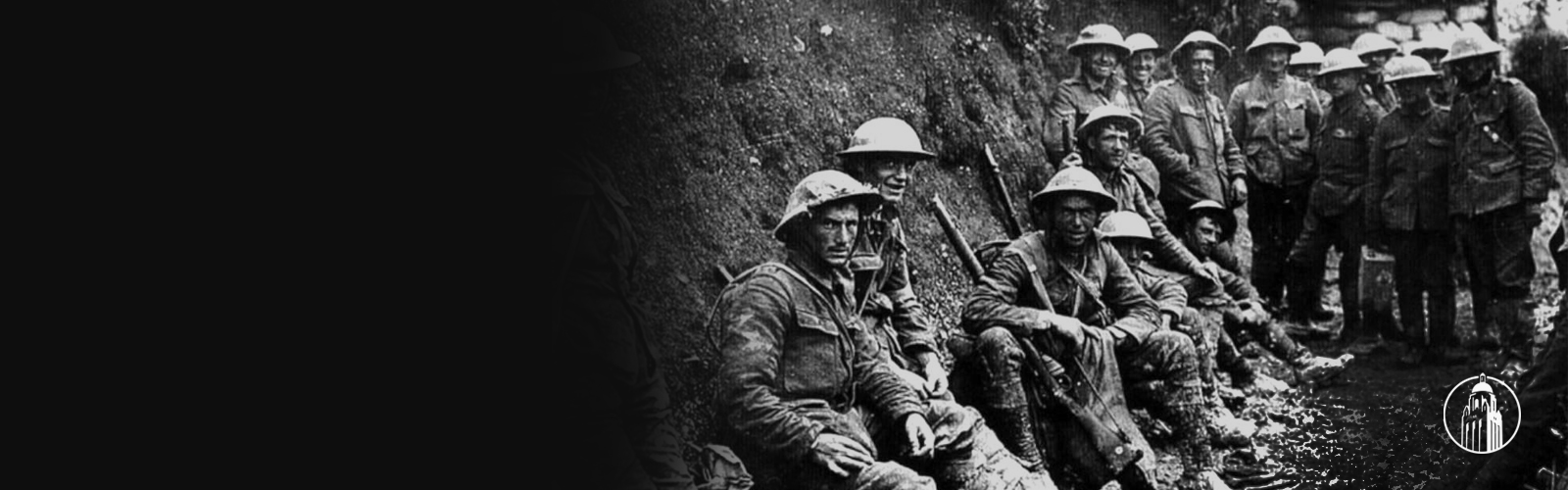
The Working Group on the Role of Military History in Contemporary Conflict examines how knowledge of past military operations can influence contemporary public policy decisions concerning current conflicts. 


As the very name of Hoover Institution attests, military history lies at the very core of our dedication to the study of "War, Revolution, and Peace." Indeed, the precise mission statement of the Hoover Institution includes the following promise: "The overall mission of this Institution is, from its records, to recall the voice of experience against the making of war, and by the study of these records and their publication, to recall man's endeavors to make and preserve peace, and to sustain for America the safeguards of the American way of life." From its origins as a library and archive, the Hoover Institution has evolved into one of the foremost research centers in the world for policy formation and pragmatic analysis. It is with this tradition in mind, that the "Working Group on the Role of Military History in Contemporary Conflict" has set its agenda—reaffirming the Hoover Institution's dedication to historical research in light of contemporary challenges, and in particular, reinvigorating the national study of military history as an asset to foster and enhance our national security. By bringing together a diverse group of distinguished military historians, security analysts, and military veterans and practitioners, the working group seeks to examine the conflicts of the past as critical lessons for the present.

Victor Davis Hanson on War in the Contemporary World — WATCH

The careful study of military history offers a way of analyzing modern war and peace that is often underappreciated in this age of technological determinism. Yet the result leads to a more in-depth and dispassionate understanding of contemporary wars, one that explains how particular military successes and failures of the past can be often germane, sometimes misunderstood, or occasionally irrelevant in the context of the present.

The working group is chaired by Victor Davis Hanson with counsel from Bruce S. Thornton and David L. Berkey, along with collaboration form the group’s distinguished scholars, military historians, analysts, journalists, and military officers.