International Organizations & Politics

Defense

Filter By:

Type

Fellow

Research Team

Use comma-separated ID numbers for each author

Support the Hoover Institution

Join the Hoover Institution's community of supporters in advancing ideas defining a free society.

Support Hoover

Analysis and Commentary

Compassionate Conditionality for Africa

by Larry Diamondvia Hoover Daily Report
Monday, July 24, 2000

Unless African countries lay the institutional foundations of limited and accountable government, under a true rule of law, they have no hope of relief from their burdens.

Analysis and Commentary

Facing Up to Kosova

by Norman M. Naimarkvia Hoover Daily Report
Monday, April 24, 2000

Kosova must eventually emerge as an independent country within its present borders.

A Strategic Flip-Flop in the Caribbean

by William Ratliffvia Analysis
Wednesday, March 1, 2000

For almost three decades the U.S. embargo of Cuba was part of America's cold war strategy against the Soviet bloc. It should have been lifted after that ‘‘war’’ ended since Castro ceased to threaten the United States and its neighbors and adopted the standard rules of international behavior. But inertia, a powerful Cuban American lobby, and misguided politicians set new demands: democracy, improved human rights, and economic reform. When Castro demurred we tightened the sanctions in 1992 and again in 1996 with the Helms-Burton Law. The United States has never committed the resources necessary to overthrow Castro, however, and the pressures we have applied have utterly failed to advance the three objectives. Worse yet, in the post–cold war world the policy and political outlook that sustain it have become a strategic liability. They promote conflict, both within Cuba—where a crisis might draw in the U.S. military—and abroad, as occurred in 1999–2000 after the arrival in Florida of the rafter boy, Elián González. They allow pressure groups to stand in the way of the policy-making process of the U.S. government. For example, the lobby manipulated wishy-washy politicians in 1998–1999 and got the president to turn down a widely supported proposal for a bipartisan commission to conduct the first comprehensive evaluation of the policy in four decades. Finally, the imperialistic Helms-Burton Law alienates allies worldwide and will poison relations between the United States and Cuba for decades to come. Castro will benefit no matter what we do, but on balance he gains more if we maintain the sanctions because they provide a scapegoat for his own repression and economic failures even as they enable him to maintain his cherished global image as the ‘‘scourge of U.S. imperialism.’’ Castro can wage a worldwide campaign against the embargo to bolster his image knowing Washington is too inflexible to change it. Indeed, whenever Washington has lightened up, Castro has tightened up and effectively prevented further improvement. Lifting sanctions need not mean establishing friendly relations with Castro—which he would reject in any event—or supporting his efforts to get international aid without meeting standard requirements. The ultimate responsibility for maintaining this antiquated and potentially dangerous policy falls on politicians who either do not understand the need for, or for political reasons are afraid to support, a new policy to benefit both Americans and Cubans in the post–cold war world.

Political Instability as a Source of Growth

by Bruce Bueno de Mesquitavia Analysis
Wednesday, March 1, 2000

The U.S. government emphasizes the importance of stable political leadership as a necessary condition for economic growth. Contrary to this view, I show that high leadership turnover is strongly associated with high economic growth both in autocracy and in democracy. The effect of "unstable" leadership is stronger in democracies than autocracies because democratic political systems have institutions that promote competition over policy ideas rather than over the distribution of private benefits to cronies. Two institutions are shown to be particularly important in promoting such public goods as a fair legal system, transparent decision making and accounting, a strong national defense, and a healthy, growth-oriented infrastructure. These two institutions are a large selectorate (the set of people with a say in choosing leaders) and a large winning coalition (the set of people whose support keeps the incumbent in office).

Political leaders are eager to stay in office and, contrary to the neoclassical economic model, are not benign agents of the people in whose name they lead. Because autocrats depend on small groups of supporters, they emphasize the use of private benefits to their cronies as the means to gain political loyalty and stay in office. This means that they generally have little incentive to pay attention to the overall quality of their public policies.

Democrats, in contrast, require the support of a large coalition to stay in power. Because private rewards have to be spread thinly to many people, democrats find it easier to compete for office by providing public goods that benefit everyone rather than private benefits for a few cronies. This means that, in democracies, political competition is over policy ideas. Two effects follow from the fact that democratic leaders must build large coalitions: Democratic leaders provide better policies to improve their chances of surviving in office, and because competition is over policy ideas, they are more easily turned out of office in favor of a political challenger than are autocrats. Thus, autocrats have longer terms in office and produce less-efficient economic growth. The U.S. government emphasis on stable leadership as a necessary condition for growth is mistaken and can lead to global economic contraction rather than expansion.

Analysis and Commentary

Tightening the Screws in Russia

by John B. Dunlopvia Hoover Daily Report
Monday, January 24, 2000

Vladimir Putin, Russia’s acting president, will likely be chosen the country’s second president in elections to be held on March 26.

The Case against the International Monetary Fund

via Analysis
Monday, November 1, 1999

In July 1944, delegates from forty-four nations gathered in Bretton Woods, New Hampshire, to design a postwar international monetary system that would promote world trade, investment, and economic growth. The framers created the International Monetary Fund (IMF or fund) to supervise the new "Bretton Woods monetary regime" that sought to keep national currencies convertible at stable exchange rates and to provide temporary, low-cost financing of balance-of-payments deficits resulting from misaligned exchange rates.

In reality, the framers of the Bretton Woods regime created an international price-fixing arrangement enforced by the IMF. After joining the fund, each member country declared a value for its currency relative to the U.S. dollar. The U.S. Treasury, in turn, tied the dollar to gold by agreeing to buy and sell gold to other governments at $35 an ounce; the inflation of the 1960s, however, made the U.S. commitment to sell gold at that price unsustainable. To preserve U.S. gold reserves, President Richard Nixon closed the gold window in August 1971, effectively uncoupling the dollar from gold and ending the fund's original mission of supervising a system of pegged exchange rates. Looking for a new mission, the IMF quickly evolved into a financial medic for developing countries. Beginning in the early 1970s, the IMF skillfully used a series of global economic crises to increase its capital base and financing activities.

Has the expansion of IMF financing activities alleviated the balance-of-payments problems of member countries and encouraged prudent, progrowth economic policies? The evidence, much of it supplied by the IMF, demonstrates that the fund does more harm than good. Historical studies as well as recent initiatives in Mexico, East Asia, and Russia reveal that IMF financing programs, which rarely prescribe appropriate economic policies or sufficient institutional reforms, are at best ineffective and at worst incentives for imprudent investment and public policy decisions that reduce economic growth, encourage long-term IMF dependency, and create global financial chaos.

It is time to scrap the IMF and strengthen market-based alternatives that would promote an orderly and efficient international monetary system. Key reforms include floating exchange rates, internationally accepted accounting and disclosure practices, unfettered private financial markets, and fundamental legal, political, and constitutional rules that would allow free markets to emerge and countries to achieve self-sustaining economic growth and development.

Using Power and Diplomacy To Deal With Rogue States

by Thomas H. Henriksenvia Analysis
Monday, February 1, 1999

The end of the cold war a decade ago has ushered in a greatly transformed international landscape. Instead of a pacific era of peace and political harmony, the world, and particularly the United States, has been confronted with a menacing challenge of rogue regimes whose propensity for violence is matched by their intentions to disrupt regional stability, contribute to outlaw behavior worldwide, or to possess weapons of mass destruction. Ruthless rogues also endanger American interests and citizens by their active or passive sponsorship of terrorism. If left unchecked, rogue states like Iraq, North Korea, Iran, Libya, and others will threaten innocent populations, undermine international norms, and spawn other pariah regimes, as the global order becomes tolerant of this political malignancy.

As a major beneficiary of a global order of free markets, free trade, growing prosperity and spreading democracy, the United States, the world's sole superpower, must take the lead in confronting rogue governments, even though our allies may balk from time to time. Specifically, American power should be used to enhance the credibility of our diplomacy. Law and diplomacy alone are unlikely to affect rogue dictators. They must be reinforced with power. Four broad policy options, which in most cases should be combined rather than implemented individually, can be applied:

  • Sanctions and isolation to achieve containment of and inflict economic damage on a rogue state
  • International courts and domestic prosecution to bring rogue criminals to justice
  • Shows of strength and armed interventions to coerce or eliminate rogue regimes
  • Support for opposition movements or covert operations to oust rogue figures

Unless the United States addresses the challenge of rogue states with a combination of force and diplomacy, the new millennium will witness a widening of global anarchy, deteriorating progress toward economic development, and declining political reform. Dire consequences await the United States if it fails to react forcefully to international roguery.

The comments of my colleagues Charlie Hill, James Noyes, Henry Rowen, and Abraham Sofaer were helpful and are gratefully acknowledged along with those from Addison Davis, David Gillette, Bradley Murphy, Douglas Neumann, Piers Turner, and Robin Wright.

Hong Kong Under Chinese Rule: The First Year

by Alvin Rabushkavia Analysis
Wednesday, July 1, 1998

July 1, 1998, marks the first anniversary of Hong Kong under Chinese rule. How has Hong Kong fared during its first year as the newly created Hong Kong Special Autonomous Region of China (HKSAR)? The one positive story was the HKSAR's successful defense of the fixed link between the Hong Kong dollar and the U.S. dollar, which serves as backing for Hong Kong currency. In almost every other respect, the people of Hong Kong are worse off than they were during the last years of British colonial rule. The greatest setback was in the political arena. Nearly two million Hong Kong residents lost the right to vote in the May 24, 1998, elections for thirty of the sixty representatives of the HKSAR's legislature, who were chosen from functional constituencies. In general, the principle of one man, one vote was violated in favor of extremely complicated, three-tiered, rigged electoral arrangements to ensure that pro-China candidates would constitute a legislative majority. Several civil liberties were eliminated or reduced. Mainland Chinese cronyism was reflected in the purchase of substantial stakes in Hong Kong firms by Hong Kong branches of mainland firms at a substantial discount to market prices, until the Asian financial crisis transformed connections with mainland business and political organizations from an asset into a liability. The stock and property markets lost up to half their peak August 1997 value. English-language education was curtailed over the objections of parents and students as numerous schools that formerly taught in English were converted into Chinese-language schools.

India: Asia's Next Tiger?

via Analysis
Sunday, February 1, 1998

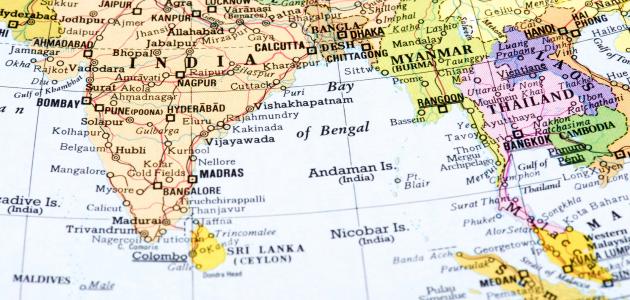
India, a rare democracy in the third world, is widely perceived to be a political success, despite its economic failures. India's poor choice of economic policies, however, has a political motivation. Getting elected has required targeting tangible spoils to an increasingly well-organized, but fractured, electorate. Political patronage was the stimulus for interventionist economic management, eventually producing massive fiscal deficits. When the danger of defaulting on foreign debt became a reality in 1991, the country's leadership began to reevaluate the flawed economic policies without considering the flawed system of governance that accompanied and sustained the policy matrix. Patronage politics spawned corruption; money, muscle, or influence propelled public services and government, making the system of public administration as incompatible with liberalism as the system of economic regulation. Political and administrative imperatives impelled the country to economic policies that failed. Economic reform will not be complete until the underlying administrative imperatives are transformed by accountable governance.

Continuity and Change in Popular Values on the Pacific Rim

by Alex Inkelesvia Analysis
Friday, August 29, 1997

Although the economic transformation of many nations in Asia is widely recognized, equally profound processes of social and cultural change in these same societies have gone largely unnoticed. Yet without knowledge of those changes we cannot fully appreciate the extent of the Asian economic miracle or adequately assess its significance for the future incorporation of the rapidly developing Pacific Rim nations into the emergent world order of the twenty-first century. This essay presents the first results of a continuing program to assess the extent and form of changing popular values and attitudes in a number of the most important of the growth engines in the area such as Taiwan, mainland China, Singapore, Korea, and their forerunner, Japan. The evidence is drawn from public opinion polls and social surveys covering a span of decades. To be sure, the region provides evidence of the persistence of tradition, and even of its actual strengthening, under conditions of modernization. Examples are the sentiment of filial piety and the value of hard work and frugality. Nevertheless, the main fact is that in a large number of domains popular attitudes and values have been changing profoundly and at a surprisingly accelerated rate. Within little more than one generation the approach to selecting a marriage partner, the ways of spending leisure time, and basic values about what one's goals in life should be have all undergone profound and rapid shifts. Communal responsibility has come to be replaced by individual expression; the present is increasingly stressed over the past and the future; consumption more and more displaces saving and accumulation. These are all the hallmarks of modernity. The diffusion of these tendencies in Asian populations increases the facility with which they can be integrated in a new blending of the cultures of East and West. But the same processes present great challenges to the traditional bases of social integration and political cohesiveness of these societies.

Pages

Research Teams


The Working Group on Foreign Policy and Grand Strategy explores an array of foreign policy topics to develop orienting principles about the most important policy challenges that face the United States.



The Arctic Security Initiative addresses the strategic and security implications of increased Arctic activity and identifies opportunities for shaping a safe, secure, and prosperous Arctic.