

Articles
Tokenization Of Real-World Assets: A Market Taking Shape
Managing the profound change demands harnessing advantages, mitigating risks, and creating careful legislation.
October 21, 2026
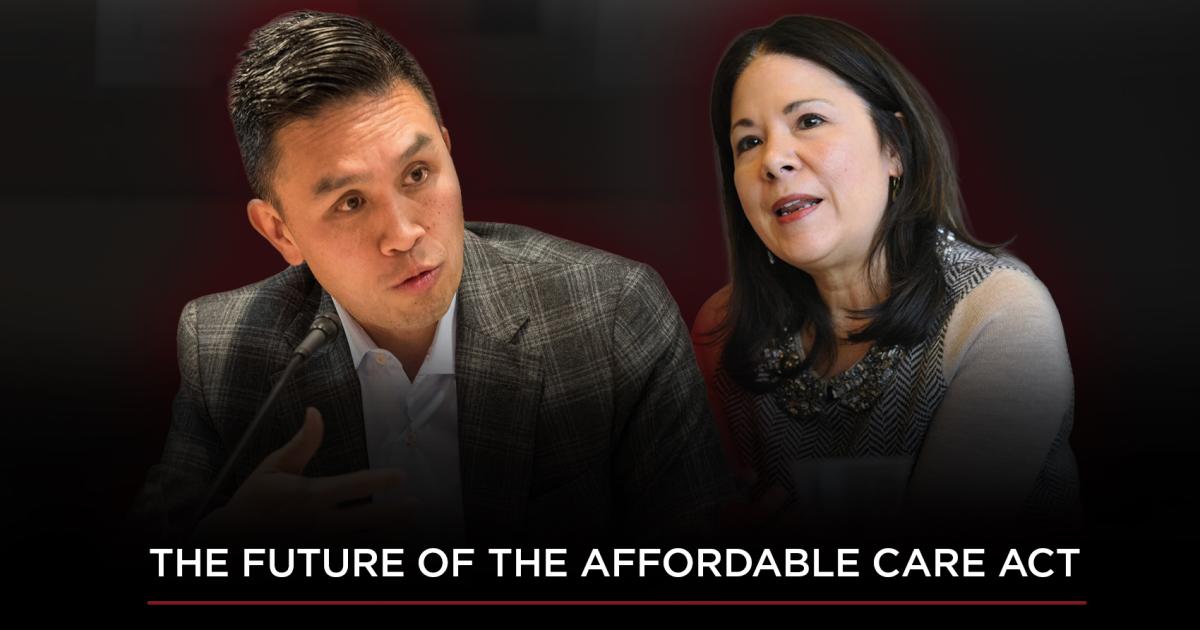
In this episode, healthcare policy experts Lanhee Chen and Nancy-Ann DeParle discuss the expiration of enhanced premium tax credits under the Affordable Care Act, the implications for healthcare coverage, and the future of healthcare policy in the US. They explore the challenges of data trustworthiness, the need for affordability, and the importance of defining problems in healthcare reform. The conversation emphasizes the necessity of finding common ground between differing political perspectives to address the complexities of the healthcare system.
- Hello everyone. Welcome to Factual Foundations of Policy, a podcast from the 10 Bomb Program for fact-based policy at the Hoover Institution. I'm your host, Tom Church, and today I'm joined by two healthcare policy experts as we attempt to figure out what happened with the expiration of some of the Affordable Care Act subsidies, why it led to a government shutdown, and why each side has a different approach to healthcare reform. My first guest is my Hoover Institution colleague, Lanhee Chen. Lanhee is the David and Nancy-Ann DeParle fellow in American Public Policy at Hoover. He's also the Director of domestic Policy studies and a lecturer at Stanford University. He's advised several presidents, several candidates for presidents, and has ex written extensively on healthcare policy. And my other guest, I'm very happy to have us joining is Nancy Ann DePaul. She's the managing partner and co-founder of Continents Capital Partners. She was the former administrator of the Centers for Medicare and Medicaid Services under President Clinton, and was a former Deputy Chief of staff and longtime advisor on the Affordable Care Act for President Obama Lhe. And Nancy-Ann, thank you for joining us.
- Thank you. Thank you, Tom.
- So we're here today to talk about healthcare, namely the recent push to extend the EPCs, the enhanced premium tax credits in the Affordable Care Act. Lanhee, he, I'll start with you. Will you walk us through the EPCs, what they were, who was receiving them, and why they led to a shutdown last year?
- Well, I, I think to answer that question, Tom, we've gotta think about the structure of the Affordable Care Act more broadly. And, and, you know, just briefly, the, the concept was really to try and figure out how to get more Americans healthcare coverage. And there were a variety of different mechanisms to do that. Some of that was in the expansion of the Medicaid program, which is the joint state and federal program that covers many lower income Americans. And then there was this effort to really expand private insurance take up by, by Americans who weren't eligible for that coverage. And so, you know, through a variety of discussions and debates around the original Affordable Care Act, there was a structure created to essentially incentivize the purchase of private health insurance through the health insurance marketplaces that were created by the Affordable Care Act. Many of those marketplaces are administered by states. For example, in California where I live, we have a, a program called Covered California. And the idea was to make that coverage more affordable. That was the genesis of the original tax credits, premium tax credits and subsidies that were in the Affordable Care Act. And then during the COVID pandemic, and in, in the aftermath of that, there was an effort to expand affordability of plans for more Americans further. And so some of the income restrictions that were originally put in place in the Affordable Care Act, which capped the availability of those subsidies up to about, I think it was 400% of federal poverty level, some of those restrictions were lifted so that they would be more generous for a broader swath of the population. Again, all with the goal of expanding coverage. So the debate that we recently had was really about whether those temporary extensions, the ones that that originally originated during COVID, whether those extensions would continue for some period of time. And that was really the genesis of the disagreement, I think, between Republicans and Democrats. I'm sure Nancy Anne will correct my factual inaccuracies and, and, and maybe some of the way that was characterized, but that is kind of the, the, the most sanitized description I guess I can give of what we, what we just went through.
- Sure. Nancy Ann, can I have you jump in? January 1st happens this year, these enhanced premium tax credits have expired. What happened? What happened to the people who were receiving them? What happened to the Affordable Care Act market?
- Well, so far what we know, I think it's early days, but what we know is from the reporting from the states that run their own marketplaces and from the federal marketplace that around 1.3 million people who had been signed up did not sign up again. So, you know, they're, they're not going to participate this year, presumably because the cost increased. I've seen various estimates of the cost increase. It matters a lot where you fall and the, you know, degree to which you're around the federal poverty level, 400% of the federal poverty level, which is around $62,600. I think for an individual, if you're right around that, you could be facing doubling of your premiums. If you're further away from that, it might be less on average, though, this affects everyone. It's a marketplace. So once the actuaries started working on the premiums for this year and covered California and the various other state exchanges, and they looked at, they each looked at their actuarial analysis, and if you wanna talk about facts, here's where you get, it's really interesting because actuaries use judgment as well as facts, and it all funnels together into what they're saying is an average 26% increase for the 24 million people who were in that part of the marketplace. If I could just circle back, you saw me nodding aggressively or energetically, I hope while Lanhee was talking, because I thought it was a very fair description of the enhanced advanced premium tax credits. I would just add, this is supposed to be about fact, but there is a realpolitik part of fact as well. So when, when we were working on the law, as Lanheenie said, there were carrots, which the premium tax credits were a carrot to help people participate in the individual market. Who, you know, we had 50 million uninsured, so we wanted many of them to get insured as possible. Why not? Just because we think it's a good thing for society, although I do, but also because it affects everybody. If they're not insured and they show up at the hospital, then that causes uncompensated care, which increases the premiums for everyone. So whether we like it or not, it's a, we're a community and it, what we do affects each other. So there was something called an individual mandate, which was a requirement that every person show evidence of insurance on your tax returns. I just got my thing in the mails, you know, that I get to submit with my tax returns. And then there were carrots, like the advanced premium tax credits, which is Lanheenie says, were capped. Why were they capped? We looked at hundreds of regression analysis showing what would happen to different sort of synthetic families that we created, you know, a family of three who ran a dry cleaning business in Vienna, Virginia. I mean, literally we came up with families and had the guys up at MIT run these different analyses. And there's no question that having more generous tax credits, more generous subsidies would've helped get more people in. We were trying to hit, I think it was 96% coverage, 96% of Americans with coverage. It was really hard to do that, and we had to keep it under a trillion dollars, and we had to pay for the whole thing. So I had to come up with I and our team. We had to come up with a trillion dollars worth of savings from other parts of the healthcare system, not from other things, you know, that the government spends money on. That might have been an easier task. No, it had to come from within the healthcare system. So the real politic of this was from the very beginning, we thought we would've liked the subsidies to be a little more generous. They weren't, there was also political disagreement about that, not, not just with Republicans who were working with us at the time, but also among Democrats. I remember talking to then Governor Joe Manchin, who said to me, Hmm, I don't know, 400% of poverty that's really in my state. That's a really middle class person. I don't know about that. And then the next meeting I had was with Chuck Schumer who said, oh, that's not nearly enough in New York. You can't make it. So these are the, you know, you take the facts and then you have to fit them into the different
- Policy trade offs.
- Exactly, exactly.
- Yeah. You know, Lanheenie, I want to ask you, because you've, you were on the other side of this when this debate was happening. You know, you, Nancy Ann has talked about the number of, of people they were trying to cover and what it would cost. How do you go and actually verify these numbers for, you know, each of you, you know, did it on, on each side? Who do you go and trust to actually provide you with
- Yeah.
- Reasonable estimates with enrollment figures, with projections, and with actual data?
- Well, this is part of the problem, is that we, we've entered an environment now where different sides of the debate will want their own numbers because the, it may be hard to find an authority that is trusted and agreed upon. Now, I will say, for example, there are entities like the Congressional Budget Office, whose job it is to create a score as they would, as, as they call it in Washington, but basically an estimate that tells us, for example, what the effect will be on the number of insured, what the effect will be on overall GDP, what the effect will be on the federal budget. And over the years, there have been, you know, tweaks and disagreements on the margins. But by and large, the CBO, you know, current director Phil Gel's, a friend of mine, really good guy who I've known for many years, but they've had a series of directors who I think are, are trusted economists, and they've got a great career staff that work very hard to produce estimates that are broadly acceptable. The Joint Committee on Taxation has a very specific set of responsibilities in the Congress per for finding those same estimates. And, and then, you know, there's a whole third party environment. There are academics, you know, people at places like Hoover and Stanford who estimate for a living there are, are, are people at think tanks around Washington who do this, you know, and, and there you're gonna get a little bit more debate and dispute because oftentimes there's a question about what the agenda is there. So it's, it's hard. It's, it's very hard. And, and part of the reason why we're in the environment we're in now is because we've lost in some ways some of that common lexicon around what a trusted authority is. You know, people will automatically dismiss authorities that may have been trusted because the leader was at one point appointed by a Democrat or maybe confirmed by a Senate that was majority Democrat, and therefore they're somehow tainted. It, it, it is unfortunate in my mind that that's where we're at. It would be easier, of course, if there were authorities that we could all say, look, we can quibble with a methodological issue here or there, but fundamentally we believe that they're not cooking the books, as it were. And, and I think the Congressional Budget Office is a great example of an organization that, generally speaking, both sides have respected over the years as an arbiter of good econometric research that produces the kinds of estimates that we would want to use in policymaking.
- I agree.
- And can I ask about this? So CBO, the head of it is not appointed each time by a new president, correct?
- Yes. I think it's the, the speaker of the House, isn't it? Yeah. In, yeah,
- In conjunction
- With the Senate leaders. Yeah.
- Yeah. It's, it's, it's really a appointment that has to have bipartisan support. That's the only way to do it, because it's an appointment that has to be agreed upon. And, and, you know, the current director had to go through that, and every director has to go through that. And, and there have been some widely respected, you know, not just Phil, but Doug Hole Teon, our, our colleague who Nancy Anne knows well as well. Yes. He was someone who had to be, you go through that process and, and there have been others over the years as well. So I I, I do think that we try, they, they try to put in place a process for these positions that requires the buy-in of both sides of the political spectrum intentionally, because you, you, you wanna create a constituency that is not just rooted in one party or even one part of government or one chamber or another. It's, it's, it's a broad, as broad of a constituency as possible.
- Can I ask for actual data enrollment data? Nancy Ann, you ran CMS, I mean, it's CMS. What are the other main organizations that you're going to turn to, to say how much did we spend, how many people signed up? Anything along those lines?
- Well, back in the day when I was at CMS, our Medicaid data wasn't very good. It's much of CM S'S data is very lagged. I, I think the marketplace data is better, maybe, maybe in part because we have California and other states reporting in, but we used to use the Urban Institute. They had a model there, the TRIM model, I think was the name of it that was, and they, they dealt directly with states and got their most recent data, and it seemed to be more up to date and less lagged than what CMS had. But that's certainly one place I would look. Kaiser Family Foundation also tends to have very good data, especially on Medicaid and the uninsured. What else, Lanheenie? Those are two places I think of.
- Yeah, I, I mean, I think the, tho those are all sources that, that have had credibility over the years. And I mean, I think states have gotten better at reporting data as, as they've developed more sophisticated systems. And when you think about questions around, for example, how many people are enrolled in a state exchange, usually the state exchange is gonna produce the, the best information in terms of what's actually going on. And I've actually found that states, as far as I can tell, are, are being pretty sincere about wanting to produce data that is accurate, because ultimately their reputations are on the line too. If, if they end up producing data that's not accurate, then they're gonna be called out for it. So I I, I do think that having, again, a, a, a common understanding of where the data's coming from and what it's telling us is, is helpful. Now, there will be questions of course, you know, for example, one of the issues at play in the debate over the enhan, the extension of the enhanced tax credits was how much fraud was going on? Was there fraud? You know, what was the level of fraud? And there, you know, the discussions got a little bit more partisan because people said, look, we don't trust the numbers we're seeing from the state of California, for example. And, you know, whether you agree with that or not, that that is gonna be an issue when you're debating the, the, the, the more political elements of policy. But fundamentally, I don't, you know, my sense is that most people in the center, left and center right, would agree. We don't want fraud to be occurring to the extent it is, and we wanna do what we can to prevent that from happening. So there are situations where we'll wanna look at multiple sources of data to make a determination about what's actually going on.
- That was the EPCs. It doesn't seem right now like Congress is going to do anything about those or, or reextend them at the moment. That's probably a discussion for the future. I'd like to ask both of you, maybe Nancy Ann I'll start with you. The 2026 health policy landscape, if we're operating from, you know, we, we've set the bar, here's where the A CA stands, here's where Medicaid after the one big beautiful bill O triple B stands, you know, if you're gonna be spending federal dollars on healthcare coverage, how would you structure them? How, how would you like to see Congress react this year, especially as midterms are coming up?
- Well this year, given the tight margins in Congress and the lack of a real vehicle, unless you think, I guess next year's budget is a possible vehicle, but I think
- That's, you don't think reconciliation, another one is, is likely here for healthcare?
- Well, they could do that. I think, though, I think there are enough members on the Republican side, from what I hear, who also don't think this is the right thing to focus on. They think they've done their big thing on healthcare. Let's let the system absorb that. They got some of the PBM reforms done in this so-called mini bus that they did last week. So I'm not sure there's so much traction to do another big healthcare bill. There's certainly things to work on. They're having hearings, you know, pretty much every week there's some new hearing about Medicare Advantage or three 40 B or whatever the issue is. But I don't honestly see much traction towards another bill. Now, I did hear over the weekend that President Trump's, I think he's calling it the great healthcare plan, which was humbling because in contrast to 10 years of work on a however many page bill, this is a one pager. So from a communication standpoint, I, I tip my hat, but I've heard that there's some interest in passing that, at least in the house so they can show some momentum for, for that, you know, back.
- Okay, but may I ask you, Yeah, may I ask you on this, you know, less what you think might happen with Congress, other parts, parts of what I think should happen? What do you think should help and what, what parts of, I mean when we talk about healthcare, it's many different parts. It is Medicare, medicaid, parts within Medicare, it's the Affordable Care Act, it's the employer sponsored insurance, you know, group plans. Are there, are there areas you, you think we should put some work into? And I wanna know how much, not that you have the same idea of what to do about it, but same areas that maybe Lanhee would also agree of.
- Well, and this is, this is, this is an area that I think the president is trying to address in part through his Trump RX affordability. You know, that is an issue. It is, as I said, when we were working on the Affordable Care Act, we knew that it was going to be difficult even with all the carrots and sticks that we put in there to get people to sign up. It turns out California actually led the way here again, they did a California premium subsidy, they passed it before the American Recovery Act added the enhanced premium tax credits. It ended up getting subsumed by the, by the federal law. But you know, that show that showed what it could do to stabilize and strengthen and bring more people into the market. So then the issue is, do you wanna figure out a way to continue that? And so probably the answer is the same thing that's happened a couple other times. I was, you were nice enough not to say this, but I worked on the Clinton reform health reform bill that did not become law. It, it was much more disruptive in a sense, the Obama law, its ambitions were to work on the part of the market that wasn't working the uninsured. Right. It was more the Clinton law described. Yeah. Law. Everyone would've had to change. It was gonna take over the employer market. It was very different. But you know, we knew that, I can remember sitting with some house Wes and means committee members saying, well, once we pass this, we won't have to do healthcare again. And I said, no, honestly, you will have to, because yes, there are reforms here that have slowed the growth in healthcare costs and Medicare. And we did everything people came up with other than the tax exclusion and medical malpractice reform. We did almost every other idea that people brought to us. You're gonna have to keep going back to this. This is a major, this is a big part of the economy. It's, you know, it's gonna keep changing. So we're gonna have to keep coming back to it's time to look at affordability again. We had reforms that worked for a while. Some of them maybe aren't working anymore. Maybe we need to re-up, there's some ideas on the table, both from the right and the left. So we need probably another group of strange bedfellows to start working together some of these ideas that they could meet in the middle on. And I think there are some
- Lanhee he, what do you see as the, the similar or different approaches? I mean, can you kind of sketch out what are the, to affordability to healthcare reform? Yeah. On, you know, on the right versus, and, and maybe where they actually might agree.
- Look, I I, I think that there are, and and I recently wrote a, wrote a piece about this in a, in an academic journal where, where I posit that one of the challenges we have in healthcare policy is that people on the, the polar extremes of both the right and the left desire a set of changes, which I'm sure while well intentioned from their perspectives, are never gonna happen.
- Right? - The likelihood that we're gonna have a single payer government run system in the US is very, very low. The likelihood we're gonna take the current system, blow it up and go to some kind of market-based nirvana is very low. And so what we are left with, I think is how do we take the system? We have warts and all, which most Americans actually rather like, how do we take this system there is bad. Yeah. I mean, how do we take this system and, and make it better? How do we enhance affordability? How do we put the consumer in charge of more of these decisions? How does a government play a responsible role in ensuring that people have access to affordable coverage, but also that it's fiscally sustainable? And, and I think if, if you start with those broad guardrails, there are a couple of areas where I, I think you'll get agreement between conservatives and progressives, for example. The, the need for us to have better, a better sense of how much things actually cost.
- Yes, yes.
- And, and, and what the quality of care provided is. I mean, I, I can't tell you the number of times I've talked to people. They want to get information about the quality of care. They go to Yelp. Now Yelp is great for picking restaurants, not so good for picking, you know, who might do your brain surgery. And so we need to have, for example, a better understanding of what the quality of care is that's being provided, what the costs of that care are in different modalities. And then we can couple that with innovative insurance arrangements. We're seeing more and more of this from, from employers for example, who are trying to put consumers and patients in charge of more of their health benefit spending. There are limits to that of course, but by and large, it's very difficult to create a system where there's any kind of awareness of a marketplace if you don't have data around basic cost and quality. And, and right now we, we just don't have that in our healthcare system. We've got some measures that have been around that are good and we should do more to expand upon those, but they're insufficient fundamentally. So
- Yeah, that's been very disappointing, honestly.
- Yeah,
- I agree with, I agree with you. We haven't gotten as far as we should have on that.
- And, but there is a role for government to do it. There is a role, I'll just say there's a role for government to play here, right? Because government is, is the one entity that can step, the federal government can step in and say, here are the kinds of metrics that would be helpful for consumers to understand better and begin to move us in the direction you can say, nudge us, or you say, force us, whatever it might be, but move us in a direction where we have a better sense for what the transparency of that cost and quality might look like.
- Nzi. And I want, I want to ask you, by
- The way, so there's one area already. Yeah,
- I like that. I like that. But now let's talk about where you guys might disagree. If I can try and find a couple areas. One might be who is going to pay for this and decide how these, how, how markets might change, how the government, you know, if we, we've we're talking about the a CA right here, and that's kind of just giving money premium subsidies to people along with some rules on what insurers, insurers are allowed to offer. But if you get into Medicaid insured's for low income Americans, if you get into Medicare, there are a lot of rules that the government sets on what they'll pay for 'cause and then also what recipients are expected to pay for. So I'd love to just turn it over to you looking at this system. Do you think we've got a good mix right now of what the government pays for or what patients are ex expected to pay for?
- That's a hard question, Tom. I think, yes, but I guess I'd step back another couple of steps to say one thing that surprised me in the last year or so, in talking to Republicans in Congress, I won't, I won't say conservatives 'cause I don't really know where, where they fall on the spectrum. But there are Republicans in Congress and it seems like there is, if you go back 15 years ago when I was working on the Affordable Care Act, I walked into a situation, Lanheenie had been up on the hill at this point, I think. And there was in general an agreement that it was a problem that we had 50 million Americans uninsured, that the number was growing, that employers were dropping that individual, that that people with preexisting conditions could be excluded, that insurers could run them off through rescissions, women could be charged 27 times men. There were, there were a set of things that people agreed were a problem that they thought would be worth working on. They obviously didn't agree that the Affordable Care Act was the solution, but at least we agreed on the problem. Now I hear people saying things like, well, I was in a meeting with another, a group of people and a senator, Republican senator who said, pointed to his staffer and said, you know, Tom over there is 25, he doesn't need insurance. We're just paying a lot of money for him. There's no reason to really require him to have it or for anyone to pay for it. You know, I, I suppose where that would lead you is to some sort of availability of more different types of plans, like a catastrophic plan, which is one thing that has been posited as a solution for, you know, allowing more choice. I just think on both the Republican side and the democratic side, sometimes choice is held up as the answer to things when it really, I'm not sure it is, like on the democratic side, you know, having more and more choice of providers and more and more choice of plans doesn't always, sometimes it makes things very complex and sometimes it allows for more gaming. And on the Republican side, the idea that I, well, you can say we should have different types of insurance products. We should have catastrophic plans. But, but you also have to accept that will make, if you have other marketplaces that will make their cost go up because you will draw out some of the younger, healthier population into these catastrophic plans. So there's just so many trade-offs in it. It, it, I think it depends partly on how you define the problem.
- I think trade-offs is one of the themes of, of why we're doing this podcast. It's 'cause we're starting from, you know, same base hopefully. And then different preferences. Lonnie, same quick question for you. Do you think we're, have a, we have a good payer mix right now from the government, from patients, from, you know, private payers or much things to change? Well,
- You know, one of the things that we have to grapple with is that we have a changing America from a demographic perspective. And increasingly more and more Americans are going, are going to be relying on Medicare, which is the, the, the program for older Americans. As the baby boomers retire and as they, you know, begin to need more healthcare, that's just natural. As we get older, we need more healthcare. There will be a natural pressure from a fiscal perspective that's placed on that program. It's gonna be increasingly important. So we do have to think about ways, in my mind, of migrating that program toward a system that compensates more for keeping people well as opposed to the volume of services provided. And I, I think that's a fundamental rearrangement that to the credit of the Affordable Care Act, I think the, the a CA started some of that discussion. We've gotta take it to the next level in the next couple years. But what that also means is that in the broader marketplace, when you talk about Americans who are working age and those who are entering the working environment, now, their expectations about the kind of care they're gonna get and the kind of plans they have access to are different than the expectations that Nancy Ann or that I might have about what we want from a coverage perspective. And I, I think that a system that allows for a broad variety of coverage arrangements where individuals have more choice and, and can make decisions that they believe syncs up well with their life condition. I think that's an important thing. Now there's gonna be a balance because to Nancy Ann's point, we can't have a bunch of people running around making choices that make healthcare dramatically more expensive necessarily for other people, right? We have to think a little bit about what that balance looks like. So how do you retain choice and make sure we are maximizing that choice for parts of the population that, you know, wanna get access to healthcare but don't necessarily wanna pay a lot, or don't want to have coverage. That's super extensive. We need to allow for that while also recognizing that there are community impacts of the choices those folks make. So that's gonna be the delicate compromise over these next couple years. How do we reach a system that truly expands choice and optionality for more Americans, while also recognizes that the cost of care is deeply tied to the choices that other people make?
- That's exactly right. And you and I have talked about this, you know, back after the Affordable Care Act passed, one, one of the decisions that the president had to make early on was, what do we do about all these plans that are out there that where people are paying, you know, $150 a month for $50 of coverage and, you know, some, some call them junk plans, but they're not great. We decided to policy term grandfather them to allow them to stay even though they didn't meet the standards. Some of them are still around today. There are still people enrolled in those. I saw on, on something I read recently, some progressives were arguing maybe it's time to finally get rid of those because they do, to some degree affect, you know, some of the marketplaces. They, they siphon off people into them. On the other hand, as the way I looked at it was, well, this isn't the coverage that I want for my family. It's not what I aspire to. I hope most people can get better, but it's okay with me if this is what they're choosing, if they have another choice, you know, and if the employer wants to, to offer that and they have that alongside going in the marketplaces, I'm okay with it. So it's a balance. As, as Lonnie said, it's a pragmatic decision making that is hard to do.
- Well, let's close just with this, what's one thing you'd want listeners, viewers, to take away from this conversation about future of healthcare reform?
- Well, I, I'll, I'll start. I, I do not think it's going to be possible for either ideological poll to solve this problem on their own. Healthcare is 20% of our economy, roughly speaking from a consumption perspective, everybody's gonna need it at some point. It is a, it is a part of our economy where the health, the, the, the government, federal, state, all the way down to the local are deeply engaged along with the private sector. Whatever solution we come up with is probably gonna make both sides a little upset. And that probably means we've done a good job. Because the reality is that you're not gonna be able to solve the challenges our system faces by the ideologically purist approach one way or another. So agreeing on a basic set of facts and understandings about where the system is headed, developing a set of policy solutions that ultimately incorporates elements of both of these approaches. And starting with the low hanging fruit where we can agree, whether it's around pricing transparency or around some of these other areas where there is agreement that's gonna be the way to go. And that's the only way we're gonna solve and resolve some of the issues that the system faces as we go into what will be a, a dramatic period of expansion in terms of the utilization of healthcare services over these next several years and, and decades.
- Couldn't agree more. And I would just add, I think this is implicit in what Lonnie said, but defining the problem. So what can we even define the problems? I think on transparency, we agree that is a problem. I cannot believe there was a major, you know, change in the Affordable Care Act announced to require hospitals and plans to make this information transparent. And it's been 15, 16 years and it still hasn't really happened. I give the Trump administration credit for moving it forward some, but my goodness, you know, people using Yelp is not the answer here. So that is a problem. So let's agree on a set of problems like that and try to try to address 'em. And I, I think there's hope. I guess that would be my final word on it. There's hope.
- Thank you, Nancy and Lon. He thank you for joining us. Thanks for doing this. Thank you. Thank you everyone for tuning in. This has been Factual Foundations of Policy, a Hoover Institution podcast from the Tenenbaum program for fact-based policy. If you have questions you wish we'd covered, please send them in and we'll get to them in a future episode. Also make sure to check our show notes where we'll post links and sources to everything discussed today. Thank you for watching. We'll talk to you next time.
Articles
Managing the profound change demands harnessing advantages, mitigating risks, and creating careful legislation.
October 21, 2026
Articles
We asked Medicare policy experts to write up proposals that save taxpayers ~$100 billion over ten years. Here’s what they came up with.
October 20, 2026
Videos
The Fed, inflation, and the economic case for long-term price stability.
October 20, 2026