Filter By:

Subtopic

Type

Fellow

Research Team

Use comma-separated ID numbers for each author

Support the Hoover Institution

Join the Hoover Institution's community of supporters in advancing ideas defining a free society.

Support Hoover

The Real Debt

by Clark S. Judgevia Hoover Digest
Saturday, October 30, 2004

The nation’s most serious debt problem? Not the “federal debt” but the country’s staggering future obligations to the Social Security and Medicare programs. Clark S. Judge proposes a solution.


The Provinces

Cooling Shanghai Fever: Macroeconomic Control and Its Geopolitical Implications

by Cheng Livia China Leadership Monitor
Saturday, October 30, 2004

It is often said that politics is about who gets what, when, and how. Since early 2004, Hu Jintao and Wen Jiabao have adopted a macroeconomic control policy to limit bank lending, land use, and fixed-asset investment. They have acknowledged explicitly that this policy does not treat all sectors and provinces in the same way. While allocating resources to support the agriculture, energy, transportation, and social welfare sectors, especially in the less-developed western and northeastern regions, Hu and Wen have strived to cool off the decade-long construction fever in Shanghai and the Yangtze River Delta. The fact that the central government can say "no" to Jiang Zemin's turf suggests that Hu and Wen have begun to take the offensive. Through macroeconomic adjustments and geopolitical coalition-building, Hu and Wen have consolidated their power. However, given China's daunting challenges, only time will tell whether the Hu-Wen administration can achieve a soft landing politically as well as economically.

The Economist

by Tom Bethellvia Hoover Digest
Saturday, October 30, 2004

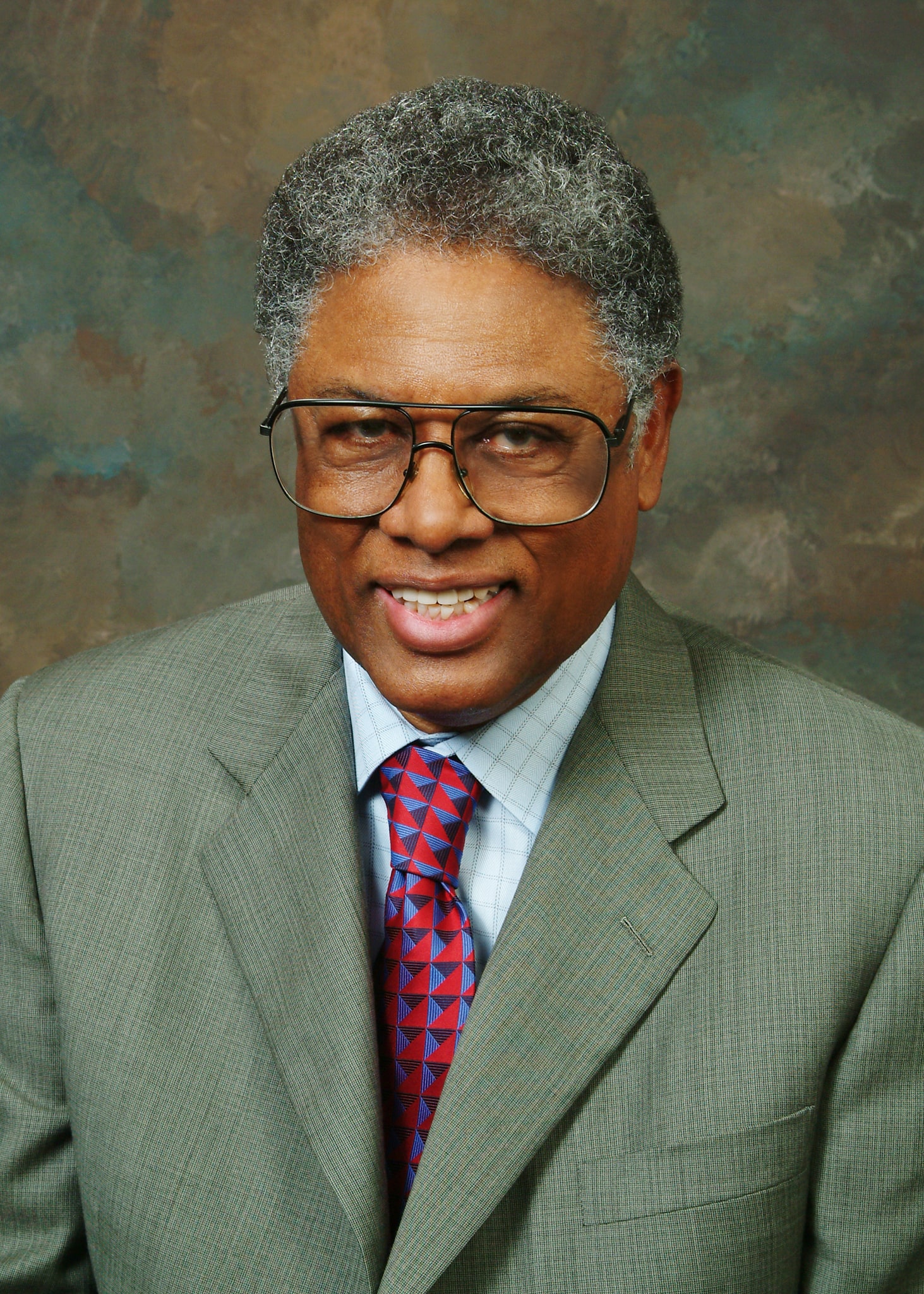
“As an expositor of economic principles and their application to the policies of our day, Thomas Sowell has no rival.” By Tom Bethell.

Social Security’s Surprising Turn

via Hoover Digest
Saturday, October 30, 2004

Finally—some good news about Social Security. By Thomas J. Healey.

Bandwidth for the People

by Robert Crandall, Robert W. Hahn, Robert Litan, Scott Wallstenvia Policy Review
Friday, October 1, 2004

For faster downloads, click here

Neoconservatism's Liberal Legacy

by Tod Lindbergvia Policy Review
Friday, October 1, 2004

Striking a balance between freedom and equality

7 + 1 = 8. China Will Join the Economic Group of Seven

by Michael S. Bernstam, Alvin Rabushka
Monday, September 27, 2004

On October 1, 2004, on the 55th anniversary of the founding of the Communist People's Republic of China, the born-again China will effectively join the Group of Seven major industrial economies.

Healthy, Wealthy, and Wise

by Daniel P. Kessler, John F. Coganvia Hoover Digest
Friday, July 30, 2004

The American health care system is broken. Here’s how to fix it. By John F. Cogan, R. Glenn Hubbard, and Daniel P. Kessler.

The Monster in Our Backyard

by Clint Bolickvia Hoover Digest
Friday, July 30, 2004

Former president Bill Clinton famously proclaimed that “the era of big government is over.” He was wrong: Big government just moved to the suburbs. By Clint Bolick.

Political Reform

Promoting the Scientific Development Concept

by Joseph Fewsmithvia China Leadership Monitor
Friday, July 30, 2004

For the past nine months, party General Secretary Hu Jintao and other leaders have been promoting a new economic approach that they call the "scientific development concept." This approach aims to correct what they describe as an overemphasis in recent years on increasing gross domestic product (GDP), which encourages the generation of false figures and dubious construction projects while neglecting the social welfare of those left behind in the hinterland. Advertised as a "people-centered" approach to development, the scientific development concept has been extended to leadership practices in general, including the recruitment of talent and the administration of the Chinese Communist Party (CCP). Leaders associated with former party General Secretary Jiang Zemin, such as Secretariat head Zeng Qinghong, have endorsed the scientific development concept, but Zeng in particular has appeared to demur at some of its central notions. At a minimum, this divergence underscores the difficulty of defining "social development" as opposed to "mere" economic development; at a maximum, it suggests continuing tensions within the leadership.

Pages

Economic Policy Working Group

 
The Working Group on Economic Policy brings together experts on economic and financial policy to study key developments in the U.S. and global economies, examine their interactions, and develop specific policy proposals.

Milton and Rose Friedman: An Uncommon Couple